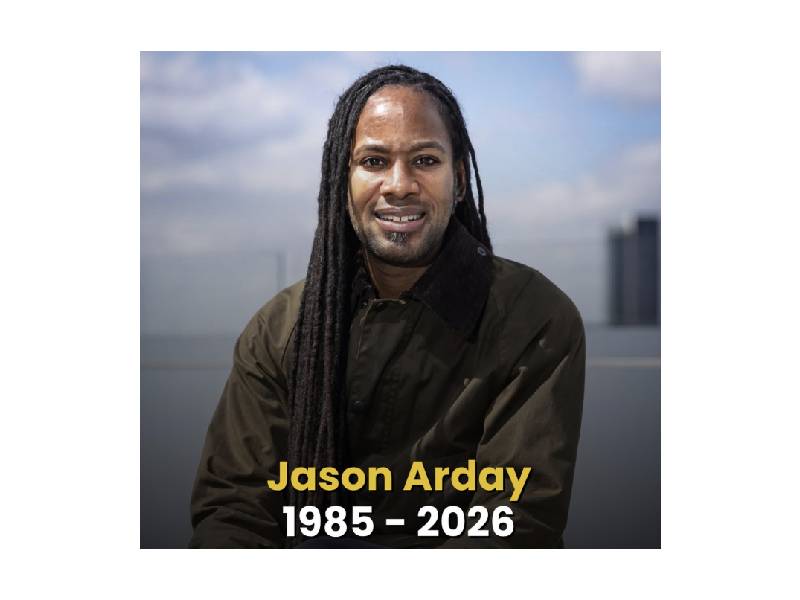
Photo source: Instagram / blackthingsuk
When news broke that Professor Jason Arday had passed away, the tributes started to pour in. They came from academics, activists, students, journalists, and everyday Black people who had followed his story with a mix of admiration and quiet recognition.
By 37, he was the youngest Black professor in the history of the University of Cambridge, an achievement made even more significant by the severe underrepresentation of Black academics at the highest levels of British higher education. According to official data from the Higher Education Statistics Agency, only 1% of professors at UK higher education institutions are Black. This is despite years of commitments to equality, diversity and inclusion (EDI).
Arday’s rise was remarkable. It represented a rare ascent to a level of academic authority that relatively few Black professionals have reached, and for people who have long been told they do not belong in these spaces, it showed that reaching the top is possible.
Then came the scrutiny. Questions were raised about his PhD, his academic work, his CV and aspects of the extraordinary personal story that had accompanied his rise. He was accused of plagiarism, which started with a Substack post from Nathan Cofnas, a former Cambridge colleague who describes himself as a “race realist” and has argued that Black people would be far less represented in elite academia under a purely merit-based system. The post was picked up by the British press and turned into what became a media uproar.
Arday denied plagiarism allegations, while Cambridge announced an investigation. He quit his role as professor of sociology of education at the University of Cambridge on August 5, and on August 14, he was found dead at his London home.
His autobiography, “Great and Unfortunate Things,” scheduled for official release on August 27, captures his triumph and tragedy. Excerpts provide ample evidence of what he passed through.
“Everything I do is scrutinized and challenged in a way that almost never happens to my white colleagues. For every new position I have attained, there has always been someone doubting that I’ve arrived there on merit. This is a phenomenon that many other Black people and I seem to have to learn to live with.”
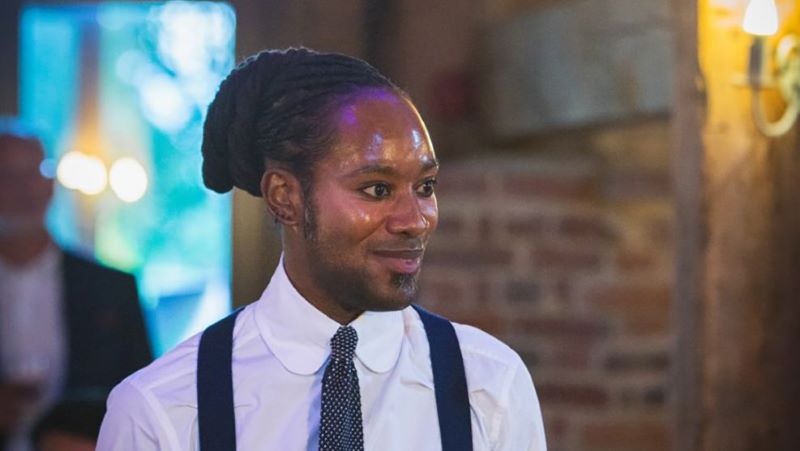
Photo source: Faculty of Education, University of Cambridge
Read also: Dr. Ayo Sekai and the Fight to Build a Black Scholarly Canon
Arday’s situation, beyond plagiarism, shows how Black men in elite institutions are often held up as proof of progress, only to be judged more harshly when things go wrong. His death has opened a difficult conversation about race, merit, institutional power, and the experiences of Black professionals in elite settings or predominantly white environments. It has also prompted broader reflection on what his journey reveals about Black excellence and the pressures that often come with it.
His family claims he faced a campaign of misinformation and harassment for more than three years since he accepted the role of professor at Cambridge University.
Labour MP Diane Abbott is among those who have shared their views. Speaking at a vigil organized by Stand Up To Racism in Trafalgar Square, Abbott said Arday had been subject to a “vicious and bitter media campaign”. She said attacks by “people who didn’t believe a black man should be a Cambridge professor” started as soon as he was appointed by the university in 2023.
“This was a campaign against all of us,” she added.
Black academics around the world are sharing condolences on social media and sharing their own experiences of being targeted by trolls and hounded by the media in ways that echo the sustained coverage Arday faced in Britain and in the U.S.
Emmitt Riley, an associate professor of political science and African American studies, thinks Arday was targeted by British media and is a classic example of what it is like to be Black and in white academic spaces.
“Jason became a target in this particular environment because white people do not believe that Black people deserve a seat at the table,” said Riley.
Riley made reference to Claudine Gay, the first Black woman to become president of Harvard, who faced a months-long conservative campaign and was forced out in 2024. He noted that if she could be taken down as a scholar, anybody can be taken down.
Also weighing in, journalist Karen Attiah drew comparisons between British and American media, noting their shared tendency to turn scrutiny of prominent Black people into spectacle. She argued that Arday’s impact is precisely what made him, and what makes Black intellectuals like him, targets for elimination.
“Throughout history, American and British media especially have repeatedly shown the world their lust for the blood of Black people, especially ones they have deemed to be too powerful or influential for their liking. Black people who transgress the racial hierarchy are targets to be ‘put back in their place’.”
Some of the people writing about Arday’s death keep circling back to Antoinette “Bonnie” Candia-Bailey, then vice president of student affairs at Lincoln University in Missouri, who died by suicide after being pushed to resign, leaving behind a final message accusing the university’s president of bullying and unfair scrutiny. This is not because the two cases are identical, but because the pattern keeps repeating: extraordinary achievement, followed by extraordinary scrutiny, and then an eventual collapse.
Universities have a responsibility to verify qualifications and investigate credible allegations. Journalists have a responsibility to ask difficult questions. Academics have a responsibility to maintain professional and academic standards. But the public also has a responsibility to recognize when scrutiny becomes spectacle. There is a difference between investigating someone’s work and turning every detail of their life into public entertainment.
What Jason Arday’s story leaves us with is a tough question: “What happens when a person’s achievement becomes a symbol others feel entitled to praise or tear down? Being exceptional was never supposed to be a liability.
Black excellence should not be a burden, a demand, or a performance. It should be a possibility open to everyone, not a narrow path only a few can walk. Black people should not have to be extraordinary to be valued. Arday’s brilliance deserves praise, but his humanity also deserves protection. And perhaps the real tribute is building institutions where Black excellence is not the exception, but the norm.