Source: Businessday.ng
Across the world, the number of children assigned to each teacher varies sharply by region, but nowhere is the gap more striking than in Africa. UNESCO data for 2022 show that sub-Saharan Africa had an average of 38.4 primary-school pupils per teacher, compared with 29.8 in Central and Southern Asia, 22.0 in Oceania, 20.1 in Latin America and the Caribbean, 20.0 in Northern Africa and Western Asia, 16.9 in Eastern and South-Eastern Asia, and just 13.7 in Europe and Northern America.
The global average was 22.8 pupils per teacher. The disparity becomes even greater when looking only at trained teachers. Sub-Saharan Africa had about 55.7 pupils for every trained teacher, compared with 34.9 in Central and Southern Asia and 15.5 in Europe and Northern America.
These numbers tell a story that goes beyond statistics. They point to a continent where millions of children are entering classrooms faster than education systems can recruit, train and retain the teachers needed to educate them.
Across Africa, going to school is considered one of the most important pathways out of poverty for the Black child. Parents make enormous sacrifices to keep their children in school, while governments continue to expand access to primary and secondary education. Yet access alone does not guarantee learning.
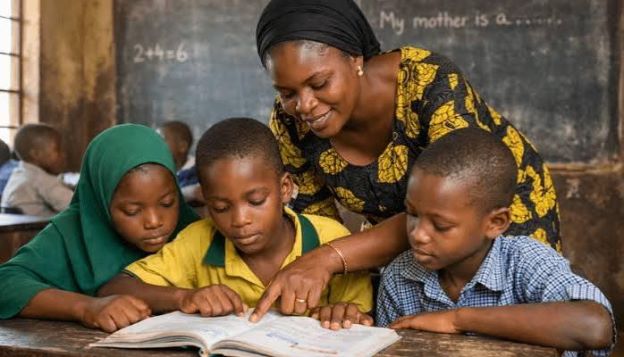
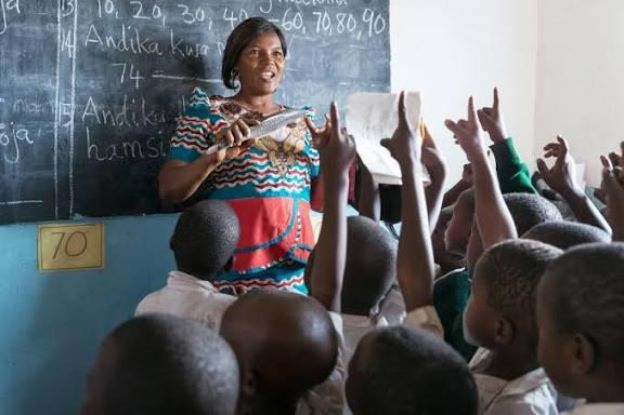
A Black child can have a desk, a school uniform and a classroom and still struggle to receive the individual attention necessary to learn, and one of the reasons is the growing shortage of teachers across the continent.
The UNESCO figures illustrate the scale of the problem. A ratio of 38.4 pupils per teacher in sub-Saharan Africa is almost three times the 13.7 recorded across Europe and Northern America. While the pupil-teacher ratio should not be confused directly with actual classroom size, UNESCO notes that higher ratios can be associated with crowded classrooms and teacher shortages.
And this is where the problem becomes obvious.
In Africa, teachers are critical to the future growth and development of the African child. They do more than stand in front of a classroom and deliver lessons. They identify children who are struggling, encourage students who have lost confidence, develop critical thinking, and help young people understand the world around them.
In many communities, particularly rural areas, teachers also serve as mentors, role models and trusted members of the community. When there are too few teachers, all of these responsibilities become more difficult.
The situation becomes even more concerning when we consider whether teachers have the required qualifications.
The difference between the overall pupil-teacher ratio and the pupil-trained-teacher ratio reveals how thinly qualified teachers are distributed. In sub-Saharan Africa, there were approximately 56 pupils for every trained primary-school teacher in 2022. In Europe and Northern America, the comparable figure was about 16 pupils per trained teacher.
This means that Africa’s challenge is not simply about putting more adults into classrooms. It is also about ensuring that those standing before students not only meet the teacher-to-student ratio but also have the preparation and professional support required to teach effectively.
The problem has deep historical and economic roots.
As African countries expanded access to education, enrollment often increased faster than the supply of teachers. UNESCO’s Global Education Monitoring data show that pupil-teacher ratios in sub-Saharan Africa rose during periods of rapid school expansion because children entered classrooms faster than governments could recruit educators.
That challenge remains particularly important because Africa has one of the world’s youngest and fastest-growing populations.
As Africa’s young population has grown, the economic realities required to support that growth through adequate teacher training, salaries, classrooms, housing, and professional development have not always kept pace. With standards of living in several African countries still relatively low compared with more developed economies, teacher remuneration remains a critical challenge for governments.
Poor remuneration and difficult working conditions can make it harder to retain qualified teachers. Some educators leave the profession altogether, while others combine teaching with additional income-generating activities. When teachers are forced to focus on how to meet their own economic needs, it can affect the time, energy, and resources available for teaching and professional development.
Source: edutimesafrica.com
The question, therefore, is not simply whether African countries can build enough schools. It is whether they can build education systems capable of keeping pace with their demographic transformation while strengthening their economies enough to ensure that teachers receive the remuneration and support structures needed to develop intellectually capable individuals.
The lack of infrastructure within educational systems is another crisis facing the continent. Many of the tools required by teachers and students are in short supply and, even when available, are not evenly distributed. In some schools, students lack adequate textbooks, laboratories, libraries, computers, and reliable internet access.
This creates another divide between children in well-resourced urban schools and those living in rural or disadvantaged communities.
The digital revolution has also changed what it means to be prepared for the future. African children are growing up in a world increasingly shaped by artificial intelligence, automation, digital commerce and new forms of employment. If schools are expected to prepare them for this changing environment, teachers themselves must have access to the training and technology required to understand and teach these emerging subjects.
Technology, however, cannot replace the teacher. Artificial intelligence can provide information and digital platforms can expand access to educational materials, but education remains deeply human. A teacher can recognize when a child has lost confidence, identify a learning difficulty, and encourage a student to keep going. In many African communities, that relationship can make the difference between a child remaining engaged in school and eventually dropping out.
This is why solving Africa’s teacher shortage should be viewed as an investment in the continent’s economic future rather than simply an education expense. Professor Abdeljalil Akkari has argued that Africa’s challenge is not “more schooling” but “different schooling and learning.” His argument points to the need to rethink education systems so they better reflect Africa’s socio-economic realities.
This includes linking education to development, prioritizing local ownership, focusing on the critical 5-15 age group, strengthening local infrastructure, promoting mother-tongue instruction, investing in teachers and school leaders, and aligning learning with job markets.
These priorities recognize that expanding access to schools is only one part of the solution; Africa must also ensure that what children learn, how they learn, and who teaches them prepare them for the realities of the societies and economies they will eventually enter.
Africa’s young population is often described as one of its greatest assets. But a young population becomes an economic advantage only when young people are equipped with the knowledge and skills needed to participate productively in society.
Governments must therefore invest more deliberately in teacher recruitment, training, remuneration and retention. Teachers working in rural and underserved communities need additional support, while teacher-training institutions must be strengthened to prepare educators for the realities of today’s classrooms.
The private sector and civil society can also contribute through investments in school infrastructure, teacher development, digital learning and community education programs.
Africa cannot afford to treat the teacher shortage as a problem that can be postponed until tomorrow.
Every child entering a classroom today represents the workforce, entrepreneur, scientist, engineer, healthcare professional, farmer, creative or leader of tomorrow. But potential requires investment before it can become productivity.
As we celebrate World Teachers’ Day, we recognize that the future of Africa will not be determined only by the number of children it sends to school. It will also be determined by the quality of education those children receive once they get there.
For the Black child sitting in an overcrowded African classroom, the teacher is more than an educator. The teacher may be the person who recognizes a talent, encourages a dream, or provides the knowledge needed to change the direction of a life.
Africa’s teacher shortage is therefore not simply a crisis in the classroom. It is a crisis that could shape the future of an entire generation.

Okechukwu Nzeribe works with the Onitsha Chamber of Commerce, in Anambra State, Nigeria, and loves unveiling the richness of African cultures. okechukwu.onicima@gmail.com