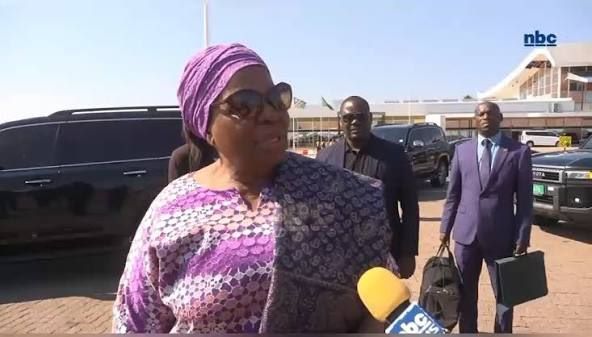
Source: Instagram (Nambianpresidency)
A rural clinic that cannot safely store its medicines has an electricity problem before it has a health problem. President Netumbo Nandi-Ndaitwah of Namibia made that point in New York this month. She told the room at the UN Private Sector Forum that reliable and affordable power decides whether a rural clinic can safely preserve medicines, whether a small enterprise can grow and whether a young person can find decent work at home. The audience was chief executives, heads of state and senior United Nations officials. On paper, many of them control the capital that could change that clinic’s night.
The Forum met on Sunday, September 20, inside UN Headquarters. It was hosted by the UN Global Compact on behalf of the Secretary-General as an invitation-only roundtable on accelerating a clean and just energy transition. The organizers’ closing release reported that more than 100 CEOs, heads of state and government, and UN leaders took part. The same release was unusually frank about what stands in the way. Participants named weak grid infrastructure, regulatory uncertainty, financing constraints, and limited energy access in many emerging and developing markets as persistent barriers.
That list deserves attention from anyone in the diaspora with family on the continent. The barriers are the ordinary machinery of development. Summits that stall usually do so because the machinery goes unbuilt.
Nandi-Ndaitwah seemed to understand this. Her speech measured success in human rather than technical terms. She argued that a clean energy transition must be “measured not only in megawatts installed or emissions avoided, but in jobs created.” She went further. At the continental level, she said, Africa’s energy transition has to serve as an industrialisation strategy. Clean power should be used to manufacture, add value to minerals, strengthen food systems, modernise transport and build a skilled workforce, rather than simply to export electricity or unprocessed minerals. As she put it plainly, “For Namibia, this is not an abstract policy debate.”
That is the heart of the matter, and it is where this column lands. Clean energy investment on the continent should be judged by what stays on the continent, starting with the jobs it creates and the local companies that hold a stake in it. An energy project that ships power and unprocessed minerals abroad while nearby villages stay dark would be a continuation of an old pattern under a greener flag.
The Forum’s host appeared to share the impatience. Sanda Ojiambo, who leads the UN Global Compact, told participants that investment alone will not carry the day: “ambition and capital alone are not enough.” She said the world needs the grids, policy frameworks, financing structures and partnerships that let investment move off corporate balance sheets and into the real economy. It was a striking admission from the head of the world’s largest corporate sustainability initiative. By her account, companies are increasingly ready to invest, and delivery is now the scarce resource.
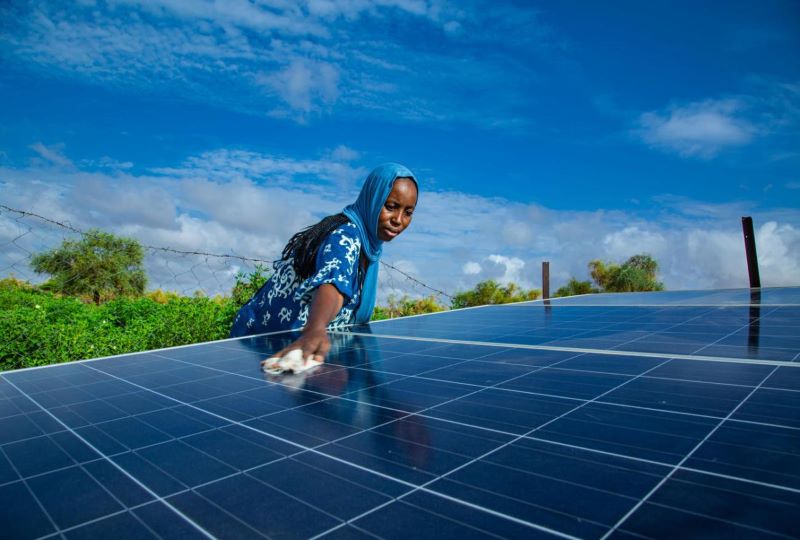
Source: UNSDG
There was some delivery to point to that weekend. Across Midtown, in Times Square, the African-convened Unstoppable Africa forum announced that the US$300 million Nigeria Distributed Renewable Energy Fund had reached its first close. Co-managed by the Nigeria Sovereign Investment Authority and Africa50, the fund will provide equity to local clean-energy developers. Those developers work on solar mini-grids, solar home systems, commercial and industrial power, and energy storage. Aminu Umar-Sadiq, who runs the sovereign investment authority, called the launch a signal that Nigeria’s market is ready: “Nigeria’s distributed renewable energy market is investable, credible and ready to operate at scale.”
Alain Ebobissé, Africa50’s group chief executive, described the partnership as a way of turning Nigeria’s energy needs into investable opportunities and a model that could scale across the continent.
The word “local” in that fund’s mandate matters more than the dollar figure. Equity backing for Nigerian developers keeps local firms in the ownership structure rather than reducing them to contractors on someone else’s project. That is the industrial logic Nandi-Ndaitwah described, applied to a single country.
Damilola Ogunbiyi, the Nigerian-born head of Sustainable Energy for All, took part in Unstoppable Africa discussions on how innovative finance could unlock investment in Africa’s power infrastructure. She framed the fund as proof that national leadership can move money: “country-led action can translate Mission 300’s ambition into concrete investment and connections.”
Source: ResearchGate
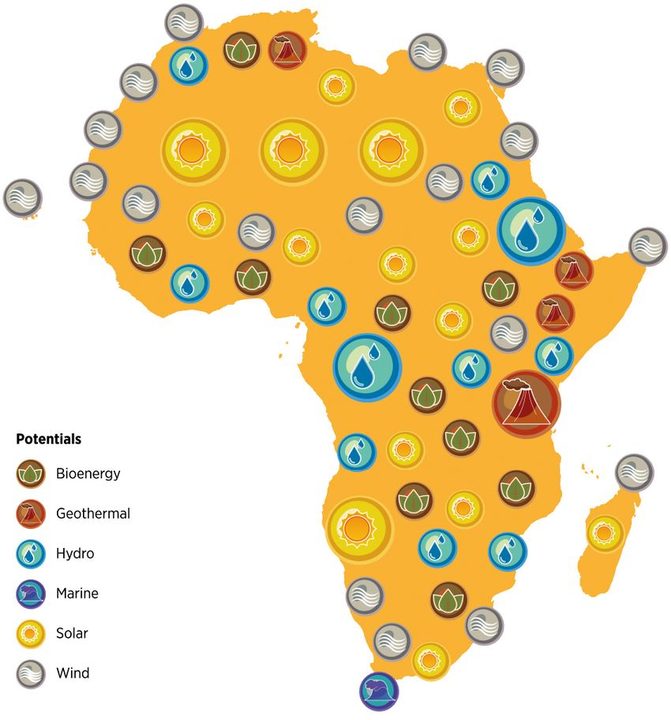
Mission 300 is the scoreboard worth watching. It is the joint effort by the African Development Bank and the World Bank to connect an additional 300 million Africans to electricity by 2030. In late May, the African Development Bank launched a public progress tracker. At launch, it recorded 5.2 million people connected through the Bank’s own supported operations and 74 active energy access projects. It also recorded 35 million more people expected to gain access through the current portfolio, US$9 billion approved for aligned operations, including US$6 billion from the Bank itself, and 30 National Energy Compacts endorsed. Dr. Kevin Kariuki, the Bank’s vice president for power, energy, climate and green growth, said that as of late May the two banks together had reached more than 50 million people since the mission began. He called that a demonstration of “what is possible when financing, policy reform, and implementation are aligned.”
Fifty million is a real number. So is the distance still to travel. The African Energy Chamber notes that more than 600 million people across sub-Saharan Africa still lack access to electricity. The Chamber’s executive chairman, NJ Ayuk, reads that gap very differently from the Forum’s organizers. At the ARPEL conference in Buenos Aires, in remarks published in early June, he said: “Forget transition. Let’s talk about addition.” In a later statement, he argued that ending energy poverty will take every available resource, with natural gas, renewables, hydropower and existing coal and oil assets all playing a part.
His argument deserves a fair hearing rather than a dismissal. Families without light will not wait for a perfect energy mix. The risk in the “addition” case is the one Nandi-Ndaitwah named: countries left at the bottom of global value chains, exporting raw resources while power stays scarce at home. The real dispute is less about fuel than about ownership and access. On that point, Ayuk and the Namibian president may be closer than their slogans suggest.
For African Americans, this debate has a familiar shape. The Congressional Black Caucus Foundation’s 55th Annual Legislative Conference ran in Washington from Sept. 16 to 20, ending the same day the UN Forum met. As the conference opened, Antoine Thompson, who leads the Greater Washington Region Clean Cities Coalition, urged caucus members to push for more energy and transportation funding for underserved communities. He also urged them to make Justice40 federal law. Justice40 was the Biden-era goal that 40 percent of the benefits of federal clean energy and transportation investment reach disadvantaged communities. His reason was durability. He wants the commitment written into statute “so that no other president can come in and just dismantle programs.”
That fear of promises that can be undone links a coalition leader in Washington to a president from Windhoek. Black communities on both sides of the Atlantic have learned the same lesson. A pledge made at a podium can be withdrawn after an election or a budget fight. Grids, laws and locally owned companies are much harder to take back.
The speeches in New York were good. The measure of the week will be whether the next Mission 300 update shows faster connections, and whether the Nigerian fund’s first projects are owned and staffed by Nigerians. Nandi-Ndaitwah told business leaders that the transition should be counted in jobs. The diaspora can hold her and the chief executives she addressed to that count.

Anand Subramanian is a freelance photographer and content writer based out of Tamil Nadu, India. Having a background in Engineering always made him curious about life on the other side of the spectrum. He leapt forward towards the Photography life and never looked back. Specializing in Documentary and Portrait photography gave him an up-close and personal view into the complexities of human beings and those experiences helped him branch out from visual to words. Today he is mentoring passionate photographers and writing about the different dimensions of the art world.