Image: Dr. Ayo Sekai
A profile of the academic publisher building language, methods, and lasting space for Black scholarship
Dr. Ayo Sekai laughs easily, speaks quickly, thinks widely, and refuses to shrink the truth to make anyone comfortable.
That is part of what makes her work urgent.
She is the founder, CEO, and publisher of Universal Write Publications, a Black-owned social science press focused on publishing Black scholars. She is also a political linguist, poet, and Howard University-trained political scientist whose work examines how language carries power.
In an Unfiltered with FunTimes interview, Sekai spoke about publishing as memory, access, scholarship, identity, and responsibility. Black people, she argues, must be able to tell their own stories, define their own language, build their own scholarly tools, and enter the academic record with authority. “She doesn’t separate language from politics, publishing from power, or scholarship from responsibility.” To her, they have always been parts of the same conversation.
“This is not a new revelation. History has proven that a people who do not know who they are will be defined, and those who do not know their names will be named. This is why memory, identity, and culture are so important and should be protected.”
The press did not begin as an answer. It began as a responsibility.
The power of words
Sekai’s path began in Jamaica, continued in Brooklyn, and matured through years of writing and study. She remembers herself as a quiet child who watched people closely and created characters in her head. Fiction, poetry, and music gave her early ways to work with language.
Migration sharpened her awareness of who gets to define correct language. She arrived in the United States as a teenager after studying in Jamaica’s British-influenced school system. Familiar spellings were marked wrong, and the education she had already completed was not always recognized at the same level. The experience showed her how quickly institutions can turn one language standard into a judgment about intelligence and belonging.
“I’ve always been in love with words,” she said, smiling widely. I love their rhythm, their music, the way they dance across a sentence. I love the weight they carry, the history they remember, and the possibilities they hold. A single word can comfort, provoke, liberate, or erase. That has always fascinated me.
That love matured into scholarship. At Howard University, where she earned her Ph.D. in Political Science, Sekai studied Black Politics and International Relations. Her work as a political linguist focuses on linguistic imperialism, long before it became a household name through political narrative. Dr. Sekai was already looking at the way language becomes policy, law, regulation, and social control.
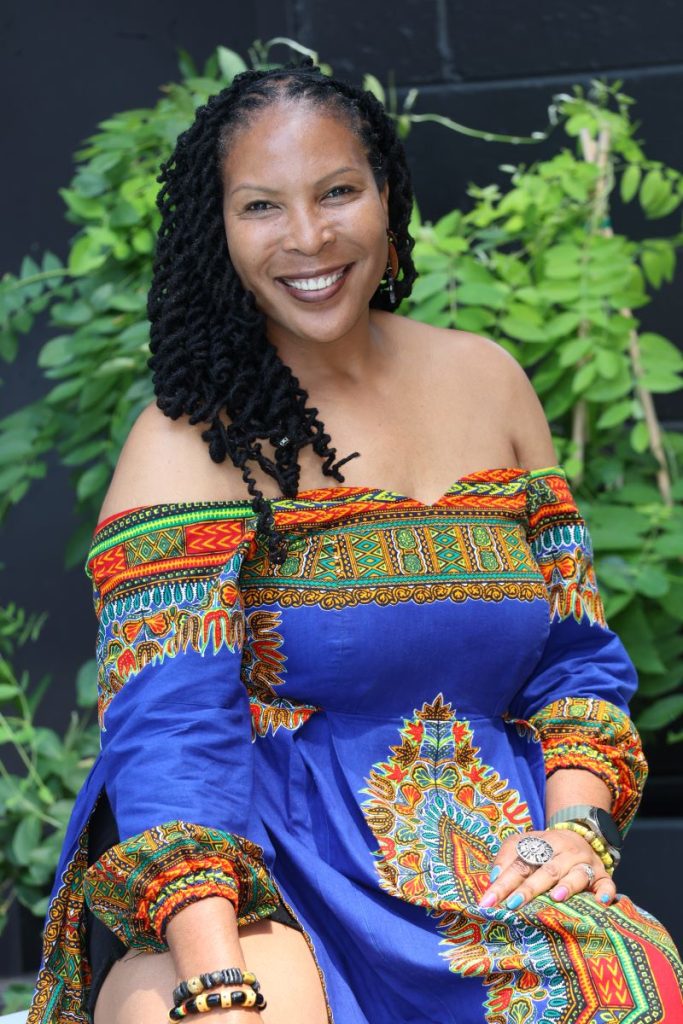
Dr. Ayo Sekai
“As a political linguist, I study what happens when language becomes institutionalized,” she said. “My dissertation on linguistic imperialism examined how words move from ordinary speech into policy, regulation, and law. Once that happens, language begins to shape identity, legitimacy, memory, and access. It no longer simply reflects power; it helps produce it. That realization became the foundation of much of my later work on the Poetical Science Discourse Method and Lexicentrism.”
For Sekai, words do more than describe the world. They help create the conditions people live under. A label can become a public judgment. A phrase can become a policy. A missing citation can erase generations of scholarship. A discipline without its own language can be treated as secondary, even when it carries centuries of knowledge.
That is why Sekai speaks with such force about naming. She understands the cost when Black people are named by others, studied by others, and excluded from the systems that decide what counts as knowledge.
“When we lose the language to define ourselves, we begin to lose more than words,” she said. “We lose the memories they carried, the histories they preserved, the communities they connected, and the cultural inheritance that tells us who we are. Long before identity disappears, language has already begun rewriting it.”
Universal Write Publications is not the answer to a challenge. It is the consequence of a realization.
Why academic publishing matters
Published scholarship is often mistaken for the end of research. In reality, it is the beginning of a different kind of life.
A book enters a library. An article appears in a database. A citation finds its way into another scholar’s work. A theory is assigned in a graduate seminar, debated at a conference, referenced in a grant proposal, or taught to students who may never know the name of the person who first imagined it. This is how disciplines are built—not only through ideas, but through the institutions that preserve, circulate, and legitimize them.
When Black scholars are absent from that ecosystem, it is not simply individual careers that are diminished. The scholarly record itself becomes incomplete.
“People often think publishing is about writing a book,” Sekai said. “It’s much bigger than that. Publishing is how scholarship enters the life of a discipline. It determines what is taught, what is cited, what receives funding, what earns tenure, and ultimately, what future generations come to understand as knowledge. If your work is never published, it is much harder for it to shape the conversations that define a field.”
Sekai sees academic publishing as a series of gates that most readers never notice.
A scholarly idea does not become part of a discipline simply because it is compelling. It must survive peer review, satisfy disciplinary expectations, be indexed and cataloged, enter library collections, become discoverable through scholarly databases, and eventually find its way into classrooms, bibliographies, and conversations that shape a field. Each stage confers another layer of legitimacy. Together, they determine not only what is read, but what is remembered.
For many Black scholars, she believes, the negotiation begins long before the first manuscript reaches a reviewer. Their questions are often expected to justify themselves before they can be explored. Their methodologies may be viewed as unconventional because they emerge from intellectual traditions that have too often been treated as peripheral rather than foundational. Their language, theoretical frameworks, and even their relationship to the communities they study are scrutinized in ways that reveal an enduring assumption about who is permitted to produce authoritative knowledge.
“We are not simply applying theory,” Sekai said. “We are drawing from our own epistemologies, our own ontologies, and our own histories. Every scholar writes from somewhere. The difference is that Black scholars are often asked to defend where they stand before anyone is willing to engage what they have to say. For me, our history, our identity, and our scholarship are not separable. They inform one another.”
Sekai insists on rigor. She also insists that rigor should allow Black scholars to bring their communities, histories, and intellectual traditions into the work.
That is where Universal Write Publications enters. The press exists to make room for scholarship that might otherwise be delayed, dismissed, softened, or mishandled by institutions that do not fully understand its origin or purpose.
The work of building a canon
A canon is more than a collection of books. It is a map of authority.
It tells students whom to read. It tells scholars whom to cite. It tells institutions what counts as foundational. It tells future generations where to begin.
Sekai wants Black scholarship to be part of that foundation.
The press publishes across Black Studies, Africology, political science, psychology, methodology, theory, education, and related fields. It carries the work of major scholars and opens space for emerging voices. Sekai mentioned scholars and intellectual traditions that shaped her own awakening, including Molefi Kete Asante, Maulana Karenga, Wade Nobles, and others whose work has helped define African-centered thought.
One of the most revealing parts of her story comes from her first encounter with Asante. As she tells it, she discovered him while working on a class assignment during her doctoral studies. That encounter became more than an academic exercise. It became a summons.
Asante learned that she had owned a publishing company since 2004. He challenged her to understand that the ancestors had given her work to do. He then gave her a test: publish a scholarly book on Charles Fuller, the Pulitzer Prize-winning playwright known for A Soldier’s Play.
Sekai accepted the challenge. The result, she said, became the only published book on Fuller’s life. Fuller died two years later.
“This is the impact that happens when we step in,” she said.
That experience helped clarify her direction. Publishing could rescue memory. Publishing could document genius. Publishing could make sure a life did not pass without a scholarly record.
Her motto, “We will tell our own story,” is more than a slogan. It is a declaration of ownership.
“We need to give each other access,” she said. “That changed the narrative.”
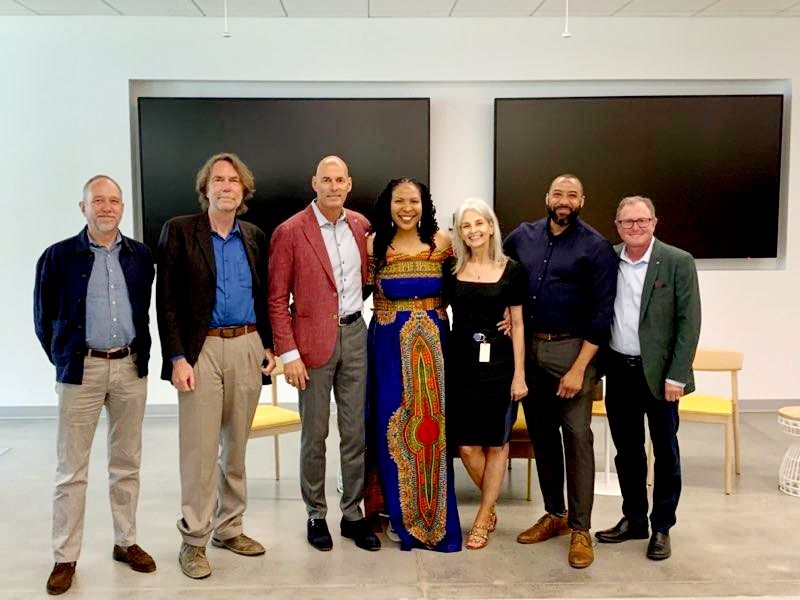
Dr. Ayo Sekai with Sage Publications CEO Blaise Simqu, Senior Executives, and Vice President, and Executive Advisor, Geane De Lima.
Gratitude for access
The partnership with Sage Publications enters Sekai’s story as a turning point, but her work began long before that door opened.
Sekai speaks of Sage with deep gratitude because, in her view, Sage shared access without taking control. At a time when many companies issued public statements of solidarity with Black communities, Sage looked for a Black-owned publisher already doing serious mission-driven work. Sekai says they reviewed several publishers before choosing Universal Write Publications.
What followed was no acquisition, no takeover, no branding exercise. Sage gave support, knowledge, visibility, training, and institutional credibility while allowing Universal Write Publications to remain independent.
“This time they wanted to partner with a company who was doing their own work, with their own mission, with their own purpose,” Sekai said. “They opened the floodgates.”
Sekai recalls wondering why she had been chosen. The answer, as she understood it, was tied to purpose, preparation, ethics, and the willingness to carry knowledge back to community.
“They were looking for the right person to give back to,” she said. “Somebody driven, somebody hungry, somebody who would take that knowledge and pass it on.”
Her gratitude reads as stewardship. The access was never for her alone. The value of the partnership was in what she could return to the community: stronger systems, better publishing standards, wider distribution, more credible books, and a pathway for Black scholars whose work deserved to be part of the academic record.
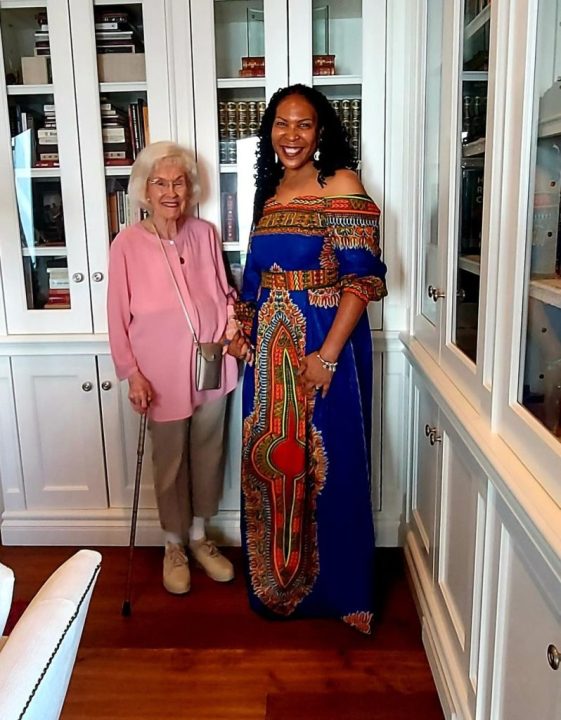
Sara Miller McCune, Founder of Sage Publishing, and Dr. Ayo Sekai.
Read also: Someone Has to Be the First: Leslie Short on Opportunity and Courage
The outlaw thread
Sekai’s story carries a striking thread of fearless independence.
She sees a connection between her own work and the founding spirit of Sage. She described Sage founder Sara Miller McCune as a woman who built an independent company and took risks on scholarship others would not support. Sekai linked that history to the publication of the Journal of Black Studies, which became an important academic space for Black scholarship.
The connection is a shared refusal to accept the limits handed down by gatekeepers.
Sekai wants Black scholarship to stand with rigor, cultural truth, and intellectual fire.
McCune offered a piece of advice Sekai has carried ever since.
“Build the institution you believe should exist,” McCune counseled. “Do not diminish its purpose for the sake of wider approval. Scholarship earns its authority through integrity, not accommodation.”
She describes herself as “a bit radical,” and the description fits, though not in the way the word is often understood. Her radicalism is disciplined. It is found in what she chooses to protect, what she refuses to compromise, and the quiet conviction that institutions worthy of enduring are built one principled decision at a time.
Along the way, there were a handful of people who recognized that conviction before she fully recognized it herself.
Sara Miller McCune, the founder of Sage, reminded her never to dilute the mission for the sake of acceptance. Blaise Simqu, Sage’s Chief Executive Officer, affirmed that there was room for scholarship that expanded the boundaries of the academy rather than conforming to them. But it was Geane De Lima, her executive adviser and mentor through Sage’s advisory council, who helped her discover something even more difficult than building a publishing house: the confidence to inhabit her own calling.
There were moments, Sekai admits, when the road felt lonely. Before the awards, before the recognition, before established scholars entrusted their life’s work to Universal Write Publications, there were closed doors, unanswered emails, and long stretches when the vision seemed larger than the resources available to realize it. In those moments, De Lima became more than an adviser. She became a steady voice reminding Sekai not to measure the worth of the vision by the speed of its acceptance.
“They taught me something that had nothing to do with publishing,” she reflected. “They taught me that institutions are not built because everyone believes in them. They’re built because someone is willing to believe in them long enough for everyone else to finally see what was always there.”
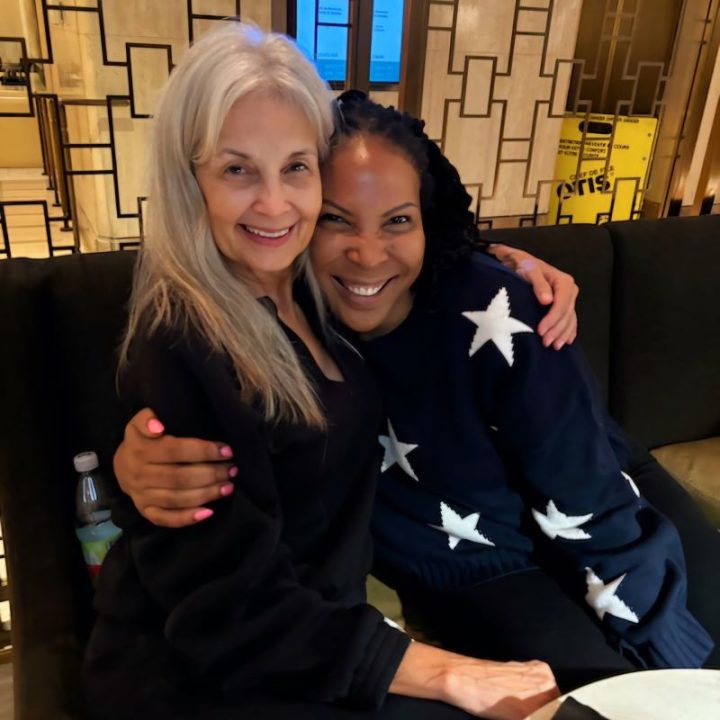
Geane De Lima, Executive Advisor of Sage Publishing, with Dr. Ayo Sekai.
The Little Black Book and The Black Lexicon
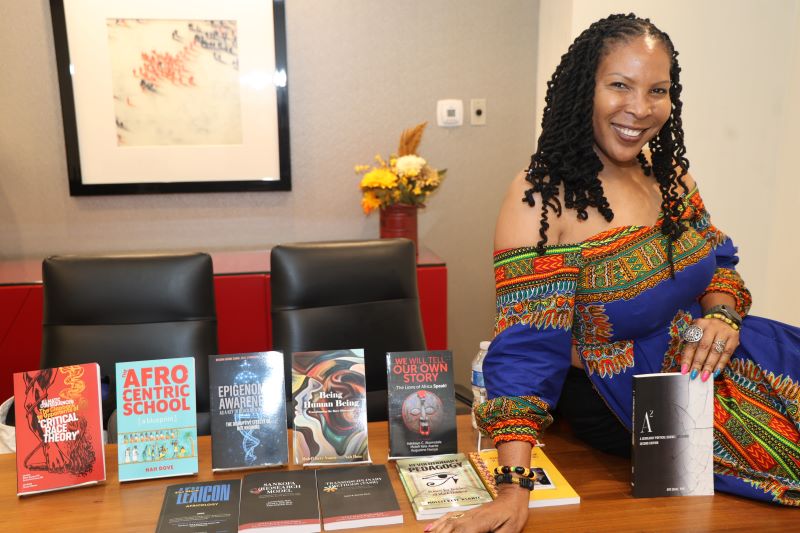
Sekai’s next priorities are the Little Black Books series in research methodology, theory, and practice, and the Black Lexicon series. Both respond to the same problem. A field needs its own terms, definitions, theories, and methods if students are going to enter it fully.
“Any discipline cannot survive without its own language,” she said.
The Little Black Books center methods developed, practiced, or sharpened through Black scholarly experience. The Black Lexicon provides definitions, histories, and applications for concepts used across Black Studies, Africology, Black Psychology, and related disciplines.
Sekai has been advised more than once that explicitly centering Black scholarship could make the work less commercially attractive. She has never viewed publishing through that lens. Markets fluctuate. Intellectual responsibility does not.
“I’m not publishing against anyone,” she said. “I’m publishing for something. I’m investing in scholarship that deserves to become part of the permanent academic record.”
Her goal for the next five years is ambitious and specific. She wants both series to become foundational resources for scholars, professors, and students. That requires peer review, distribution, marketing, institutional trust, and continued independence.
“In the next five years, I want the Little Black Book series and the Black Lexicon to be the foundational canon material,” she said.
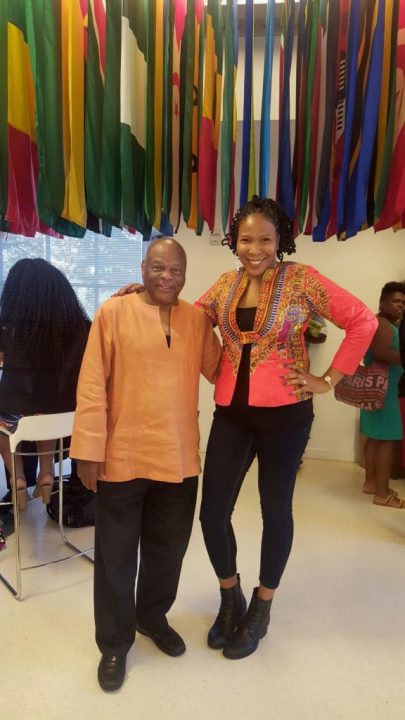
Dr. Asante and Dr. Sekai
Leaving a trail
Sekai’s work belongs to a longer tradition of Black publishers who created space before her. She speaks about that history with gratitude because every opening carries evidence of someone else’s labor. She also understands that influence must be handled carefully.
“That means you do not violate people’s trust. You do not hurt people. You do no harm,” she said. “That has to come with integrity.”
She wants Black scholars to enter the record without being filtered through suspicion. She wants students across the African diaspora to recognize themselves in serious academic language. She wants libraries to carry the books, professors to assign them, and graduate students to cite them.
Canon-building is slow work. It demands money, time, credibility, and the courage to keep naming the people the work serves. Sekai measures success by what remains available to those who come after her.
“We have to leave breadcrumbs and trails so that the next generation after us can follow,” she said. “Every publisher makes a choice about what they are willing to invest in,” she said. “I’ve chosen to invest in scholarship that strengthens our intellectual infrastructure, preserves our knowledge systems, and leaves something enduring for the generations that follow.”
Dr. Ayo Sekai is building books, language, methods, and a scholarly home. Her fight is to secure a permanent place for Black knowledge in the world’s intellectual record. She approaches that work with gratitude, discipline, laughter, and no interest in asking permission.

Dr. Eric John Nzeribe is the Publisher of FunTimes Magazine and has a demonstrated history of working in the publishing industry since 1992. His interests include using data to understand and solve social issues, narrative stories, digital marketing, community engagement, and online/print journalism features. Dr. Nzeribe is a social media and communication professional with certificates in Digital Media for Social Impact from the University of Pennsylvania, Digital Strategies for Business: Leading the Next-Generation Enterprise from Columbia University, and a Master of Science (MS) in Publication Management from Drexel University and a Doctorate in Business Administration from Temple University.