
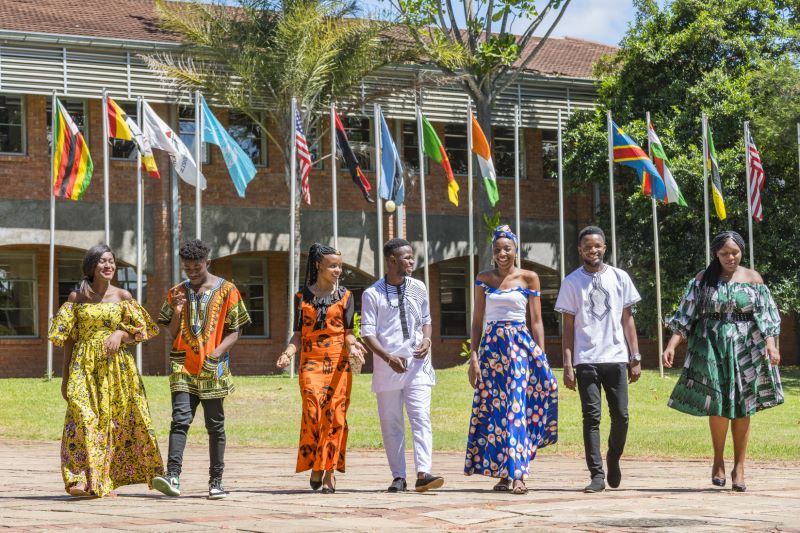
Source: African University
On September 30, Times Higher Education published its 2027 World University Rankings in the middle of a global summit hosted at the University of Cape Town, the first of its kind held in Africa, according to UCT.
For a student in Lagos or Nairobi, and for an African American family weighing options abroad, that setting matters. My view is that African universities are becoming a serious first choice, not a fallback. The evidence supports that, with caveats I’ll spell out.
Start with the numbers, because they point in two directions. In the QS World University Rankings 2027, released on June 18, UCT placed 184th, down from 150th. UCT says it remains the highest-ranked university on the continent and has stayed in the global top 200 for a fourth straight year. It also improved on employment outcomes (40th in the world) and academic reputation (179th).
This week’s THE table told a different story. UCT rose to joint 147th from joint 164th, and THE names it the highest-ranked university in sub-Saharan Africa. Daily Maverick reports that this is UCT’s best showing in seven years and its first return to the top 150 since the 2020 edition.
Two tables, two directions. That isn’t a contradiction. It’s a reminder that rankings weigh different things. UCT’s own account of the QS result notes that QS emphasises reputation and global perception, and it lists data glitches and employer-survey response pools among the things to fix. A student who chooses a university on one number is making a mistake, anywhere in the world.
What persuades me more than any single position is the breadth behind it. THE reports that the number of ranked institutions in sub-Saharan Africa rose from 55 to 69 this year, with Nigeria holding the most at 29. Reporting from the summit, Daily Maverick adds that South Africa now has 17 ranked universities, four more than last year. Five of them (UCT, Wits, Stellenbosch, Johannesburg and Pretoria) are in the global top 500, and Pretoria reached its best showing yet, the 451-500 band.
QS’s first-ever Sub-Saharan Africa ranking, published earlier this year, offers a regional view. The top seven institutions are South African. The University of Ghana is eighth, Nigeria’s University of Ibadan 11th and Ethiopia’s Addis Ababa University 13th, with Uganda and Kenya also in the top 20. QS itself concluded that strong performance isn’t confined to a single country. It also amended its methodology for this regional table, so I’d treat its positions as a separate lens, not a continuation of the global list.

Source: Times Higher Education
The most useful voice here is African. In a THE opinion piece published two days before the results, UCT Vice-Chancellor Mosa Moshabela writes that African universities have spent decades judged by what they lack, and argues for engaging with rankings “on our own terms.” He adds that rankings miss things like a lecturer who spends extra hours keeping first-generation students from falling through the cracks. That’s the caveat every prospective student should carry.
Here is the practical question the tables can’t fully answer. QS does measure employment outcomes, and UCT’s 40th place there is impressive. But it’s an institution-wide indicator. It can’t tell you what happens to graduates of the specific degree you’re considering. African leaders are candid about the gap. Moshabela told the summit that South African universities lack strong industry partnerships, and Higher Education Minister Buti Manamela tied the issue to youth unemployment, saying universities must “train for employment.”
The same coverage reports that UCT is training students in AI at different skill levels and has switched off its AI-detection tools, choosing to teach responsible use instead. A flagship African university making that bet publicly is what a first-choice institution does.
My advice to the class of 2027: treat rankings as a starting point and compare more than one. Look beyond the top spot, and ask every school where its graduates in your field actually work. The old assumption was that the best education was always somewhere else. The 2027 data doesn’t disprove that for every student, but it makes the assumption much harder to defend.

Anand Subramanian is a freelance photographer and content writer based out of Tamil Nadu, India. Having a background in Engineering always made him curious about life on the other side of the spectrum. He leapt forward towards the Photography life and never looked back. Specializing in Documentary and Portrait photography gave him an up-close and personal view into the complexities of human beings and those experiences helped him branch out from visual to words. Today he is mentoring passionate photographers and writing about the different dimensions of the art world.