Courtesy: Diamond Jones
There are moments in your life that split everything into before and after. This was one of mine.
I was in labor with my first baby, a boy we had already decided to name after his dad. The excitement, mixed with pain and confusion, made everything feel like a blur. But there are parts I will never forget.
I had been waiting for two hours just to get into a labor room, two hours waiting for relief, waiting for the epidural. The contractions weren’t giving me a break. They came hard and close, one after another, like waves that never pulled back.
Every few minutes, a nurse would come in and say, “That was a big contraction.” Then they would reassure me, “The anesthesiologist will be here soon. After almost 2 hours, it started to feel like a lie.
Still, I held on. I tried to stay in good spirits, breathing through the pain, holding onto the excitement of meeting my baby.
And then, in an instant, everything changed.
The room filled up, not one nurse, not two, but at least eight. Voices started overlapping, each giving me a different command: “roll over, sit up, take deep breaths.” I was confused, in pain, and starting to feel overwhelmed as nothing seemed to help. My baby’s heart rate was dropping, and mine was spiking, fast.
Movements got faster, and the energy shifted in a way you can feel before anyone says a word. Something was wrong.
I looked for my partner for comfort, but he was gone. I saw him walk into the bathroom and close the door. At that moment, I thought he couldn’t watch me in that kind of pain and panic. I told myself maybe it was too much for him, me, our unborn son, everything happening all at once.
Now I know he was in there praying.
“Turn to your right side, now turn a little more to the left”. Machines started beeping louder and faster, like they were trying to say what no one wanted to say out loud.
Panic.
Eventually, the nurses took a step back, as if they had done all they could. I remember looking around, trying to read faces. No one looked calm. Just looked at “wells” and “what to do now.” No one looked like they had control of the situation. And in that moment, without anyone clearly explaining it to me, I sat there in pain and panic for my baby and slight denial of the situation as a whole. Now I see clearly, things were happening to me, not with me.
And then… she walked in.
It was my first time ever seeing her. I did not know her personally. But I will never forget her for the rest of my life.
A Black doctor.
She didn’t rush in with panic. She came in with presence. She was calm and gracefully showed her authority. She spoke to everyone with clarity and brought the kind of energy that makes you feel like maybe, just maybe, everything is going to be okay. Within seconds, it was. As she assessed the situation, there was no guessing, and she definitely did not react emotionally. She knew what she was looking at, and she did not waste any time doing what needed to be done.
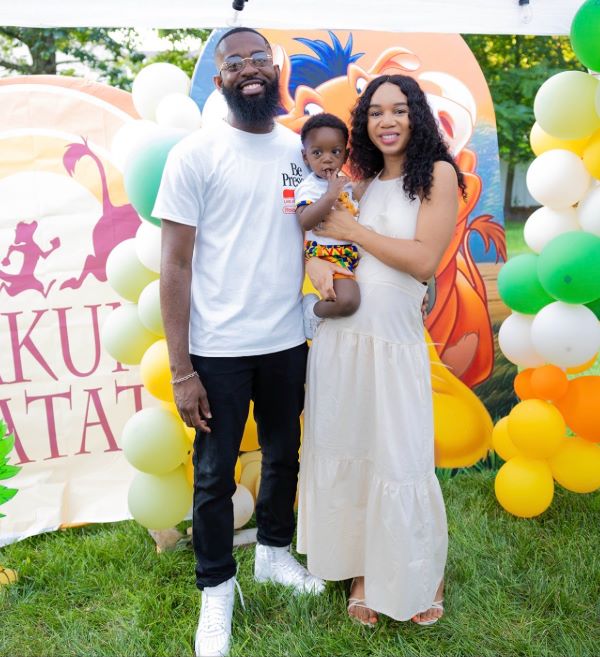
Courtesy: Diamond Jones
Read about Black Maternal Health and Childcare : Centering Black Mamas and Babies in Maternal Health Matters
No chaos. No confusion. Just precision and care. Within two minutes, everything changed. My baby’s heart rate stabilized, and my body responded. The urgency in the room dissolved.
Just like that, the same room that had been filled with fear moments before went quiet. Controlled. Grounded.
And the C-section that everyone had already mentally decided on? It never happened.
I continued my labor, and the next morning, I delivered my baby without surgery. To this day, my husband and I still talk about that moment. We still sit with it and still feel the weight of how differently our story could have gone if she hadn’t walked in when she did.
Because here’s the truth that doesn’t get talked about enough:
Sometimes, it’s not that your body is failing.
Sometimes, it’s not that surgery is the only option.
Sometimes, it’s about who is in the room.
What I did not fully understand at that moment was that experiences like mine are not uncommon. In an MI Blue Daily article featuring Dr. Patricia Ferguson, a Black medical director and physician, she highlights that Black women are 21% more likely to undergo C-sections during their first birth, even when classified as low-risk and preferring vaginal delivery.
These disparities reflect broader patterns in maternal healthcare, where clinical decisions and outcomes can vary significantly based on race, hospital systems, and provider practices. What felt like chaos in that room was part of something much larger than me.
Who sees you? Who listens. Who has the experience and the willingness to pause, assess, and choose a different path? That moment changed how I see birth and advocacy. It changed how I understand the importance of being heard, especially as a Black woman navigating the healthcare system.
I experienced the difference, and I know what it feels like to be surrounded by people ready to escalate… and then to be saved by someone who knows how to de-escalate. I will never stop being grateful for that. Not just because she helped me avoid surgery, but because she reminded me that in one of the most vulnerable moments of my life, my body wasn’t the problem. It just needed the right person to listen.
Too many Black women don’t get that moment. C-sections have saved thousands of lives, but today, too many are being performed on low-risk Black women. The American Pregnancy Association notes that C-sections are major abdominal surgeries and can come with complications such as infection, blood loss, blood clots, injury to surrounding organs, and longer recovery times compared to vaginal birth.
Before and after don’t just mark a moment; they mark what you survived.
April is recognized as C-Section Awareness Month. It is the perfect time to reflect on how and why cesarean births happen, and the disparities that exist in maternal care.

Diamond Jones joined the FunTimes family as an intern while earning her Bachelor’s degree from Temple University. After graduating in 2018, Diamond decided to stay with FunTimes continuing her role as a writer and content creator for social media. In addition to writing, she also enjoys reading, traveling, and art. Working at a magazine has always been a dream. As a child, she would collect and study popular entertainment publications such as Word Up and Teen Vogue. Diamond hopes to continue to create content that will inspire and entertain.