
Source: Shutterstock
“You are a man, pull yourself together.” “Be strong, pray about it.” “We don’t do that here.” These are not just passing statements; they are deeply ingrained responses that have become part of the daily experience of Black men and women. Across homes, communities, and society at large, such phrases shape how individuals are expected to confront the everyday challenges that define their lived realities.
For centuries, Black men have often received the short end of the stick. Strength is demanded of them, regardless of the struggles they face. They are expected to endure silently while society replaces vulnerability with grit and a rigid idea of masculinity.
Over time, many have learned to bury their frustrations and emotional struggles in the dark recesses of their minds, embracing society’s unforgiving stance against perceived weakness while pushing forward. In this construct, vulnerability is punished, and as a result, it becomes a luxury that many Black men feel they simply cannot afford.
Black women, too, have not been spared. In today’s high-performance society, they occupy multiple roles: provider, protector, nurturer, and burden bearer, all while grappling with the harsh reality that weakness is rarely tolerated. They are expected to be endlessly strong, serving as the backbone of families and communities, even as their own emotional needs are sidelined. The result is a collective cycle where everyone carries heavy burdens, yet very few spaces exist where those burdens can be safely laid down.
We have celebrated resilience so intensely that we have failed to interrogate its consequences. “From those historic misconceptions, we learned to ignore mental health symptoms or call them other terms, like ‘stress’ and ‘being tired.” Christine M. Crawford, MD, MPH, notes in a publication by the global mental health awareness platform – Deconstructing Stigma: Changing Attitudes About Mental Health, titled Understanding Mental Health in Black Communities.
We have not fully examined its long-term impact on the mental health of Black communities. Somewhere along the line, survival became more important than healing, while endurance has been replaced with emotional processing, and strength has become synonymous with silence.
Today, mental health challenges are an increasingly urgent issue within Black communities, yet many individuals continue to suffer in isolation. The silence persists not because the pain is absent, but because it has been normalized.
A People Born Out of Struggle
The roots of this silence are neither accidental nor superficial. They are deeply embedded in a history shaped by struggle. Generations of Black communities have endured colonial disruption, systemic racism, economic instability, and social displacement. Within such environments, emotional vulnerability was often seen as dangerous or even impractical. Strength was not just encouraged, it was necessary for survival.
This necessity has evolved into expectation. What began as a protective mechanism hardened into cultural identity. Strength became synonymous with endurance, and endurance often meant suppressing emotional pain. This is where the stigma around mental health took root.
In many Black communities, mental health challenges are still interpreted through moral or spiritual lenses rather than medical or psychological ones. Anxiety is dismissed as a lack of faith, depression is framed as ingratitude for the gift of life, and trauma is often minimized as a temporary phase that one is expected to outgrow. Even where awareness exists, there remains a quiet reluctance to fully engage with solutions. The problem may be acknowledged, but the pathways to healing are frequently avoided or dismissed.
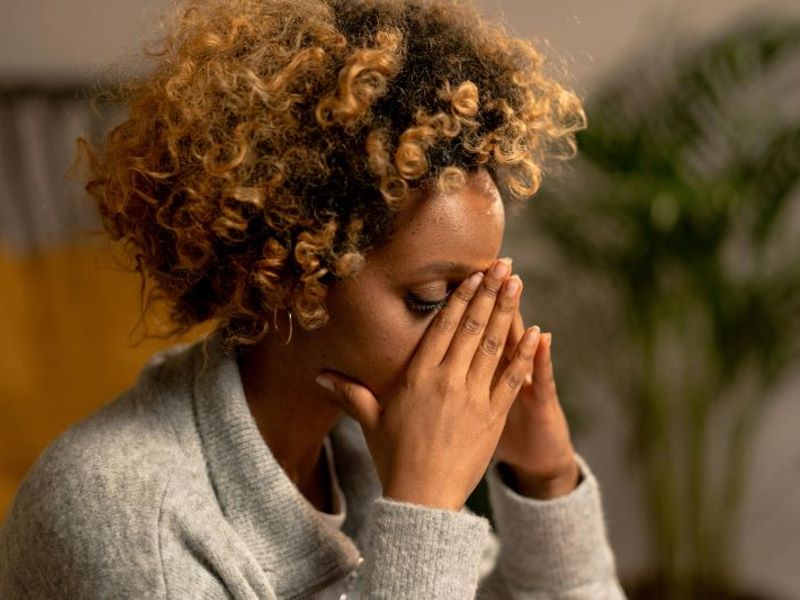
Faith institutions, which have historically served as pillars of support and resilience, also play a complex role in this dynamic. For many, the church or spiritual community is the first place of refuge in times of distress. These spaces have provided comfort, identity, and hope for generations.
However, in some instances, they unintentionally reinforce silence by offering spiritual prescriptions where professional mental health intervention may also be necessary. The Columbia University Department of Psychiatry, buttresses this in an article titled– Addressing Mental Health in the Black Community. “In the Black community, there is often difficulty acknowledging psychological difficulties, but useful strategies, including religious coping and methods such as pastoral guidance and prayer, often are the most preferred coping mechanisms.”
Source: Pexels
Prayer is powerful. It provides strength, clarity, and peace. But understanding when therapy is needed, alongside spiritual guidance, is essential. Recognizing this balance can make a significant difference in how quickly and effectively individuals receive the help they need.
Changing the Narrative
Across the continent and throughout the diaspora, a new generation is beginning to challenge these long-standing narratives. The silence, though still present, is no longer as absolute as it once was. Younger Black individuals are increasingly refusing to accept the societal restrictions, expectations, and inherited burdens carried by those before them.
They are asking different questions. More importantly, they are interrogating beliefs that were once considered unquestionable. Rather than suppressing their struggles, many are choosing to speak openly about their experiences. They are rejecting the idea that suffering must be endured in silence, particularly when it leads to overwhelming mental and emotional strain.
In 2026, conversations around mental health are becoming more visible in spaces that once avoided them entirely. Social media platforms, for instance, have emerged as unlikely arenas of vulnerability. Individuals now share their experiences with anxiety, burnout, and depression in ways that are raw, honest, and often unfiltered.
Of course, these platforms are not without their challenges. Issues such as misinformation, performative vulnerability, and comparison culture cannot be ignored. Yet, despite these complexities, their impact cannot be dismissed. They have played a significant role in amplifying conversations around mental health. They have made it easier for people to recognize that their struggles are not isolated. And in many cases, that realization is the first step toward seeking help and beginning the healing process.
There is also a growing presence of Black mental health professionals, advocates, and wellness entrepreneurs who are actively reshaping how care is delivered and received. When individuals see therapists and mental health advocates who look like them and understand their cultural context, language, and lived experiences, this builds trust. The idea of seeking help becomes less intimidating and far more accessible.
Even within professional spaces, there is a noticeable shift. Conversations around burnout, work-life balance, and emotional well-being are becoming more frequent, particularly among younger Black professionals. Many are no longer willing to sacrifice their mental health at the altar of productivity or financial gain. This marks a significant departure from previous generations, where survival often meant enduring toxic environments without question.
Moving Beyond Awareness to Action
While awareness is a critical first step, it is not sufficient on its own. It is one thing to post about mental health or organize seminars aimed at raising awareness. It is another to actively seek therapy, to recognize signs of mental distress in others, and to create environments where such issues can be addressed without judgment.
Creating safe spaces is essential. Spaces where individuals can speak openly without fear of ridicule or dismissal. Spaces where vulnerability is not seen as weakness, but as an honest expression of humanity. This requires intentional effort from individuals, families, communities, and institutions alike.
Breaking the silence begins with shifting internal narratives. Moving from “What will people think?” to “I feel safe enough to share my struggles” is a crucial transition. Without this shift, progress will remain limited. Breaking the silence is not a one-time act. It is a continuous, and often uncomfortable, process of unlearning, learning and rebuilding.
For Black communities, this also means redefining what strength truly looks like. Perhaps strength is not measured by how much one can endure, but by the willingness to acknowledge when the burden becomes too heavy and when help is needed. Perhaps resilience should not be defined solely by endurance, but also by the capacity to seek help, to rest, and to heal.
Communities, families, and faith leaders all have a role to play. Normalizing emotional conversations is a critical step. Integrating mental health awareness into teachings, moving beyond token acknowledgement to meaningful support systems, and creating accessible resources within schools and workplaces can all contribute to lasting change.
Above all, individuals must find the courage to speak, seek help, ask questions, and choose healing, even when it feels unfamiliar or uncomfortable.

Okechukwu Nzeribe works with the Onitsha Chamber of Commerce, in Anambra State, Nigeria, and loves unveiling the richness of African cultures. okechukwu.onicima@gmail.com