Smarteeee, CC0, via Wikimedia Commons
For many, death signals finality, the end to one’s sojourn in the world, and a period of grief for friends, families, and dear ones left behind to cling to the memory of what was, even as they take steps to move on with their lives with only the fading memories of those whom they have lost.
But for the Malagasy people of Madagascar, death did not signify the end but provided an opportunity for continued renewal and strengthening of family as well as social bonds, while also establishing a continued connection between the living and their ancestors. This practice is known as Famadihana, also referred to as the turning of bones.
For the Malagasy people, Famadihana allows them to pay respect to their dead ancestors, strengthen the bonds between generations, as well as look after their well-being in the other world through the rites performed on their corpses
Celebrating the Dead
Death for the Malagasy is only a transition from one stage of existence to another. As noted in an article by Ed Gallois titled – Death around the world: Famadihana in Madagascar, he pointed out that “It is a common belief in Malagasy culture that the spirit does not immediately depart after death. So long as the body remains, the spirit is still part of this world. Accordingly, Malagasy families must care for their loved ones and ancestors until they can pass into the afterlife, when their body has rejoined the earth.”
For these people, the relationship between the living and the dead must continually be nurtured and renewed, hence the effort at exhuming bodies of dead relatives and rewrapping their remains in new, clean materials as a symbol of their respect and recognition of the role and presence these ancestors have played in their lives.
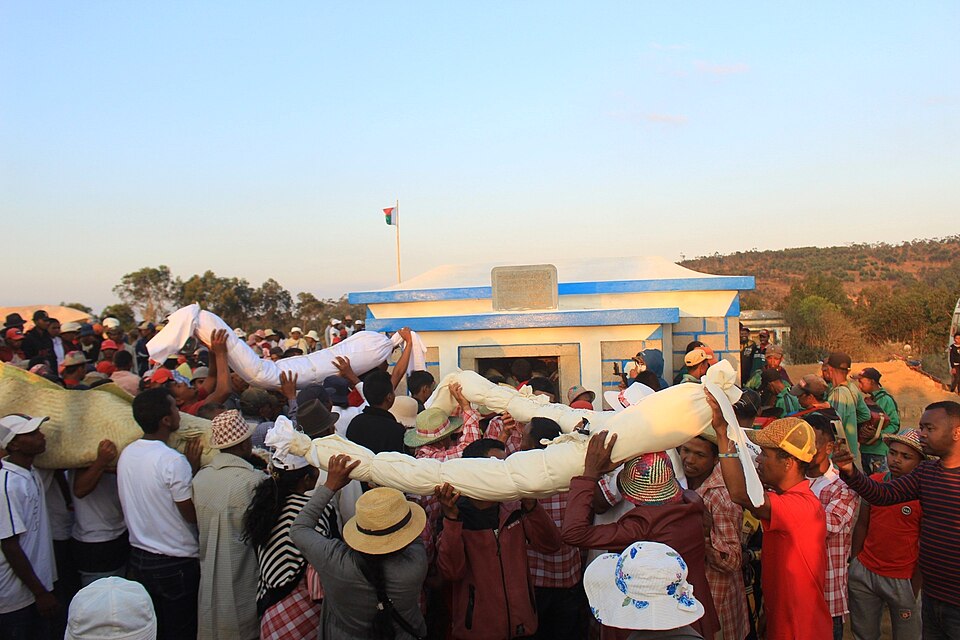
MPMF24, CC BY-SA 4.0, via Wikimedia Commons
The Ritual
Famadihana occurs every seven years but could also come early depending on circumstances. As the day approaches, families from all across converge in the village to participate fully in the year’s celebration.
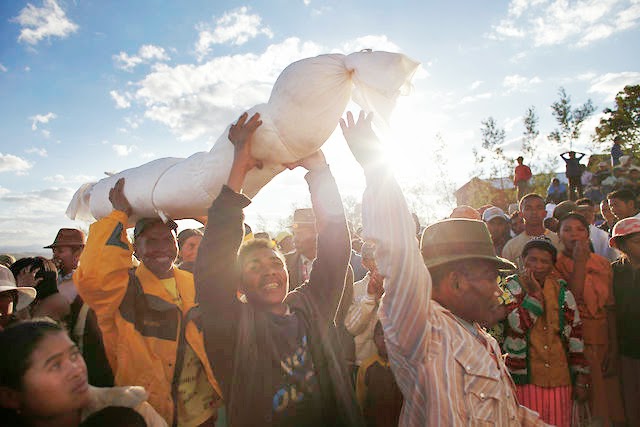
On the appointed day, family members as well as the community meet at the tomb of the departed ancestors as the process of exhuming the corpse begins. Once exhumed, the deceased relatives are then clothed in new garments. The exhumed corpses are then carried with singing and dancing to elders who would give the customary blessings before the commencement of festivities. The dead ancestors are then introduced to the new addition to the family, while also using that opportunity to help these new members familiarize themselves with their ancestry and understand the connecting bonds.
During the event, families seize the opportunity to provide updates to their ancestors by speaking to the bones of their ancestors. They share family news, important achievements of family members still alive, while seeking their blessings and guidance as well. This ritual occurs as often as possible, as it is noted that the ancestors will finally rest in peace after several Famadihana festivals. As noted by mykajabi.com in an article Exploring Famadihana: Madagascar’s ‘Turning of the Bones’ Tradition, it was pointed out that “It’s believed that the spirits of the deceased are not fully at peace until they have undergone Famadihana multiple times, strengthening the connection between generations.”
This is then accompanied by festivities which could run into several days, with relatives and family members sharing stories about the life and time of the deceased. Children are also introduced to their ancestors, while the event presents a great opportunity to resolve family conflicts.
At the conclusion of the celebration, the wrapped remains are returned to the tomb. This concludes the celebration until the next event.
Significance of Famadihana
Though the ceremony is over, the significance of the festivities is not lost to the Magalasy people as the spirits of the ancestors are believed to remain within the community and family, offering blessings, guidance, and protection to the household.
The festival also plays an impactful role in strengthening family bonds, values, and driving cohesion. Family members who participate actively in this festival learn much about their history. The event, which brings together several generations, provides an opportunity to learn songs, dances, and folktales that help them have a deeper understanding and appreciation of their culture and heritage.
Also, the festival contributes to growing the economy of the community. As a result of the influx of many people, the need to meet the demands for the supply of meals, shrouds, and other festive requirements can help boost the local economy and generate more activity.
Famadihana also helps sustain tradition and culture as the festivity is transferred from one generation to the next, who continually see to it that the norms and values remain the same or are continually improved upon.
Another impact of the festival is the uniting of communal bonds. The event is not just isolated to individual families alone; the community gets actively involved in rendering assistance in whatever circumstance the family would require it.

Okechukwu Nzeribe works with the Onitsha Chamber of Commerce, in Anambra State, Nigeria, and loves unveiling the richness of African cultures. okechukwu.onicima@gmail.com