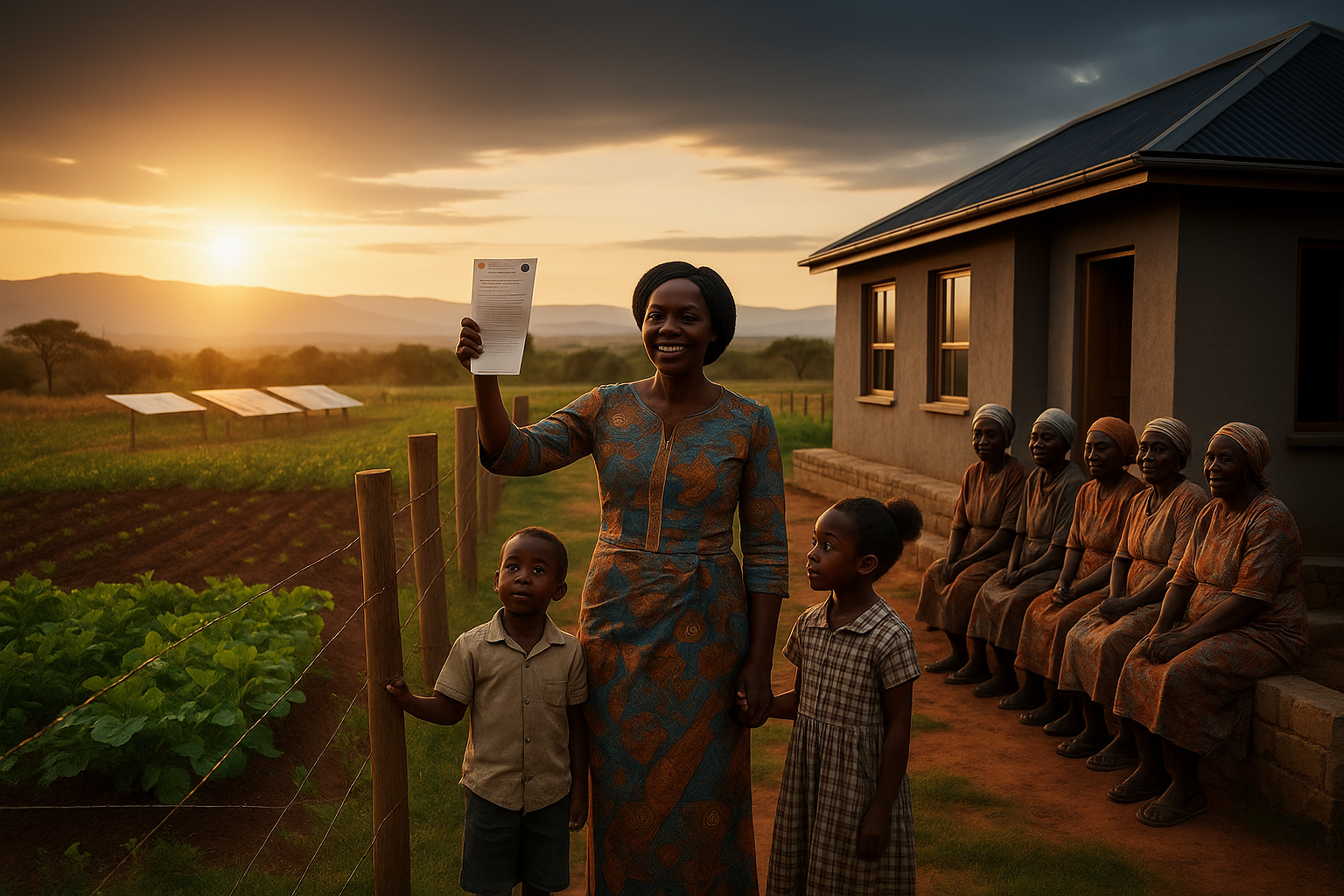
Image: AI Generated
Land ownership has always been a matter of great importance in Africa, and in modern times, land acquisition and property ownership confer a certain measure of economic empowerment.
In all African societies, property rights and ownership have remained non-contestable among men as it is customary to expect that acquisition of land and property rights might come either through inheritance or outright purchase.
This is not the same for women.
To date, a persistent barrier to equal access to land ownership. Many of these restrictions stem from cultural traditions and belief systems that have done nothing but limit women’s access to property rights and ownership thereby undermining the potential growth and stability of African families.
A Restrictive Society
African societies operate on a patriarchal system with men having considerable leverage over inheritance rights and control over investments. Ownership of land and property remained under the control of men, and women’s access was dependent only on marriage.
In some societies, daughters were excluded from the inheritance of land as it is believed that their place is with their future husband who at his discretion can provide access to land without necessarily transferring ownership.
In cases where the supposed husband succumbs to the cold hands of death, in some African societies, extended family members of the husband are known to swoop in to confiscate the said properties and transfer ownership to a male sibling who either holds the property in trust until the children of his late brother come of age or assume complete ownership thereby leaving the grieving widow and children of his brother struggling to fend for themselves.
Continued exclusion of women from access to land ownership and property acquisition has profound implications as it continues to contribute to the stunted growth of African societies while also reinforcing the gender imbalance that limits the influence of women especially in their contribution to the growth of African families.
Without ensuring women’s rights to land and property ownership are encouraged and protected more so in their own names, they continue to remain vulnerable not just to displacement through family conflict but also economic challenges. The security of homes becomes threatened due to their reliance solely on the man whose sudden absence can prove catastrophic for both the widow and the children left behind.
As pointed out by Abby Morrow Richardson in his 2004 publication in the American University Washington College of Law titled – Women’s Inheritance Rights in Africa: The Need to Integrate Cultural Understanding and Legal Reform he noted that “Without secure land and property rights, widows and orphans are often left homeless and destitute after the death of their husband or father.
Disinheritance seriously undermines women’s economic security and independence as well as their access to adequate food and housing. The denial of land rights to women also contributes to the feminization of poverty and stunted economic development in countries where harmful inheritance practices are common.”
Securing Women’s Property Rights Through Empowerment
When given the right knowledge and empowered through access to ownership rights to land and properties, women are capable of not only meeting the daily obligations to the progress of their families, but they also contribute directly to the development of their communities, impact on the national growth as well as achieve financial freedom which impacts the reduction of poverty.
As pointed out by Nisha Arekapudi and Nayda L. Almodóvar-Reteguis in their article – Women’s property rights are the key to economic development, they noted that “the evidence shows that property rights are the key to economic development. When women have access to assets (especially those they are already the primary caretakers of), communities thrive.
It increases their ability to start and grow businesses by giving them the collateral they need to secure credit. It allows them to invest in their families, changing outcomes for their children. Perhaps most importantly, it ensures that they can live with agency and dignity.”
What steps can be taken to empower women by guaranteeing their access to property rights?
- Reforming Customary Practices: Perhaps the first step in this process is the need to address the need for cultural reforms and practices that stigmatize women and limit their access to land and property ownership. Targeting community leaders through education can play a big role in driving an upturn of obnoxious practices that are gender biased and impinge on the rights of women within the community.
- Involving Women in Shaping Governance Policies: Who better to understand the challenges faced by women than fellow women who have experienced firsthand the gender discrimination that women face regularly? As a result of a deep understanding of the issues, women within governance systems can craft policies that address these issues while providing proper direction.
- Provide and Strengthen Legislation: Legislation that not only guarantees women’s right to own land and property but also ensures that they have access to financial aid through loans, grants to support their efforts at financial freedom.
The symbolic impact of women having access to land and property ownership ensures that the security of their families is guaranteed through the presence of assets that could contribute to their financial freedom and stability.

Okechukwu Nzeribe works with the Onitsha Chamber of Commerce, in Anambra State, Nigeria, and loves unveiling the richness of African cultures. okechukwu.onicima@gmail.com