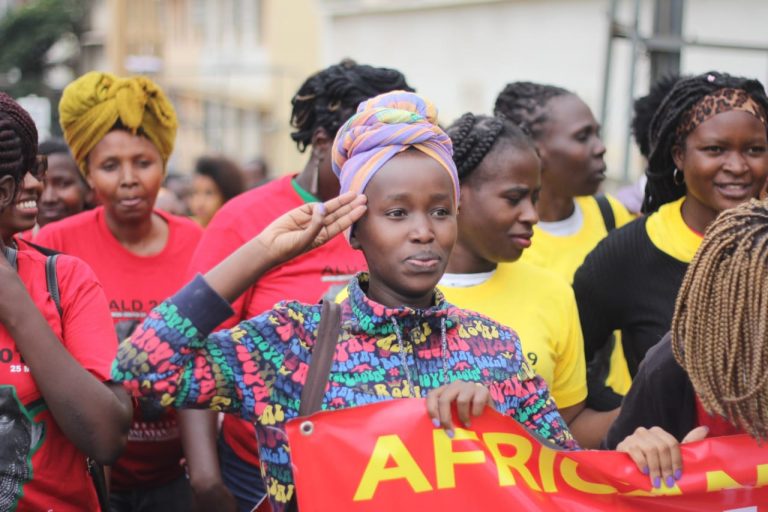
Source: africanliberationday.net
When the sun rises on Monday, May 25, 2026, it will be just another day for some people. But for millions of Africans in the motherland and the diaspora, it is more than a date on the calendar. This day holds significant meaning. It is African Liberation Day (ALD), a time when many African countries and communities across the global diaspora celebrate a milestone rooted in resistance, sovereignty, and shared destiny.
First established as African Freedom Day in 1958 by visionary leaders like Kwame Nkrumah, the event evolved on May 25, 1963, when 31 independent African heads of state convened in Ethiopia to form the Organization of African Unity (OAU), now the African Union (AU). They renamed the celebration African Liberation Day, anchoring it as a permanent global institution for Pan-African solidarity. The day was rebranded as Africa Day. But across pan-Africanist organizations, communities, and diaspora movements worldwide, the name African Liberation Day has endured because it tells the truth that Africa Day softens. It is a day of liberation, not just celebration. And liberation, as anyone paying attention in 2026 knows, is still very much in progress.
What is African Liberation Day in 2026 really about?
For decades, some viewed ALD as a beautiful but somewhat distant cultural commemoration, a day for kente cloth, drum circles, and nostalgic reflections on continental heritage. But by 2026, in a world still grappling with inequality, identity struggles, widening economic divides, and climate crises that disproportionately strike Black communities, the narrative has completely transformed.
What began as a celebration of independence movements has evolved into a worldwide conversation, one that now tackles Pan‑African solidarity, fair economic systems and control over resources, climate protection and sustainable futures, youth leadership, political responsibility, and the ongoing fight against new expressions of imperial power.
For the modern Black diaspora spanning Philadelphia, London, Toronto, and around the world, May 25 is no longer just about looking back and remembering the past. African Liberation Day is not for donning kente cloth for Instagram posts and moving on. It is not a day for mourning without action. It is a day to remember that ALD founders, Kwame Nkrumah, Patrice Lumumba, Amílcar Cabral, Julius Nyerere, and the dozens of other leaders who sat in Addis Ababa in 1963, were not commemorating the past. They were organizing the future. And in 2026, their message feels more urgent than ever.
Source: Instagram / officialjdmahama
Why May 25 Hits Differently This Year
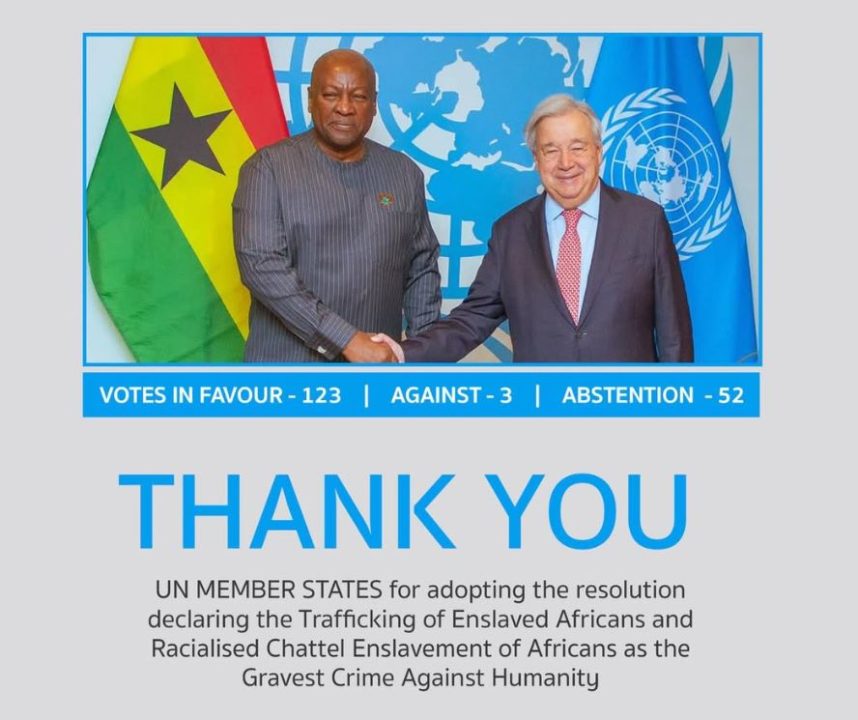
On March 25, 2026, the United Nations General Assembly voted to declare the transatlantic slave trade the gravest crime against humanity in recorded history. The African Union formally launched a Decade of Reparations, running from 2026 to 2036. Ghana’s President John Dramani Mahama stood before the world and said, “There is no such thing as a slave. There were human beings who were trafficked and then enslaved by people who believed they could own those human beings as chattel, as their personal property.”
“I speak these words today not only for Ghana, but also in solidarity with the rest of Africa, the Caribbean, Latin America, the wider Diaspora and, indeed, all people of good conscience throughout the world. This resolution is a pathway to healing and reparative justice. This resolution is a safeguard against forgetting,” he added.
One hundred and twenty-three nations voted in favor. Three nations, the United States, Israel, and Argentina, voted against. Fifty-two nations, including the United Kingdom and the majority of the European Union, abstained.
After the vote, Ghana’s Foreign Minister Samuel Okudzeto Ablakwa posted a photo of the results, saying: “We did it for Africa and all people of African descent.”
“History does not disappear when ignored, truth does not weaken when delayed, crime does not rot, and justice does not expire with time,” he added.
The resolution is not legally binding. It does not put money in anyone’s hands tomorrow. But its moral and political force is enormous, and its timing, coming just weeks before African Liberation Day 2026, has supercharged the meaning of May 25 for the diaspora worldwide.
So when May 25 arrives this year, it will not come the same way it has before. This is not a day of commemoration sitting in the background of business as usual. This is African Liberation Day, landing in the middle of the most consequential moment for the global reparations movement in living memory. This is what May 25, 2026, really means for the diaspora, and why you need to pay attention, wherever you are in the world.
What May 25 Means in Different Diaspora Communities
For Black Americans, May 25 arrives in a complicated political moment. The reparations debate in the United States is louder and more contested than it has been in decades, with local measures in some cities and fierce federal-level resistance. The UN vote, in which the US was one of only three nations to vote against acknowledging the slave trade as a crime against humanity, has heightened the sense that change will not come from Washington. It will have to be organized from below. African Liberation Day is one of the key moments for that organization.
For British-African and Afro-Caribbean communities, the UK government’s decision to abstain from the UN vote has been deeply felt. The UK, which received £20 million in government compensation when slavery was abolished in 1833, money paid not to the enslaved but to the enslavers, has consistently resisted formal engagement with reparations. The Windrush Scandal, in which thousands of Black British people were wrongly detained and deported, is a reminder that anti-Blackness in British institutions is not a relic of history. It is a current operating procedure. May 25 in the UK is both a celebration and an act of defiance.
For African immigrants in the diaspora, African Liberation Day is often a site of dual consciousness. There is pride in the continent’s history and the boldness of its current leadership on the world stage. There is also the daily reality of navigating racism, immigration systems designed to exclude, and workplaces that do not reflect the depth of what they bring. May 25 connects both realities. It says that the structures one navigates as an immigrant are the same structures that African Liberation Day was founded to dismantle.
Source: eventbrite.com
ALD 2026 Events
African Liberation Day is a coordinated global mobilization. In 2026, several significant events will happen around May 25.
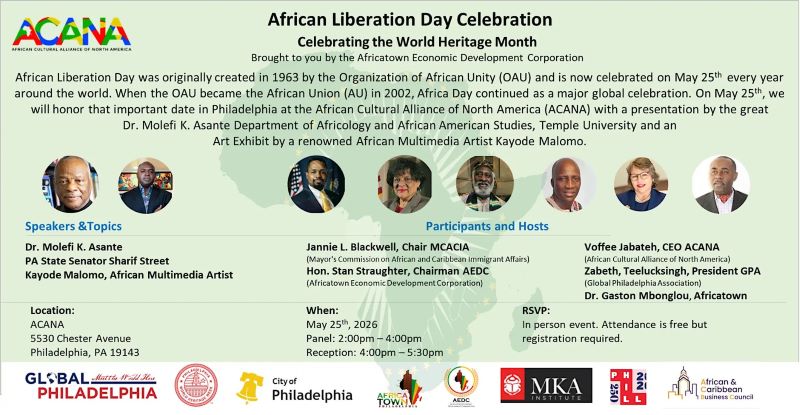
Philadelphia is set to celebrate Africa Liberation Day on May 25th, with a special event at ACANA (African Cultural Alliance of North America). The celebration will feature a presentation by Dr. Molefi K. Department of Africology and African American Studies, Temple University, and an art exhibit by renowned African Multimedia Artist Kayode Malomo.
In Kenya, organizers of African Liberation Day 2026 have officially opened registration for this year’s continental celebration, to be held from May 23 to May 25, 2026. The event, also known as Africa Union Day Kenya 2026, will bring together African leaders, diaspora representatives, business executives, ambassadors, and cultural groups from across the world.
May 23rd: African Liberation Walk and Flag Parade from KICC to Ururu Park.
May 24th: African Cultural Festival, Fashion Display, African Delicacy, and African Arts and Exhibitions – Uhuru Park.
May 25th: Leadership forums and Pan‑African dialogues.
Africans Rising, the Pan-African civil society movement, has launched African Liberation Week 2026, running around May 25. This edition focuses squarely on one urgent question: how to translate Pan-African ideals into practical, lived realities. Diaspora organisations across the UK, US, Canada, and the Caribbean are participating alongside continental groups.
In Accra, Ghana, the Pan Africa Union Agenda 2063 Diplomatic Mission, in collaboration with the International Association of World Peace Advocates (IAWPA), is convening the African Day Celebration & Leadership Summit at the Kofi Annan International Peacekeeping Training Centre located at Teshie in Accra, Ghana’s capital city on May 25, under the theme “Assuring Sustainable Water, Technology, Peace & Security for Agenda 2063.”
The summit will feature a distinguished panel of speakers, including H.E. Amb. Dr. Samuel Ben Owusu, Eminent Peace Ambassador and Country Director for IAWPA Ghana/West African Head of Missions & Special Envoy-Ghana of Pan-African AU Agenda 2063.
How Can You Celebrate African Liberation Day 2026?
Attend an event: Search africanliberationday.net for events in the United States. In the UK, search your local African diaspora community networks. Online commemorations are also available for those without a local event.
Engage with the reparations debate: Follow the work of Africans Rising (africansrising.org), CARICOM’s Reparations Commission, and the AU’s Office for Global Reparations. These are the institutions doing the actual work.
Talk to your family: Tell your children, your nieces, your nephews, the young people in your life about what May 25 represents. If nobody told you, be the person who breaks that silence.
Invest in the continent: If you are in a position to do so, consider where your money is going. Support Black and African-owned businesses. The diaspora’s wealth is one of the most powerful tools the liberation project has at its disposal.