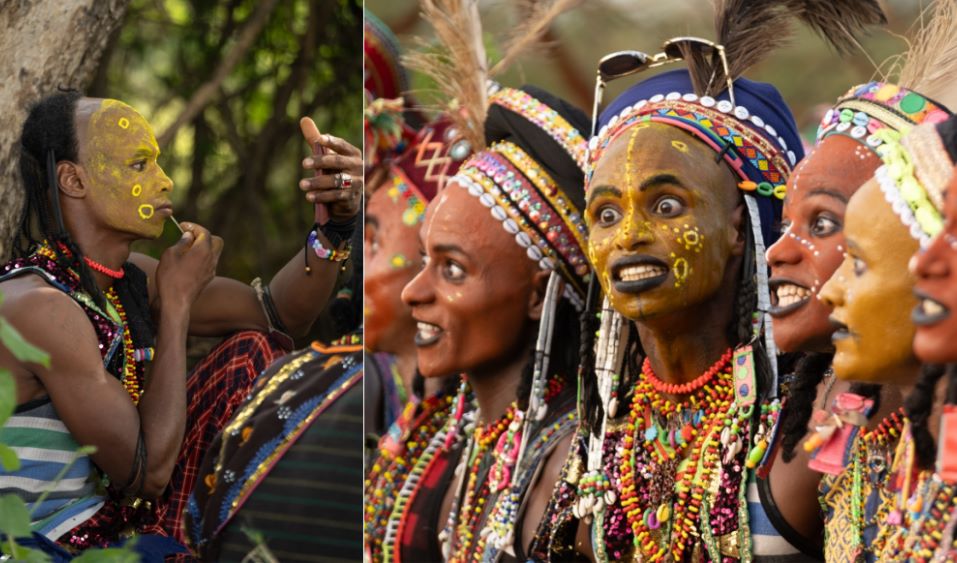
Source: Facebook / Kumakonda
We live in a world where women are constantly told to shrink themselves, doll up, and compete for a man’s attention. So what if we told you there’s a centuries-old African tradition where the whole script gets flipped, where men spend six hours getting their face-beat done, squeeze into their cutest fits, and then line up to audition for women’s approval?
No, this isn’t a fantasy. This is the Gerewol (also spelt Guérewol) festival of the Wodaabe people of Niger, and it’s been happening every year, long before TikTok made “male attention” a talking point.
Historically, the Wodaabe tribe has lived as nomads in the Sahel, moving from southern Niger through Northern Nigeria, Northeastern Cameroon, Southwestern Chad, and the Western area of the Central African Republic. The people are highly recognized for their ornate clothing and intricate cultural rituals.
The men in this tribe are said to think they are the most attractive. They participate in a beauty pageant-style event and wear extravagant costumes during the yearly Gerewol celebration.
What is Gerewol?
Gerewol is a courtship festival in which Wodaabe men dress in elaborate attire, adorn their faces with makeup, and perform dances to attract women. In many cultures, women are expected to perform beauty while men do the choosing, but Gerewol flips that script. Here, men are the ones putting in serious effort to be seen, admired, and selected.
The tribe spends the majority of its time in smaller family groups travelling across the harsh Sahel desert, mainly in Niger. They can also be found in Cameroon, the Central African Republic, Chad, and Nigeria. After spending months moving through the dry desert in search of pasture, Gerewol is their chance to gather together for a traditional catch-up, a festival of music and dance, which lasts for one week.
Mobbo Bari, a nomadic education advocate and Fulfulde poet, spoke about the festival, noting, “Gerewol is about courtship, and homecoming. For the Woɗaaɓe, they also hold a beauty display to attract the women. It’s the moment the ever-wandering nomads come home for reunion, before they disperse again in search of greener pastures.”
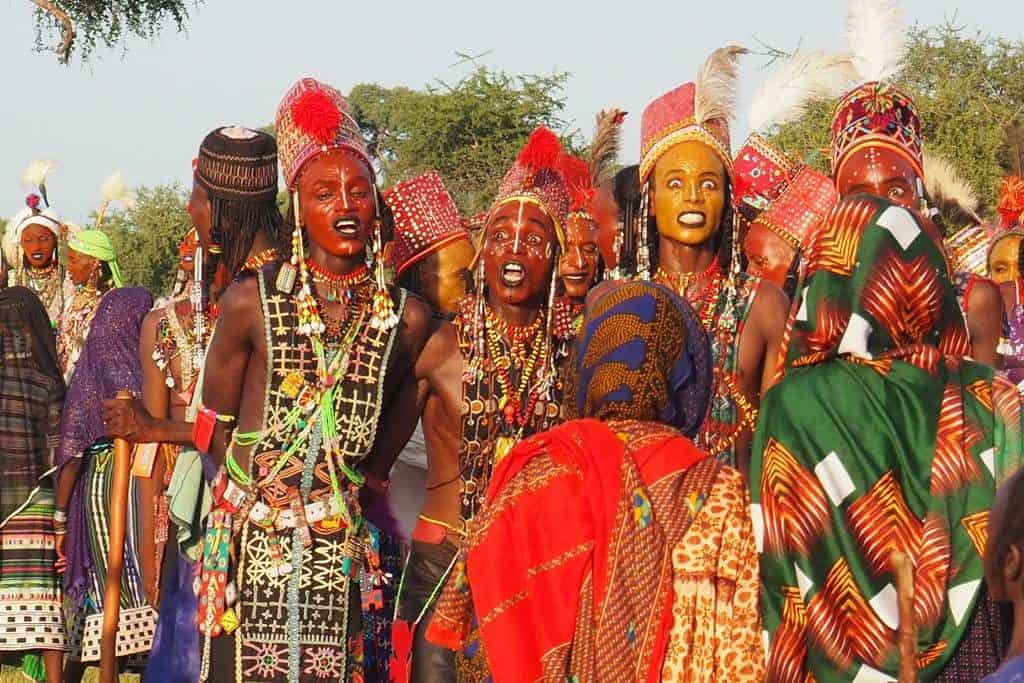
Source: Africa Travel and Life
What Actually Happens at Gerewol?
Young Wodaabe men prepare for hours. Their faces are painted with red or orange ochre (the orange, considered superior, comes only from a region near Jongooria in central Niger; some men walk over 800 miles round-trip to obtain it). They line their eyes in dark kohl to make the whites appear brighter, apply dark lipstick to contrast against their teeth, and adorn their hair with white ostrich feathers to appear taller. They also have a white stripe painted down their noses to make them look sharper. They complete the look with embroidered tunics, bright beads, and metal jewelry.
The headline event, however, is the Yaake dance, a mating call for men to battle it out for sexual supremacy.
During the festival, the men dance for hours under the sun, exaggerating their smiles and rolling their eyes to highlight features traditionally considered attractive within Wodaabe culture, including tall stature, bright eyes, white teeth, and stamina.
As part of the ritual, they bare their teeth, which can look like an aggressive grimace. They stand shoulder to shoulder and slowly move in a circle. The display may be competitive, but it is also a communal, artistic, and ceremonial expression of Wodaabe culture.
Three of the tribe’s most attractive women are selected to evaluate the males as they perform. The female judges openly choose the men they find most appealing. The tribe’s most eligible women who are looking for their next husband are not left out as they watch on. If they are attracted to any of the men, they can choose to be ‘stolen’, leaving their husbands behind.
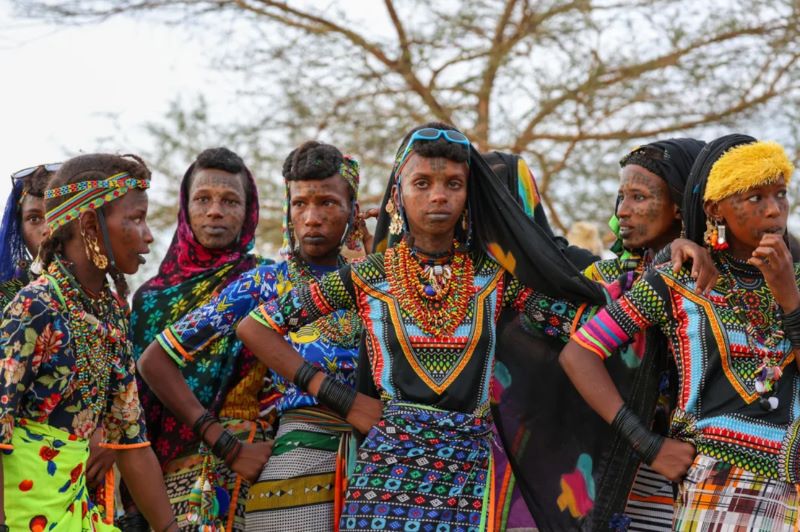
Source: kumakonda.com
In the Wodaabe culture, the fact that some of the women watching may already be married is not seen as a barrier. This is a community where women have all the sexual freedom and are allowed more than one husband.
The roles are reversed from many global beauty standards, placing women in the position of decision-makers and men as the ones seeking approval. This alone makes the festival fascinating in a global conversation about gender roles, attraction, and power.
The Gerewol “Wife Stealing” Label
You’ve probably seen this festival described online as the “wife-stealing festival.” While that’s technically part of what can happen, the framing gets it wrong because the women are in charge. Men perform; women evaluate. Wodaabe society is polygamous, and married women are permitted to pursue a second or additional husband. If a woman and a man connect at Gerewol and leave together without being noticed, that relationship is recognized by the community.
“Some cultures may call it ‘wife-stealing,” but to the Wodaabe, it isn’t. It is done with understanding, and the woman is given full freedom to decide her life and choices. The man doesn’t steal the woman; rather, the woman willingly follows the man she finds more attractive and brave than her current partner. However, the man must also have shown interest in her before she decides to go with him. In many cases, this happens when a woman is being sought after by two or more men. If the others are not chosen, they may return better prepared for the next festival, hoping to win her attention. If she eventually chooses one of them, she goes with him, and the former husband takes it as a shortcoming on his part and a reason to improve himself. Woɗaaɓe women do not settle for less, and that is why the men keep striving to maintain their place,” says Bari.
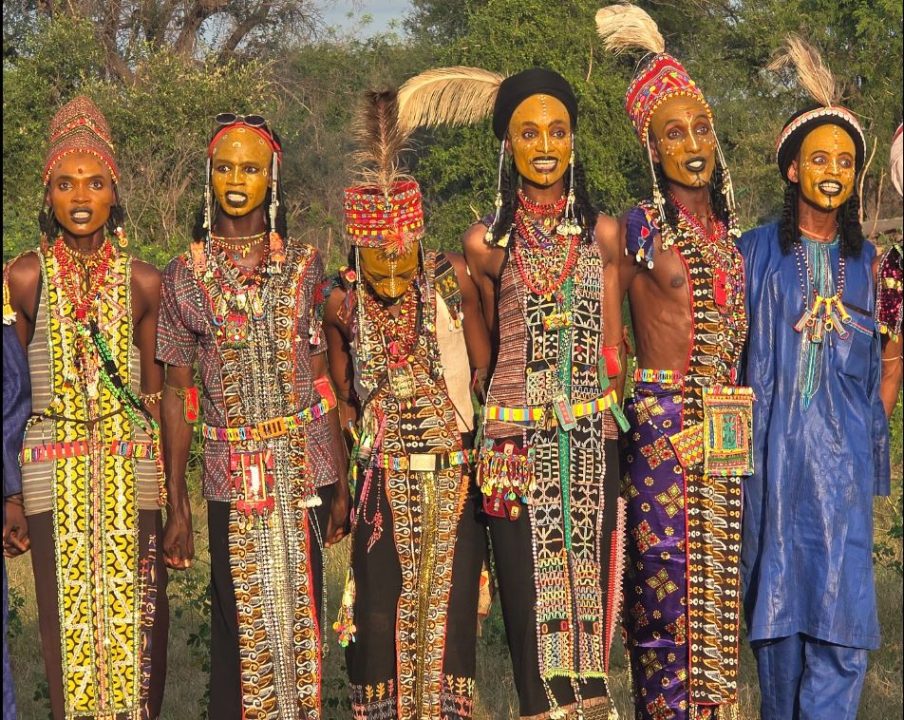
Source: Facebook / Kumakonda
In an era where Black people across the world are reclaiming identity, beauty, and cultural pride, Gerewol stands as a living archive of African aesthetics and autonomy. It shows that African societies had, and still have, complex systems of love, marriage, and gender expression. For the diaspora, it underscores that African traditions are varied, evolving, and deeply human. And Gerewol flips the script on Western stereotypes of Black masculinity, showcasing men who are expressive, artistic, and unafraid to embrace beauty.
Bari sums it up simply: “One thing the world can learn from this tradition is that, contrary to the common belief that the world belongs to men, in Woɗaaɓe society, the woman holds a central place. She makes her decisions, and they are respected. She is valued, respected, and protected. She decides for her life, and her word stands. The Woɗaaɓe tradition also shows that beauty and makeup are not just for women. They are not confined to any gender; they can be embraced by anyone for the sake of love. To win the heart of the one you love, you may go to any length, for love moves the world.”
Works cited
https://talkafricana.com/african-culture-the-wodaabe-tribe-wife-stealing-festival
https://guardian.ng/life/the-wodaabe-wife-stealing-festival

Minna Davies is a creative writer and a thespian with a degree in theatre arts from the University of Lagos. He has been privileged to have some of his works featured on Nigeria’s big stages. It is important to dream, but if no one gets to see it, it is as good as dead.