
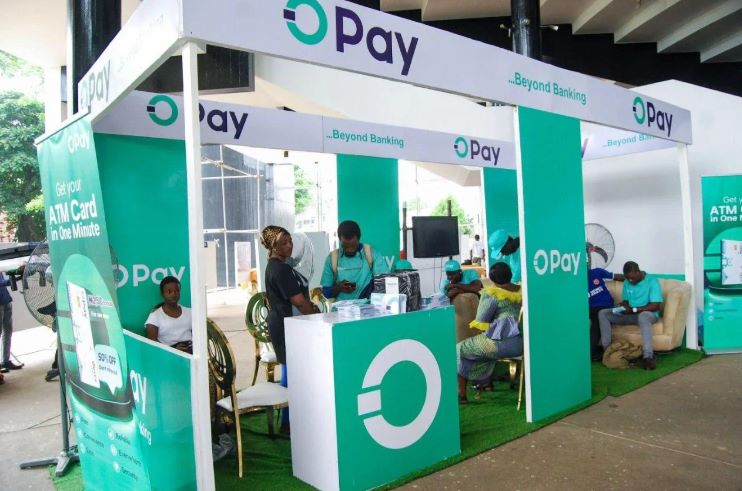
Source: cisdnigeria.org
Nigeria’s financial sector has evolved significantly over the years. There was a time when bank records were stored in physical file cabinets, and customers had to travel long distances to bank branches to conduct even the most basic transactions. Today, financial technology (fintech) companies have transformed the sector, making financial services more accessible to millions of Nigerians.
This transformation was aptly captured by Africa Risk Control, the due diligence and risk management firm, which noted: “Nigeria’s financial services sector has long struggled with low penetration. Despite being Africa’s largest economy and most populous nation, nearly 36% of adults remain unbanked, according to the Central Bank of Nigeria (CBN). Traditional banking infrastructure has failed to keep pace with population growth, leaving millions of individuals and small businesses excluded.
But what the banking sector couldn’t provide, technology has delivered. With mobile phone penetration exceeding 90% and internet usage rapidly increasing, fintech firms have stepped in to provide innovative solutions from digital wallets to microloans that address the everyday needs of Nigerians.”
Today, fintech companies are leading the charge in providing regulated financial services beyond the traditional brick-and-mortar banking model. Even established financial institutions have begun adopting innovations pioneered by fintech firms to meet the evolving needs of consumers.
Among these fintech companies is Opay. This one-stop financial services platform has significantly reshaped Nigeria’s financial landscape. Offering services ranging from payments and transfers to savings and loans, what began as an ambitious entrant into Nigeria’s highly competitive fintech ecosystem has evolved into one of the country’s most recognizable financial platforms, serving millions of customers and processing billions of naira in transactions daily.
Now, reports suggest that Opay is preparing for a potential listing on the American stock market. This development raises a fundamental question: Did Nigeria build Opay for America?
This question is not driven by hostility toward foreign investment or international expansion. Rather, it reflects a broader conversation about value creation, economic ownership, capital markets, and whether countries like Nigeria are fully benefiting from the success stories they help create.
To understand this debate, it is important to examine Opay’s journey, its impact on Nigeria’s economy, and what a potential foreign listing says about Nigeria’s investment environment.
Opay’s Entrance into the Nigerian Market
Opay entered Nigeria in 2018 through Opera Group, the Chinese-backed technology company known globally for its web browser business. At the time, Nigeria was experiencing a digital revolution. Smartphone penetration was rising, internet access was expanding, and millions of people remained excluded from formal banking services.
Founded by Chinese entrepreneur Yahui Zhou, Opay did not initially enter Nigeria as a financial services company. Instead, it launched Oride, a ride-hailing platform that quickly gained popularity in Lagos due to its affordability and convenience.
The company subsequently introduced services such as OFood and OBus, which also gained considerable traction while creating employment opportunities for thousands of Nigerians. However, in 2020, the Lagos State Government’s ban on commercial motorcycles forced the company to shut down its ride-hailing operations.
Rather than retreating from the market, Opay adapted. The company pivoted aggressively into mobile payments and digital banking, targeting a segment that traditional financial institutions had struggled to serve effectively. Unlike many conventional banks concentrated in urban centers, Opay leveraged Nigeria’s growing mobile penetration and adopted a customer-centric model. Mobile phone numbers became account numbers, transactions became easier, and users enjoyed competitive fees and simplified banking processes.
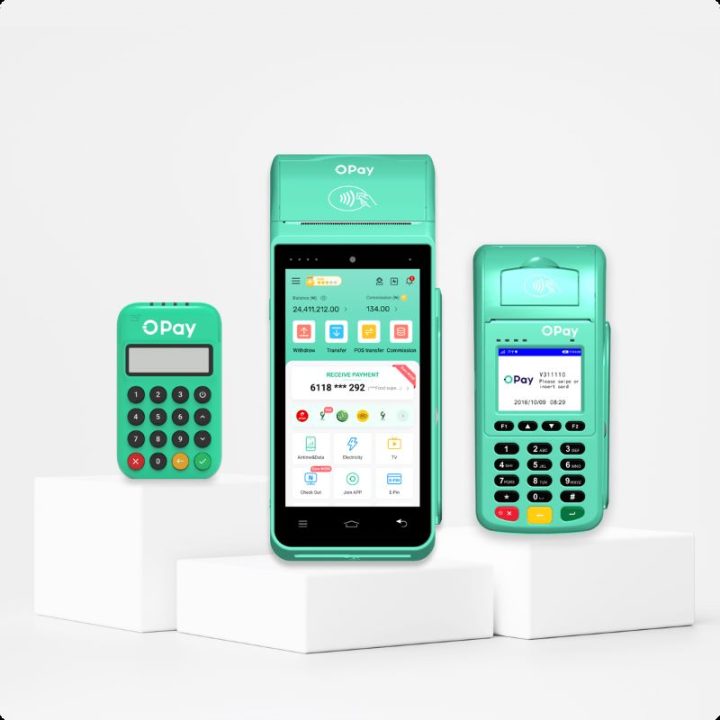
Source: Opaybusiness
The company also deployed an extensive agency banking model that penetrated rural communities, local markets, and remote neighborhoods. Through Point-of-Sale (POS) terminals and branded agent kiosks, customers could withdraw funds, transfer money, and pay for services without navigating the complexities associated with traditional banking.
In a country grappling with unemployment, Opay’s agent network created thousands of income-generating opportunities, turning ordinary Nigerians into financial service providers. The timing was strategic. Nigeria’s youthful population, increasing mobile adoption, and government-led financial inclusion initiatives created fertile ground for fintech innovation.
What followed was rapid growth. Through its user-friendly platform, extensive agent network, and commitment to accessibility, Opay established itself as a dominant player in Nigeria’s financial ecosystem.
Read also: LemFi and 4 other Fintechs Transforming Money Transfer for Africans in Diaspora
How Opay Reshaped Banking Accessibility
Perhaps Opay’s greatest contribution has been its role in democratizing access to financial services.
For decades, millions of Nigerians remained outside the formal banking system. Geographic barriers, documentation requirements, limited branch networks, high transaction costs, and long queues prevented many citizens from fully participating in the financial sector.
Opay changed that equation.
By leveraging mobile technology and an expansive network of agents, the company brought banking services closer to ordinary Nigerians. Individuals who previously traveled considerable distances to access financial services could now deposit money, transfer funds, pay bills, and withdraw cash within their communities.
The company further simplified banking by making account opening and operation accessible through mobile devices. With a registered phone number, users could access services once largely reserved for traditional bank customers.
For market traders, artisans, transport operators, and small business owners, Opay became more than a payment platform; it became their primary banking solution. Its mobile-first approach simplified transactions and reduced dependence on cash.
In a country where cash transactions had historically dominated economic activity, this represented a significant shift.
Beyond accessibility, Opay also contributed to financial literacy and digital adoption. Millions of Nigerians who had never used digital banking platforms became comfortable with mobile applications for everyday financial transactions. The result was not merely greater convenience but increased participation in the formal economy. Fintech platforms such as Opay accelerated Nigeria’s transition toward a more digitally connected financial system while helping bridge the gap between the banked and the unbanked.
Opay’s Contribution to Nigeria’s Economy
The success of OPay cannot be discussed without acknowledging the role of Nigerians and the broader economy.
Thousands of Nigerians have become agents, merchants, customer service representatives, marketers, engineers, compliance officers, and business development professionals within the Opay ecosystem. This has generated employment opportunities both directly and indirectly through its extensive agency network.
The platform has also supported small businesses by facilitating faster, more efficient, and more reliable financial transactions. By expanding financial inclusion, Opay has enabled greater participation in economic activities while contributing to tax revenues and broader digitalization efforts.
It is therefore important to recognize that Opay’s impressive valuation and market position were not built solely on foreign capital or technological innovation. They were also built on the daily participation of millions of Nigerians who became the company’s customers, distributors, advocates, and growth drivers.
In many respects, Nigeria served as the launchpad for Opay’s success.
Source: Opaybusiness
Read also: 5 Black Women Leading Africa’s Tech Revolution
American Listing and the Questions About Economic Ownership
Reports of a potential American stock market listing make the conversation particularly significant.
Given that Nigeria remains one of Opay’s most important markets, questions naturally arise as to why the company may choose an American exchange over the Nigerian Exchange (NGX).
When a company lists on a stock exchange, it creates opportunities for investors to participate in its future growth. Stock markets have historically served as vehicles through which citizens can share in the success of companies operating within their economies.
If Opay chooses to list in the United States while excluding Nigeria, many Nigerians would be justified in questioning that decision. They may reasonably ask why the people who contributed significantly to the company’s rise are not being offered a meaningful opportunity to participate in its next phase of growth.
The concern is not necessarily about where the company lists. Global businesses are entitled to pursue listings in major financial centers to access larger pools of capital, achieve higher valuations, improve liquidity, and attract international investors.
However, when companies create substantial value within African markets and then bypass those same markets when seeking public ownership, it raises legitimate questions about whether Africa is viewed merely as a consumer market rather than an investment destination.
This dynamic is not unique to Opay. Across the continent, African consumers generate demand, African workers provide talent, African governments create regulatory frameworks, and African economies absorb the risks associated with growth. Yet when these businesses mature, the financial rewards often become more accessible to foreign investors than to the local populations that helped build them.
This creates the perception that African countries are helping to build global champions without fully participating in the wealth those enterprises generate.
Arguments that the Nigerian capital market lacks the capacity to support major listings are increasingly difficult to sustain. Numerous companies have successfully raised capital through the Nigerian Exchange, while regulatory reforms introduced by Nigeria’s Securities and Exchange Commission (SEC) continue to strengthen investor confidence and market stability.
For decades, some of Africa’s most successful companies have raised capital both at home and abroad. Consequently, a decision by Opay to pursue a U.S. listing while overlooking the Nigerian market may not sit well with millions of its customers.
The argument is not to discourage foreign investment. Rather, it is to ensure that African citizens can participate more meaningfully in the wealth generated within their economies. When successful companies emerge from African markets, there should be pathways that allow ordinary Africans to become shareholders, investors, and beneficiaries of that success.
As Opay contemplates its future, it faces a decision that extends beyond corporate finance. It is a decision that touches on economic inclusion, market development, and the broader question of who truly benefits when African success stories become global enterprises.
If Nigeria helped build Opay, then Nigerians are justified in asking whether they should also share in the rewards of its next chapter.

Okechukwu Nzeribe works with the Onitsha Chamber of Commerce, in Anambra State, Nigeria, and loves unveiling the richness of African cultures. okechukwu.onicima@gmail.com