
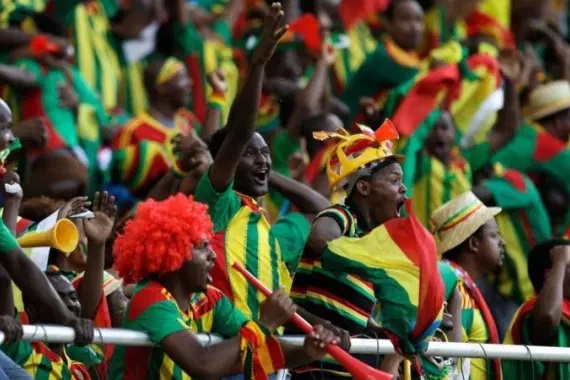
Source: cecafaonline
If you’ve ever applied for a U.S. visa as an African, you already know the feeling: That tightness in your chest before you leave your house and as you wait your turn at the embassy. That silent prayer you whisper before the interview. That fear that all your plans for your trip rest on a stranger’s 90‑second decision. It is indeed a psychological marathon.
So when FIFA announced that the 2026 World Cup would be hosted across the United States, Canada, and Mexico, African fans had mixed feelings. They were excited but also anxious. This is because the biggest barrier isn’t the flight ticket or accommodation. It is America’s visa wall.
Understanding America’s Visa Wall
For many European supporters, attending the World Cup often involves buying a ticket and booking a flight, but for many Africans, it can be layers of problems that make the process a challenge. According to U.S. State Department data, African nations consistently rank among the highest visa denial rates globally, with countries like Somalia and South Sudan topping the chart. Others, like Nigeria and Ghana, face rejection rates between 50% and 70% for tourist visas. This means more than half of applicants are denied, often without explanation.
To understand the full picture of what African fans are up against, you need to understand that there are separate walls standing between them and the stadium.
Wall one: The travel ban
In June 2025, President Donald Trump issued a proclamation restricting the entry of nationals from 19 countries, mostly in the Middle East and Africa. On December 16, 2025, the administration expanded the list to 39 nations.
For African World Cup fans, the partial restriction list includes Nigeria, Senegal, Côte d’Ivoire, Angola, Tanzania, and others. Senegal and Côte d’Ivoire are directly affected as both have qualified for the World Cup. However, there are exemptions. The exception covers athletes participating in the 2026 FIFA World Cup, coaches, people in a “necessary support role,” and the immediate relatives of athletes.
Fans, journalists, corporate sponsors, or extended family from these countries may find it hard to secure a visa to attend any of the 78 matches hosted across US cities, including Houston, Dallas, Los Angeles, and San Francisco.
Wall two: The $15,000 visa bond
Last year, the U.S. government introduced visa bond requirements for visitors from dozens of countries considered to have high visa-overstay rates. The intention is to reduce visa overstays and is part of a wider immigration crackdown by the White House. The sums required for a visa bond range from $5,000 to $15,000.
In May 2026, the Trump administration announced a waiver for fans from five African nations (Algeria, Cape Verde, Ivory Coast, Senegal, and Tunisia) traveling to the U.S. for the World Cup. While it appears to enable fans from the impacted countries to come to the U.S. for the tournament without posting a bond, there is a caveat.
In order to have the bond requirement waived, ticket holders from affected countries must have registered with the online FIFA Pass system by April 15. The FIFA PASS was established to help World Cup ticket holders secure U.S. visa appointments within six to eight weeks in countries where wait times have often been longer.
The April 15 date may significantly limit the number of beneficiaries. Before April 15, many fans may have been deterred from buying tickets or signing up for the FIFA PASS system, as they were under the impression they would have to pay up to $15,000 in bonds.
And for fans from countries like Senegal and the Ivory Coast, partial travel ban restrictions remain, meaning those who didn’t secure visas before December 2025 may still be barred, regardless of tickets.
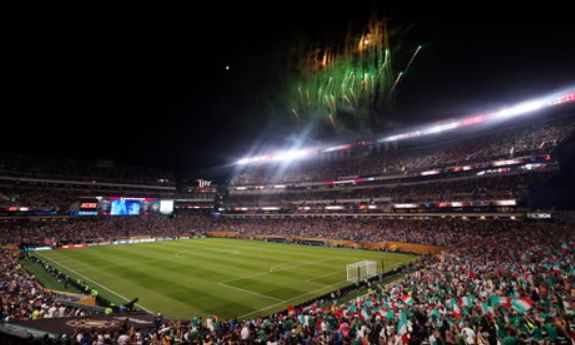
Source: The Guardian Int.
Meanwhile, all other visa requirements remain fully in place. A World Cup ticket is not a guarantee that your visa will be approved.
Wall three: Interview wait times that outlast the tournament itself
Even for African countries not on any ban list, there is a third, more quietly devastating obstacle: the wait for visa interviews at US embassies. Some fans may end up with “unrealistic” dates for visa interviews.
Speaking with The Athletic, Senegalese football pundit Mounire Sonko says: “It’s a disgrace because FIFA rules claim equality, respect and honor. Banning fans from a qualified country to support their team is discriminatory, and that’s something we don’t need in football.”
Also, a Senegal fan, Simon Ndiaye, 35, added: “I have French nationality, so I can go, but it’s a mindset of (the U.S.) being selective. That’s the biggest shame. And that’s why I’m a bit hesitant.
“Football is a party, so we should celebrate with all the qualified countries. Imposing restrictions like this simply because it’s the United States doesn’t reflect the spirit of football.
“If a team doesn’t have all its supporters behind it, it can be a disadvantage because supporters are very important. It’s where teams draw their strength.”
What America’s visa wall means for African fans
Let’s be honest about what this looks like from where Black people, whether in Africa, the Caribbean, the UK, or right here in America, are standing. The 2026 World Cup is the most expansive in the tournament’s history, with 48 teams, 104 matches, and three host nations. Because of how hard it is to get a U.S. visa, the stands may end up packed with fans from wealthy, visa-exempt nations, while supporters from Africa are filtered out. It’s a divide African fans know too well.
The fans of countries largely unaffected by any of Trump’s policies will fill the stands. Meanwhile, the Senegalese fan in Dakar, the Ghanaian in Accra, the Ivorian in Abidjan, who have spent years watching their teams qualify for this very moment, are being told to prove they won’t overstay a tourist visa before they’re allowed entry.
The World Cup is meant to be a festival of cultures, but for the African fan, 2026 is proving to be a test of endurance. This form of exclusion threatens to suck much of the joy from the tournament. Unless something changes, a good number of African fans may be cheering from their living rooms, not because they couldn’t afford the trip, but because of the U.S. visa walls that denied them entry.