

Source: Culture Custodian
Was Africa once a borderless continent? It is a question that challenges many of our assumptions about the continent’s history. Long before passports, visas, and colonial boundaries became defining features of modern Africa, commerce, migration, and diplomacy connected societies across vast distances, allowing people, goods, and ideas to move with remarkable freedom.
However, following the 1884–1885 Berlin Conference, European colonial powers partitioned the continent, drawing artificial borders that separated communities with shared histories, languages, and cultures while forcing others together under entirely new political arrangements.
For decades after independence, those colonial borders remained largely intact, shaping how Africans interacted with one another. Yet the vision of a more integrated Africa has never disappeared. Successive generations of African leaders have continued to prioritize conversations around continental integration, seeking to build an Africa where its citizens can move, live, and conduct business freely in pursuit of greater trade, unity, and sustainable development.
To advance that vision, leaders from across the continent gathered in Kigali, Rwanda, on March 21, 2018, to sign the framework agreement establishing the African Continental Free Trade Area (AfCFTA). The agreement seeks to boost intra-African trade by creating a single continental market for goods and services while eliminating many of the barriers that have historically limited commerce between African countries.
Earlier that same year, in January 2018, the African Union adopted the Protocol to the Treaty Establishing the African Economic Community Relating to the Free Movement of Persons, Right of Residence and Right of Establishment. The Protocol provides a framework for progressively achieving the free movement of Africans through three stages: visa-free entry, the right of residence, and the right of establishment.
Beyond simplifying travel, the Protocol allows citizens of member states to seek employment without discrimination, accompanied by their families where applicable, while facilitating access to residence and work permits with avenues for appeal. It also encourages the mutual recognition of professional qualifications, the portability of social security benefits, easier remittance transfers, and stronger protection for vulnerable migrants. Equally important, it promotes coordinated border management, migration data sharing, and the harmonization of national and regional laws to support deeper continental integration.
More importantly, the AU Free Movement Protocol underpins visa-free travel by enabling seamless mobility, expanding employment opportunities, encouraging investment, strengthening regional integration, and supporting sustainable economic development across Africa.
Emphasizing its significance, Alex Mubiru, Director General for Eastern Africa at the African Development Bank Group, noted during the High-Level Symposium on Advancing a Visa-Free Africa for Economic Prosperity that, “visa-free travel, interoperable digital systems, and integrated markets are practical enablers of enterprise, innovation, and regional value chains to translate policy ambitions into economic activity.”
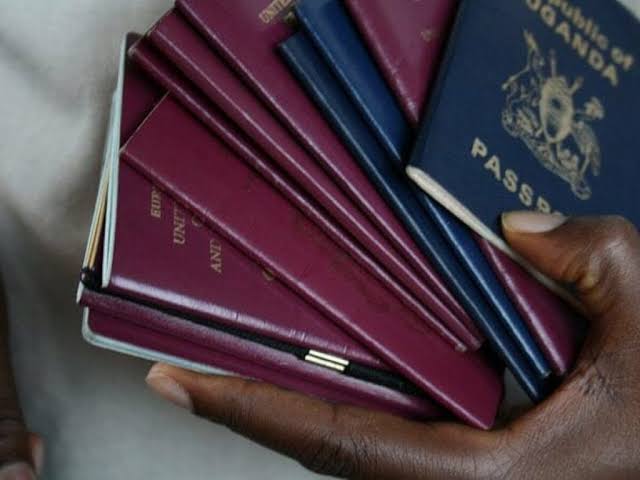
Despite this shared vision, progress has remained uneven. As of today, only a handful of African countries, including Rwanda, Kenya, Benin, Seychelles, and Togo, have implemented visa-free entry policies for holders of African passports, while many others have yet to fully embrace similar reforms.
This reality continues to raise important questions about Africa’s readiness to embrace the ideals of continental integration.
As the world becomes increasingly interconnected, the ability of people to move freely has become an essential driver of economic growth, innovation, diplomacy, and cultural exchange. Regions that have embraced easier mobility have generally experienced stronger economic cooperation and deeper political integration. Europe offers perhaps the clearest example of how freer movement can stimulate trade, encourage investment, and strengthen regional institutions, an outcome many hope Africa can eventually replicate.
Reflecting on the importance of a visa-free Africa, Amma A. Twum-Amoah, Commissioner for Health, Humanitarian Affairs and Social Development at the African Union Commission, described visa openness as “a strategic lever for deepening regional markets and enhancing collective responses to economic and humanitarian crises.”
Perhaps the most immediate and measurable benefit of visa-free travel lies in the ease with which businesses can establish partnerships. Entrepreneurs, investors, professionals, and innovators are far more likely to meet, negotiate, and build lasting commercial relationships when unnecessary bureaucratic barriers are removed. Investors can explore opportunities with greater confidence, while professionals can offer their expertise across multiple African markets without lengthy administrative delays.
Small and medium-sized enterprises, which constitute the backbone of many African economies, stand to benefit immensely from such reforms. Unlike multinational corporations with dedicated legal and administrative teams, smaller businesses often lack the resources to navigate complex visa procedures. Simplified travel requirements reduce operating costs, shorten planning timelines, and encourage greater cross-border commerce. The result is increased economic activity that benefits businesses, consumers, and governments alike.
Source: African Shapers
The implementation of the African Continental Free Trade Area (AfCFTA) has further underscored the importance of mobility. While the agreement seeks to create one of the world’s largest free trade areas, its success depends largely on reducing tariffs. Trade agreements are negotiated by people. Supply chains are coordinated by people. Investments are secured through relationships built between people.
Restricting human mobility while promoting free trade presents an obvious contradiction. Visa-free travel complements the objectives of AfCFTA.
Tourism is another sector poised to benefit significantly from visa-free entry policies. Africa possesses some of the world’s most adventurous landscapes, remarkable wildlife, ancient historical sites, and vibrant cultural heritage. Easier travel would encourage more Africans to explore their own continent without burdensome visa requirements, administrative delays, or uncertainty surrounding entry procedures.
Families would find it easier to plan holidays across borders, students could participate more readily in educational excursions and exchange programs, and professionals could combine business trips with leisure travel, making destinations once considered difficult to access, far more attractive. Increased tourism would naturally stimulate demand for hotels, airlines, restaurants, transport operators, local artisans, tour companies, and countless other small businesses that depend on visitor spending.
Innovation also rarely occurs in isolation. It flourishes when people from different backgrounds exchange ideas, challenge established thinking, and collaborate to solve common problems. Easier mobility across Africa creates precisely these opportunities by enabling researchers, entrepreneurs, students, academics, innovators, and skilled professionals to interact more freely. The result is a stronger ecosystem for knowledge sharing, technological advancement, and entrepreneurship, accelerating the growth of knowledge-based economies across the continent.
Nevertheless, adopting visa-free policies is not without legitimate concerns. Perhaps the greatest obstacle to slowing their widespread implementation across Africa is insecurity. The rise of conflicts, armed terrorist networks, organized crime, human trafficking, irregular migration, and the spread of communicable diseases has understandably made many governments cautious about embracing unrestricted movement across their borders.
-These concerns are legitimate. They deserve serious attention and should never be dismissed as mere obstacles to continental integration. Every government has a responsibility to protect its citizens while safeguarding its territorial integrity.
Fortunately, openness and security need not be mutually exclusive. Advances in biometric technology, digital identity systems, intelligence sharing, passenger information systems, and coordinated border management now provide governments with more sophisticated tools for facilitating legitimate travel while maintaining robust security standards. Rather than relying primarily on restrictive visa regimes, African countries can work together by investing in smarter, shared border management systems that identify genuine security threats without unnecessarily burdening legitimate travelers.
Governments can further strengthen security by concentrating international entry and exit through designated airports, seaports, railway terminals, and land border facilities equipped with modern screening technologies and well-trained security personnel. Such an approach enables authorities to conduct more effective immigration, customs, and security checks while facilitating smoother movement for law-abiding travelers.
Regional cooperation will also be indispensable. Intelligence-sharing agreements, harmonized immigration databases, joint border patrols, and coordinated law enforcement operations can significantly reduce the risks associated with increased mobility. As criminal networks have become increasingly transnational, the response to them must be equally coordinated.
While Africa’s borders will always define sovereign nations, they need not limit continental ambition. Visa-free policies do not seek to erase national sovereignty; rather, they aim to strengthen cooperation by making borders gateways to opportunity rather than barriers to progress.
The road toward a truly borderless Africa will undoubtedly require careful planning, sustained political commitment, institutional reforms, and continued investment in security infrastructure.
While the benefits of visa-free travel are increasingly apparent, translating ambition into reality will require deliberate action and sustained political commitment. The vision of a more integrated Africa cannot rest solely on declarations made at continental summits; it must be reflected in the domestic policies and institutional reforms undertaken by the member states’ governments.
A crucial step would be for more African countries to ratify and implement the provisions of the African Union Free Movement Protocol. Progress is unlikely to occur overnight, but every country that adopts visa-free policies for fellow Africans brings the continent one step closer to realizing the vision of an integrated Africa.

Okechukwu Nzeribe works with the Onitsha Chamber of Commerce, in Anambra State, Nigeria, and loves unveiling the richness of African cultures. okechukwu.onicima@gmail.com