Source: Barbados Today
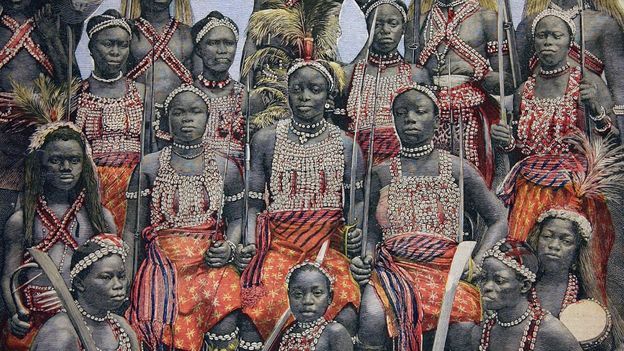
At the turn of the 20th century, as European powers tightened their grip on Africa, one woman emerged as a formidable symbol of resistance against British colonial expansion. Her name was Nana Yaa Asantewaa, the Queen Mother of Ejisu in the Asante Kingdom of present-day Ghana. She mobilized her people through her leadership to defend their sovereignty, traditions, and political independence during the War of the Golden Stool in 1900. She challenged the assumption that African women could not occupy positions of military and political authority.
More than a century later, her name remains associated with courage, national dignity, and the struggle for self-determination.
Born around 1840 in Besease, in the Ejisu area of the Asante Kingdom, historical accounts identify Yaa Asantewaa as a woman of royal lineage who eventually became the Queen Mother of Ejisu. This was an influential position within Asante political society, allowing her to participate in the selection of rulers and advise on matters affecting her community.
The Asante Kingdom was one of the most powerful states in West Africa during the 18th and 19th centuries. Its political authority rested on an organized system of government, a strong commercial network, and the influence of the Golden Stool, the sacred symbol of the unity and legitimacy of the Asante nation. Kumasi, its capital, served as a political and commercial center connecting communities across the forest region with trading networks extending toward the coast and the interior.
However, Asante’s power increasingly brought it into conflict with British commercial and imperial ambitions. Britain sought to consolidate its influence along the Gold Coast, driven by strategic interests, trade, and the desire to control territories beyond the coastal settlements. As British authority expanded, relations with the Asante deteriorated, producing a series of armed confrontations throughout the 19th century. The conflicts were not simply disagreements over commerce or territorial boundaries. They reflected a deeper struggle over who possessed the right to govern African societies.
For the Asante kingdom, maintaining independence meant preserving their political institutions and the authority of their rulers. For British colonial officials, extending imperial control meant bringing the kingdom under British administration.
Read also: Exclusive Insights from Asante Royalty’s Advisor as Asante Gold Reclaims Its Glory
Source: African Heritage
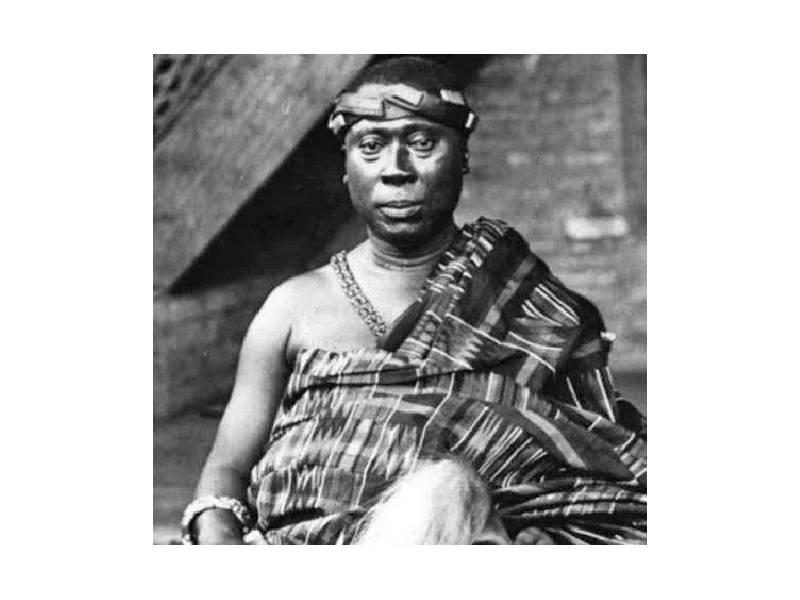
A major turning point came in 1896 when British forces occupied Kumasi and arrested Asantehene Prempeh I, the kingdom’s ruler. He was subsequently deported to the Seychelles alongside several other prominent Asante leaders. Their removal weakened the kingdom’s central political leadership and created uncertainty about its future. British officials increasingly exercised authority over Asante’s affairs, while the remaining traditional leaders faced mounting pressure to accept colonial demands.
Yaa Asantewaa’s position became particularly significant during this period. As Queen Mother and a respected political figure, she understood what the removal of the Asantehene meant for the kingdom’s independence. Her grandson, the ruler of Ejisu, had also been deported, further deepening her connection to the crisis.
The confrontation reached a decisive stage in 1900 when then British Governor Sir Frederick Hodgson committed the highest form of sacrilege in the Asante Kingdom when he demanded that the Golden Stool be surrendered to him, reportedly expressing his desire to sit on it.
His demand deeply offended the Asante people and provoked outrage among Asante leaders because the sacred stool represented their collective identity, spiritual heritage, and political authority. Also, the governor’s insistence on payment of interest on the war indemnity imposed on the Asantehene, alongside efforts to locate and seize the sacred object, further heightened public anger and resentment. Yet, despite the gravity of the situation, some chiefs hesitated to launch another confrontation against a powerful colonial force. Previous wars had brought considerable losses, and the deportation of their king had left the kingdom politically vulnerable.
It was at this critical moment that Yaa Asantewaa emerged as a rallying figure for resistance. Historical accounts associate her with a forceful address challenging the reluctance of male leaders to defend their kingdom. She questioned whether the courage of earlier Asante generations had disappeared and declared her willingness to lead women into battle if the men refused to act.
Her intervention helped galvanize resistance, and she became the leading figure associated with the uprising that followed. The conflict became known as the War of the Golden Stool, the Yaa Asantewaa War, or the Anglo-Asante War of 1900.
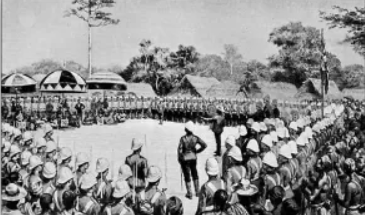
The Asante resistance targeted British authority in Kumasi, surrounding the colonial fort where Hodgson and his forces had taken refuge. The siege disrupted British communications and restricted movement around the settlement. Asante fighters sought to isolate the garrison and undermine Britain’s ability to maintain its position in the kingdom.
Yaa Asantewaa’s importance extended beyond the symbolic value of her leadership. Her emergence demonstrated that women could play decisive roles in defending political institutions and organizing collective resistance. Asante women already exercised influence in economic, social, and political life, but the war brought this authority into sharper public view.
Read also: Ghana at 69: Independence, Identity, and the Work Ahead
Source: YAPGA
Nevertheless, the conflict was fought against a colonial power with substantial military resources and access to reinforcements. British forces eventually broke through the resistance and relieved the besieged garrison. The uprising continued for months, but the balance of resources increasingly favored Britain.
The British subsequently intensified their campaign to suppress the resistance. Yaa Asantewaa and other Asante leaders were captured and deported to the Seychelles, joining Prempeh I and other members of the Asante leadership in exile. Yaa Asantewaa died there in 1921, far from the homeland whose independence she had fought to defend.
The immediate outcome of the war was a major setback for Asante sovereignty. Britain formally incorporated Asante into its colonial possessions in 1902, ending its independent political status. The kingdom’s traditional institutions, however, were not completely erased. Asante identity and political traditions endured, contributing to the eventual restoration of the Asante Confederacy in 1935.
The significance of Yaa Asantewaa’s struggle therefore extends beyond the battlefield. Although the resistance did not prevent British colonial rule, it demonstrated that the imposition of imperial authority was neither automatic nor universally accepted. Asante communities were prepared to defend their institutions, even when confronted by a more powerful empire.
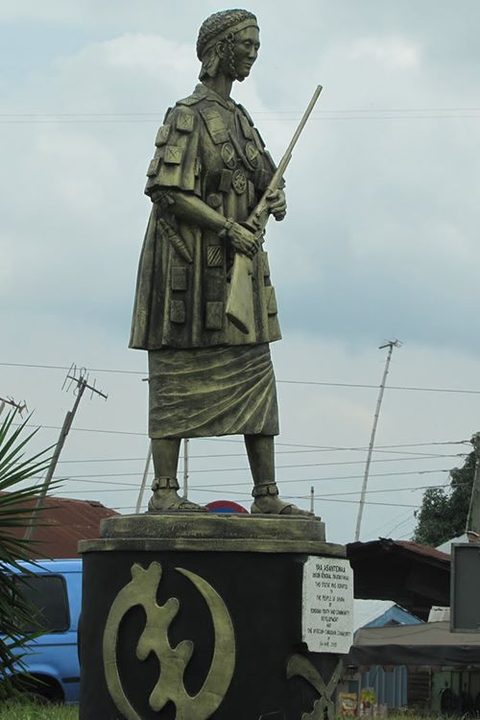
Though the war of Asante independence was lost, her legacy remains an enduring figure in Ghanaian history and the wider African struggle against colonial domination, while also reinforcing that African women were active participants in struggles over political authority and national survival.

Okechukwu Nzeribe works with the Onitsha Chamber of Commerce, in Anambra State, Nigeria, and loves unveiling the richness of African cultures. okechukwu.onicima@gmail.com