Source: areai4africa.org
For generations, access to opportunity for African girls has often been shaped by where they were born, their family’s income, the quality of their education and whether society believed certain careers were meant for them. Today, another factor is increasingly determining their future: access to the digital world.
A computer can be more than a device. Internet access can be more than a connection. Digital skills can become a pathway to education, entrepreneurship, employment, creativity and participation in an increasingly technology-driven global economy. Yet millions of African girls are still growing up on the wrong side of the digital divide.
The divide is not simply about whether a girl owns a smartphone or can access the internet. It is also about whether she has a computer to learn with, reliable connectivity, affordable data, digital skills, safe online spaces and opportunities to turn those skills into economic value.
This matters because Africa is entering a period in which technology is influencing almost every aspect of economic and social life. Artificial intelligence, software development, digital finance, e-commerce, online education, robotics, cybersecurity, data science and digital media. All these are already changing how people work, communicate and do business. So, ensuring that African girls have the same access to digital opportunities as boys is essential to closing the continent’s digital gender divide and making Africa’s technological transformation inclusive.
In a 2023 United Nations Women report titled “Bridging the Gender Digital Divide”, the former Deputy Regional Director of the UN Women Regional Office for East and Southern Africa, late Zebib Kavuma, highlighted that the digital divide between girls and boys is a significant challenge, leaving many women and girls unable to take full advantage of the opportunities created by the new digital world because they have less access to technology than men and boys.
In her speech she said, “you need to believe in your skills and ability to be leaders in the digital space and utilize spaces such as this hackathon to learn and grow”.
The digital gender gap is therefore not only a technology problem. It is an educational, economic and social development issue.
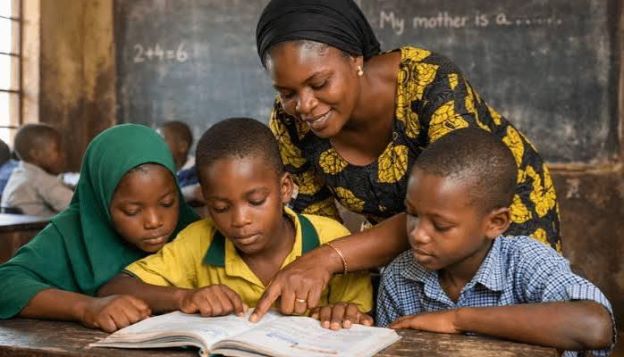
For an African girl child growing up in a rural community, the absence of a computer laboratory at school can mean much more than not knowing how to operate a computer. It can mean being unable to practice coding, explore digital design, learn about artificial intelligence or discover careers that may not exist within her immediate community.
Beyond the school environment, the home front can also become a battleground over access to technological tools. When parents have limited resources and must decide who gets access to computers, broadband or technology programs, those decisions can either expand or restrict the possibilities available to their children. If boys are consistently given priority, the digital gender divide begins at home before it reaches the classroom or workplace.
This is why access can change everything.
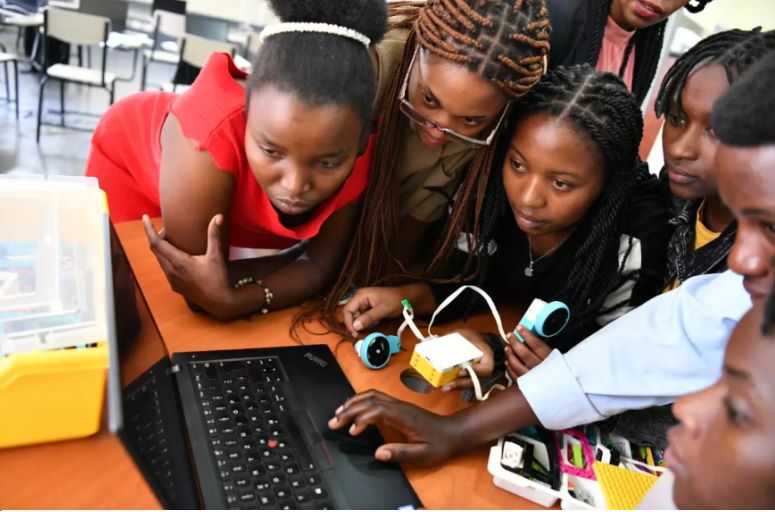
Source: africa.unwomen.org
When girls are given meaningful digital education, technology can expand the boundaries of their imagination. They can learn to code applications, design websites, use digital tools to market businesses, explore graphic design, animation and video production, and study science and engineering through online courses. They can use digital platforms to reach customers beyond their communities and connect with opportunities that were once geographically out of reach. They become ‘African girls in tech’ and tomorrow’s ‘women in tech.’
A girl who once saw technology as something created by people somewhere else can begin to see herself not simply as a consumer but as a creator. She can acquire skills that translate into economic independence and, one day, develop technologies that would address some of the challenges facing the continent.
The question, therefore, is not whether African girls should participate in the digital economy. The question is whether Africa will prepare them adequately to lead in it.
Introducing girls to technology from the foundation level, beginning in primary school, can have an even greater impact. Early exposure can challenge the perception that computers, engineering, mathematics, and science are fields reserved for boys or that they require some special ability that girls do not possess.
A girl who encounters coding as a normal part of her education may be less likely to see technology as something outside her identity or future.
Parents, schools and governments therefore have an important role to play. Computer laboratories in educational institutions cannot simply be rooms containing outdated equipment that students rarely use. Digital education must be practical, regular and connected to real-world problems. And this requires reviewing policies to address gaps in education and increasing investments to ensure the next generation of African children is adequately prepared for the continent’s expanding technological future.
Black girls must have the same opportunities as their male counterparts, both at home and in educational settings. They should be encouraged to build, experiment, make mistakes and solve problems. They should be exposed to female technology professionals, entrepreneurs, scientists and engineers who can demonstrate that there is a place for them in these fields.
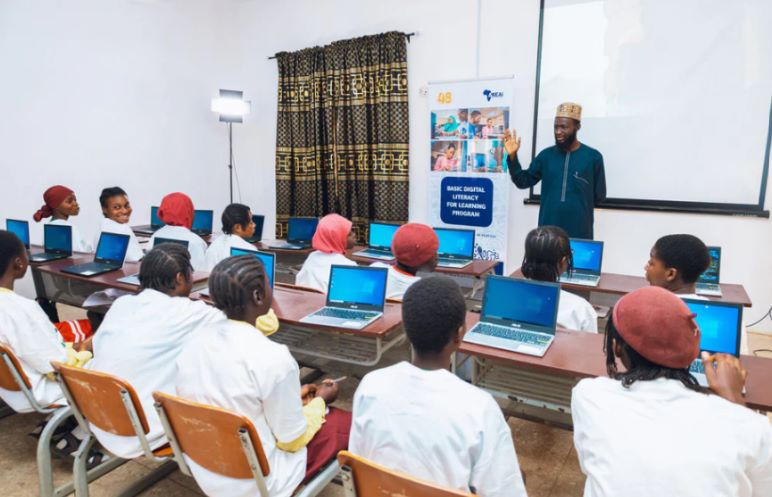
Community technology centers can provide girls with access to computers and internet connectivity outside school hours. Public-private partnerships can help equip schools with devices and reliable internet. Scholarship programs can support girls pursuing technology-related education, while businesses can create internships, mentorships and entry-level opportunities that connect digital education with employment.
Ultimately, the digital future of Africa’s Black girl child will be determined by the choices we make today.

Okechukwu Nzeribe works with the Onitsha Chamber of Commerce, in Anambra State, Nigeria, and loves unveiling the richness of African cultures. okechukwu.onicima@gmail.com