Source: Vanguard
For centuries, Ile-Ife has occupied a special place in the history of the Yoruba people. Described as the cradle of Yoruba culture and civilization, the ancient city in present-day Osun State represents far more than a place of origin preserved through oral traditions. Ile-Ife was a center of political authority, artistic excellence, religious thought, innovation, and commerce whose influence continues to shape Yoruba identity.
For the Yoruba, Ile-Ife is much more than an ancient city or an archaeological site filled with beautiful objects. It is a place deeply connected to creation, ancestry, kingship, spirituality, and identity. According to Yoruba tradition, it was where Odùduwà established the foundations of Yoruba society and where the story of creation unfolded through the actions of divine beings such as Obàtálá.
These traditions remain central to Yoruba cultural memory. But perhaps the most fascinating way to understand Ife is not simply through its kings and ancient stories. It is through the artists, craftspeople, innovators, and ideas that made the city remarkable.
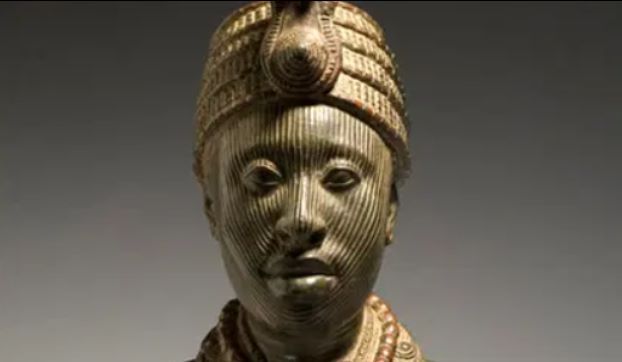
The international story of Ife art took a dramatic turn in 1910 when German ethnographer Leo Frobenius encountered bronze and terracotta heads in the city. The sculptures, especially the famous Olokun bronze head, were remarkably naturalistic, capturing human faces with an extraordinary level of detail and sophistication. Yet instead of simply recognizing them as evidence of an advanced African artistic tradition, Frobenius struggled to accept that they could have been created by Africans. He even associated the works with the mythical lost city of Atlantis.
Today, that episode is one of the most revealing parts of the story of Ife art. The sculptures were not only masterpieces; they challenged deeply rooted European assumptions about African civilization.
Source: gazettengr.com
The irony is striking. The art did not need Europe to make it extraordinary. It was already extraordinary. The people of Ife had been creating sophisticated works long before Frobenius arrived.
One of the most intriguing features of Ife art is the emphasis placed on the human head. Many of the famous sculptures are heads that appear unusually large in proportion to the body. This was not simply an artistic decision. It reflected Yoruba ideas about the importance of the head, or orí, as the seat of a person’s essence and destiny.
The head therefore carried a meaning that went beyond physical appearance.
This gives the famous Ife heads another dimension. They can be admired for their beauty and realism, but they also reveal something about how Yoruba people understood identity, personality, and human existence. The faces themselves are remarkably restrained. The eyes are stylized, the lips are slightly parted, and the expressions often appear calm and serene. Rather than exaggerated emotion, the artists created a sense of dignity and composure.
In other words, these were not simply ancient sculptures of people. They were visual statements about what a person represented.
The brilliance of Ife art becomes even more impressive when we consider how it was made. Many of the famous metal heads were produced using the lost-wax casting technique, a complex process requiring careful control of materials and temperature. Artists had to understand clay, wax, metal, and heat and know how they would behave at different stages of production.
Ife artists worked with terracotta, stone, quartz, copper and brass. Behind every famous sculpture was therefore a network of people who possessed specialized knowledge. There were artists, metalworkers, potters, material specialists and other craftspeople whose expertise helped transform raw materials into objects of beauty and meaning.
Art also had powerful political and cultural patrons. Many of the famous Ife heads are associated with the period of Obalufon II, an Ooni remembered as an important patron of the arts. His association with bronze casting, textiles, regalia, peace and wellbeing demonstrates that art was not separated from the broader life of the kingdom.
This is important because art in ancient Africa was rarely created simply as decoration. It could communicate authority, identity, religion and social status. The crowns, clothing, hairstyles and facial features represented in Ife sculptures therefore offer clues about how people presented themselves and how society understood power and status.
But the artistic story does not end with bronze and terracotta.
Archaeological research at Igbo Olokun has provided evidence of glass production in ancient Ife, including thousands of glass beads, crucible fragments, furnace-like pits and glass waste. The evidence suggests that Ife was not simply importing finished luxury goods but had developed its own sophisticated glassmaking tradition.
That discovery introduces another group into the story: innovators.
The people of Ife were experimenting with materials, mastering production techniques and creating objects that could be used for adornment, trade and expressions of status. Glass beads were more than attractive accessories. They could communicate wealth, identity and social position. Their production also required specialized knowledge and organized labour.
This changes the way we think about ancient Ife. Its brilliance was not limited to its royal court. It was embedded in the skills of craftspeople and specialized workers who helped make the city prosperous.
Ife was also connected to a wider Yoruba world and to networks of exchange across West Africa. Ideas, materials, techniques, and artistic traditions moved between communities. Ife art is also believed to have influenced the development of Benin art, particularly the emphasis on realism visible in some early Benin works.
This interconnectedness challenges the old perception of precolonial African societies as isolated communities. Ile-Ife demonstrates that urban centres could develop complex economies where agriculture, craft production, trade, religion and political authority reinforced one another.
Beyond art and technology, Ife’s importance is deeply rooted in knowledge and spirituality. The Ifá divination system, which UNESCO inscribed on its Representative List of the Intangible Cultural Heritage of Humanity in 2008, represents one of the sophisticated ways Yoruba knowledge has been preserved and transmitted across generations.
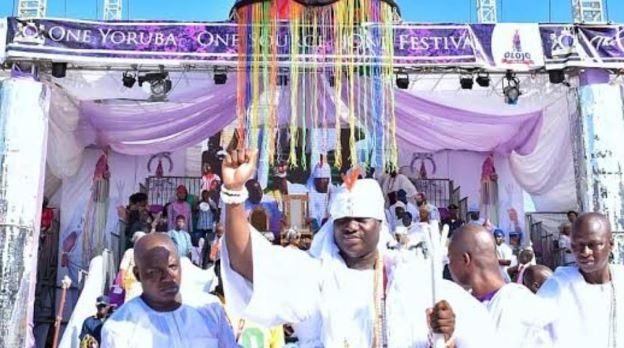
Ile-Ife also remains closely associated with Yoruba ideas about creation, kingship and the relationship between humans and the spiritual world. The Ooni continues to occupy an important position within Yoruba cultural life, while the city’s festivals, sacred sites and traditions keep its heritage alive.
This is why reducing Ile-Ife to an ancient city would miss the bigger picture.
Ife is simultaneously a place of myth, archaeology, art, technology, spirituality and living culture.
Its famous sculptures tell us about the people represented in them. Its glass beads reveal technological creativity. Its religious traditions preserve ideas about the relationship between humans and the spiritual world. Its royal traditions connect the present to a much older cultural memory.
And perhaps the most powerful lesson is that the story of African civilization did not begin with European arrival.
Long before colonial rule, the people of Ile-Ife had developed sophisticated artistic traditions, specialized crafts, systems of knowledge and networks of exchange. They produced works so technically accomplished that, when they were first brought to international attention, some Europeans could not imagine that Africans had created them.
Today, the question is no longer whether ancient Ife was capable of producing such extraordinary art. The evidence is there. The better question is what else remains to be discovered about the people who created it.
Ile-Ife therefore deserves to be understood not simply as the cradle of Yoruba civilization, but as one of Africa’s great stories of creativity and innovation. From the serene faces of its bronze heads to the beads produced by its ancient glassmakers, from the traditions surrounding Odùduwà and Obàtálá to the continuing spiritual life of the city, Ife connects the distant past with the present.
It is a place where art became a language, technology became a form of creativity, and cultural memory became something that could survive for centuries.
Ile-Ife is not simply where the Yoruba remember their past. It is one of the places where that past continues to live.

Okechukwu Nzeribe works with the Onitsha Chamber of Commerce, in Anambra State, Nigeria, and loves unveiling the richness of African cultures. okechukwu.onicima@gmail.com