Image source: Glamora
High above the plains of central Mali, where towering sandstone cliffs dominate the landscape, lies one of Africa’s most remarkable cultural regions.
The Dogon are an ethnic group indigenous to Mali, with most communities settled along the Bandiagara Escarpment, an imposing sandstone cliff stretching across central Mali.
According to historical traditions, they migrated to the region around the late 15th century, from areas near the Niger River to escape conflict and external domination. The rugged landscape served as a natural fortress, protecting them from invading forces and allowing them to preserve their unique culture for generations. Today, the Dogon population is estimated to range between 400,000 and 800,000 people.
The Dogon civilization is widely regarded as one of Africa’s greatest cultural treasures. It is especially celebrated for its extraordinary wooden sculptures and distinctive ceremonial masks, both of which are deeply connected to religion, tradition, and community life.
Unlike decorative artwork created solely for aesthetic purposes, the Dogon traditional carvings are produced primarily for spiritual and ceremonial functions. Every sculpture, mask, and carved object carries symbolic meaning and plays a role in preserving the community’s beliefs and customs.
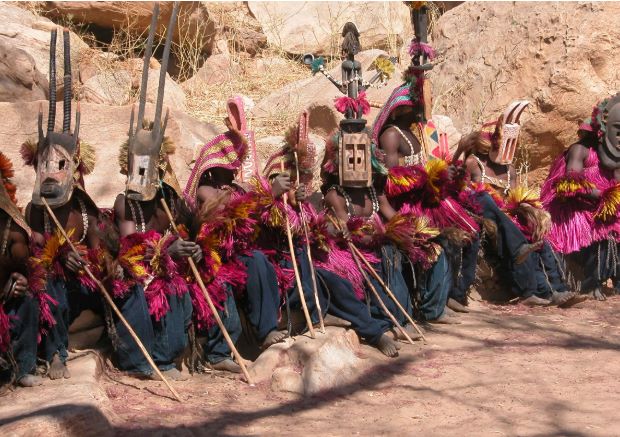
Among the most celebrated examples of Dogon artistic expression are their wooden masks. Traditionally carved from wood and painted in shades of red, black, white, and brown, these masks are believed to embody spiritual power. They are primarily used during the Dama ceremony, a traditional funeral ritual that guides the deceased’s spirit safely into the ancestral world.
Although some mask performances are now presented for visitors, many sacred ceremonies remain private and are conducted only within the community.
One of the most recognizable ceremonial masks is the Sirige mask. Carved from a single tree trunk, it symbolizes a great ancestral house and can reach heights of 13 to 20 feet. The towering mask is stabilized by ropes that the wearer grips with their teeth, while additional cords are secured around the waist. Only highly skilled dancers can perform with the Sirige during major funeral ceremonies associated with the Sigui festival. The Sigui festival is a significant religious celebration held approximately once every sixty years.
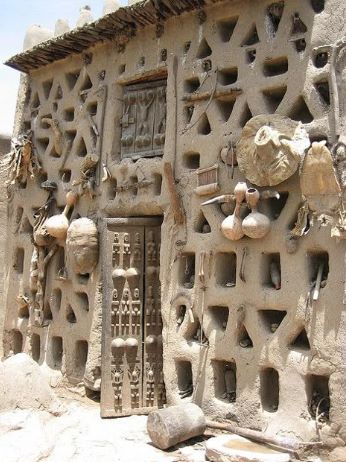
Image source: Pinterest
Other important masks include the Kanaga mask, whose cross-like design represents the relationship between heaven and earth and symbolizes Amma, the Dogon creator deity. The Yana Gulay mask depicts a Fulani woman and is decorated with cloth and cowrie shells, reflecting cultural interaction among neighboring communities. The Satimbe mask honors female ancestors believed to possess exceptional spiritual wisdom and knowledge of the afterlife.
Traditional Dogon religion emphasizes harmony between humanity, nature, the ancestors, and the spiritual world. Their religious system is organized around three major institutions. The Awa society oversees funeral ceremonies and rituals for the dead. The Bini serves as a spiritual institution that facilitates communication between humans and the spirit world, while the Lebe institution is closely associated with agriculture, fertility, and reverence for the earth.
The Dogon people also revere Nommo. The Nommos are revered ancestral beings who occupy a central place in their creation traditions. Their oral history preserves a rich body of cosmological narratives that has attracted scholars from around the world.
Although Islam and Christianity have become established in many Dogon communities, traditional beliefs continue to shape important aspects of their cultural identity and communal life.
The architectural traditions of the Dogon reflect a remarkable blend of practicality, environmental adaptation, and artistic creativity. Their villages are constructed primarily from clay and other locally available materials, allowing the buildings to blend seamlessly with the cliffs of the Bandiagara Escarpment. A typical family compound consists of several residential structures, granaries with distinctive conical roofs, and open communal spaces where social activities take place.
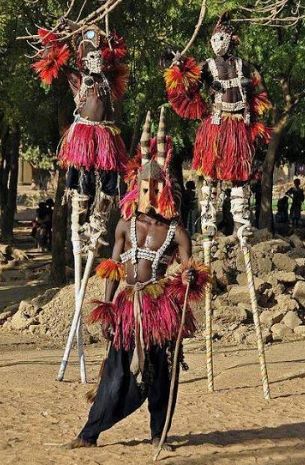
Image source: Oriire
One of the defining features of Dogon architecture is the intricate carving found on wooden doors, shutters, and granary locks. These carvings often depict human figures, animals, and symbolic images believed to protect households, safeguard stored harvests, and honor ancestral spirits. Because of their exceptional artistic quality, many authentic Dogon doors and architectural carvings are now preserved in museums and private collections across the world.
Another important architectural feature is the toguna, the traditional meeting house reserved primarily for male elders. Supported by carved wooden pillars and covered with an unusually low roof, the toguna was deliberately designed to prevent participants from standing during discussions. By forcing everyone to remain seated, the structure helped discourage aggressive behavior during disagreements and promoted patience, mutual respect, and peaceful conflict resolution.
In recognition of its outstanding cultural and historical significance, the Bandiagara Escarpment was inscribed as a UNESCO World Heritage Site in 1989. The site remains one of Africa’s finest examples of how human communities have adapted creatively to a challenging environment while preserving rich artistic, architectural, and spiritual traditions.
The Dogon civilization demonstrates how art, architecture, and spirituality can become inseparable from everyday life. Their enduring customs continue to provide valuable insight into Africa’s cultural diversity and stand as a lasting proof of the resilience of a people who have carefully safeguarded their heritage across centuries.

Okechukwu Nzeribe works with the Onitsha Chamber of Commerce, in Anambra State, Nigeria, and loves unveiling the richness of African cultures. okechukwu.onicima@gmail.com