“Salt comes from the north, gold from the south, and silver from the country of the white men, but the word of God and the treasures of wisdom are only to be found in Timbuktu,” an old Sudanese proverb.
What comes to mind when you hear the word Timbuktu? For some, it is a remote, beautiful, imaginary place far away, at the end of the world. Others may conjure up images of a legendary, lost city in northwest Africa with golden treasures hidden away. There are still people who do not know that Timbuktu is a real city in Africa and not just some mythical place in the middle of nowhere.
In 2006, a survey of 150 people in the UK revealed that 34% of respondents did not believe Timbuktu existed, while 66% considered it “a mythical place.”
The truth is, Timbuktu is a real place. It’s an ancient city in the nation of Mali on the edge of the Sahara in West Africa, about 8 miles (13 km) north of the Niger River. Before European colonization, Timbuktu (in modern-day Mali) used to be an influential Islamic intellectual centre, a cosmopolitan multicultural city of commerce and learning, and the second-largest imperial court in the world.
Once spelled as Timbuctoo, the city had stunning mosques and libraries which housed thousands of manuscripts on different subjects, some dating back to the 12th century. As the intellectual and literary heart of Africa, thousands of scholars from as far as Islamic India and Moorish Spain came to study here.
The curricula covered not only religious studies, but also astronomy, mathematics, medicine, law, and others, proving Timbuktu was a well-rounded academic powerhouse.
The Rise and Fall of Timbuktu
UNESCO reported that the city, founded in the 5th century, only gained widespread prominence as an intellectual capital during the 15th and 16th centuries.
Thanks to its location, the city quickly grew from a seasonal camp for storing salt and other goods to a major player in the trans-Saharan caravan trade that primarily trafficked in gold, salt, and slaves. Some of the travelers from the west who brought gold to trade for salt chose to make the location their permanent dwelling, and before long, the town became a city and a magnet that attracted both men of learning and men of commerce.
By the early 1300s, Timbuktu belonged to the Empire of Mali and was flourishing. Among the famous scholars and explorers of the era, Ibn Battuta, Cadamosto, and Leo Africanus wrote glowingly of the city’s wealth from the 13th to mid-16th centuries.
The city experienced its “Golden Age” in the late 15th century, but gold bars were not responsible for this prosperity. It was books. Timbuktu rose to become an Islamic center of learning, bringing students from across the region to its universities and libraries. Books were accumulated in the universities’ large libraries. At its peak, Timbuktu’s Islamic Sankore University hosted 25,000 students.
Three of western Africa’s oldest mosques, Djinguereber (Djingareyber), Sankore, and Sidi Yahia, were built there during the 14th and early 15th centuries. The Sankore mosque, around which Sankore University was established, still stands today.
This golden era was abruptly halted by the Moroccan invasion in 1591, an attempt to control the lucrative gold and salt reserves in the area. It was initiated by the Sa’dian ruler of Morocco, Mawlay Ahmed al-Mansur. Many of Timbuktu’s most highly regarded scholars were kidnapped and forcibly taken to northern Africa. As a result, the once-flourishing city began to decline gradually.
Fulani controlled the city for a short period in the first half of the 19th century. It was later captured by the French in 1894 and lasted until 1960, when it became part of the newly independent Republic of Mali.
By the time Europeans discovered Timbuktu, the city’s golden age was long gone. The palaces of its kings and other fine buildings had crumbled and were a shadow of themselves.
Read also FunTimes Magazine | The Role Of Digital Humanities In Preserving African Cultural Heritage to find more about the digital preservation of the Timbuktu manuscripts.
The ‘Lost’ Libraries of Timbuktu
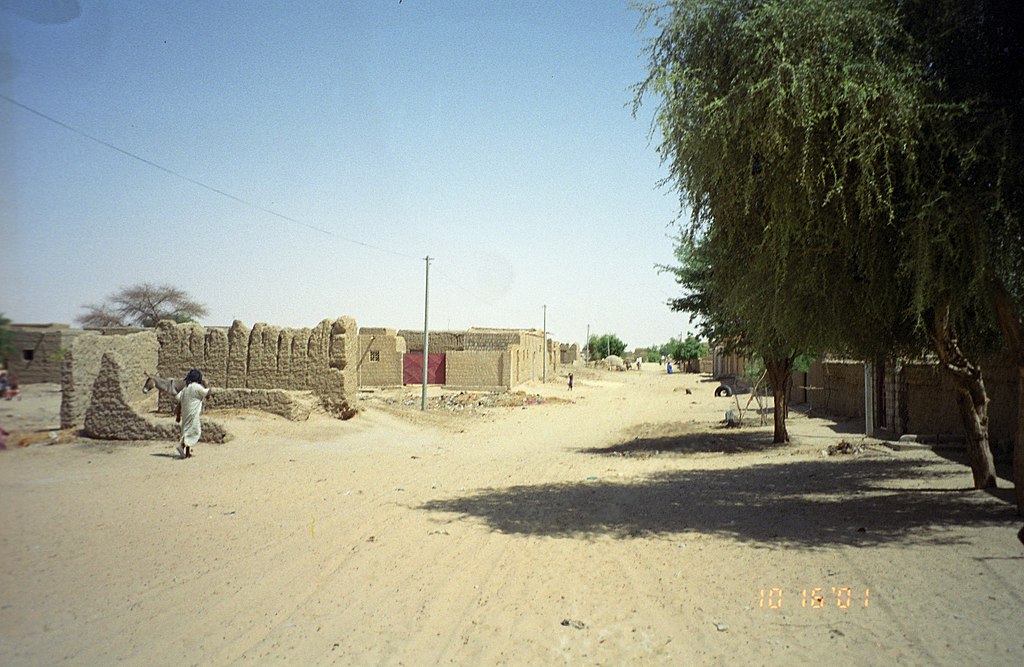
The Timbuktu of today is very different from the golden age. It is poor, a shell of its former self, and constantly facing attacks from rebels.
In 2012, Islamic extremists linked to al-Qaida invaded, threatening the city’s years of cultural heritage by burning thousands of ancient manuscripts.
However, many of these manuscripts are still safe, showcasing the intellectual legacy of Africa. It is estimated that there are about 300,000 extant manuscripts in circulation in Timbuktu and the surrounding areas. From religion to science and literature, these manuscripts cover a wide range of topics and are written in Arabic and several African languages. They provide invaluable insights into the intellectual and cultural achievements of West Africa during the Middle Ages.
Over the last few decades, historians and preservationists have been showing renewed interest in the city. In 1988, several of Timbuktu’s mosques were placed on the UNESCO World Heritage List, and the Cultural Mission of Timbuktu was established in 1993. Both served as ways to conserve the city’s historic area and educate those in the region about its history.
Fortunately, some of the libraries have received funding and donations from foreign institutions and governments for their preservation.
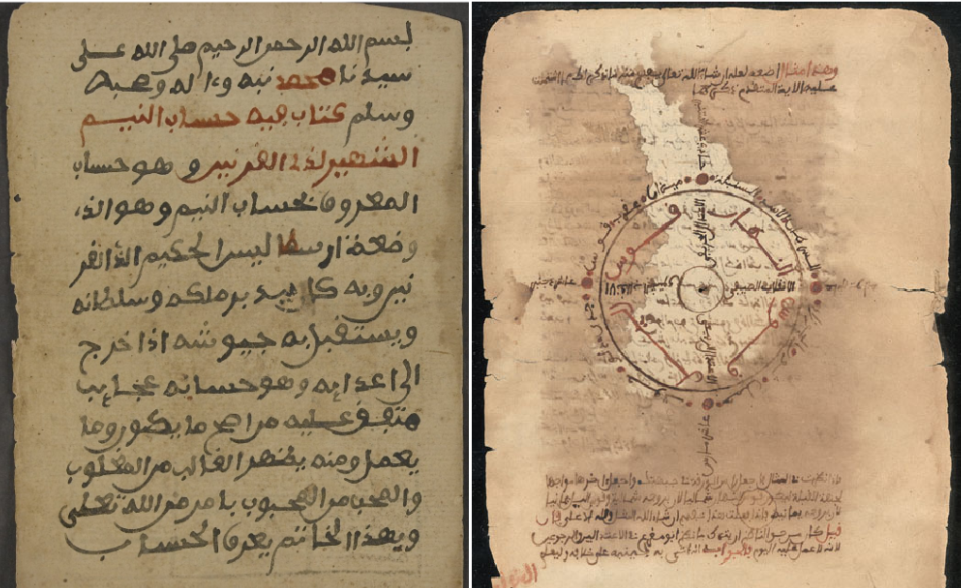
Photo source: Wikimedia Commons
What These Libraries Tell Us About Africa
Africa has a long-standing literary tradition, and the Timbuktu manuscripts, which date from between the 14th and 16th centuries, a time when the town was thriving, are remarkable artifacts important to Malian and West African culture.
Not only are they a representation of the continent’s cultural heritage, but they are also proof that African societies were documenting, debating, and disseminating knowledge centuries before any contact with the Western world.
These manuscripts offer firsthand accounts of African governance, science, and spirituality, establishing a strong record of the continent’s literary heritage.
When the city started to decline, the manuscripts faced threats of destruction. Many were hidden in underground chests or carried secretly through the desert to escape raiders. Even today, families in Timbuktu guard these manuscripts as ancestral treasures.
There have been efforts by Mali’s traditional leaders, historians, and digital archaeologists to digitize these ancient manuscripts to ensure that this rich heritage is preserved and accessible to future generations.
Timbuktu’s lost and recovered libraries reveal not only one of Africa’s greatest intellectual legacies but also challenge the long-held myth that precolonial Africa had no written tradition. These libraries dismantle the false narratives about Africa being a “dark continent,” as they prove the continent was a land with deep knowledge in science, art, and philosophy, centuries ahead of its time.
They testify to the fact that the reading and writing of books have long been as important to Africans as they are to Europeans.
The ancient city’s magnificent libraries and mosques may have been lost to history, but the legacy of the city lives on in the historical records left by scholars and explorers who witnessed Timbuktu in its golden age.