SImage Credit: Shutterstock
Scattered along the Mediterranean coast of modern-day Tunisia are the remains of one of the most powerful cities of the ancient world, Carthage. Although centuries have passed since its destruction, the ruins of Carthage continue to inspire curiosity, research, and visits from historians, archaeologists, and travelers alike.
More than broken walls and weathered stones, the ruins serve as a gateway into the story of a civilization that once rivaled Rome for supremacy in the Mediterranean. They reveal the ambitions of a people who built a thriving commercial empire, developed advanced urban infrastructure, and left a lasting mark on the history of North Africa and the wider Mediterranean world.
The Birth of Carthage
The ancient city of Carthage was one of the most influential cities in Mediterranean history. Located on the northern coast of present-day Tunisia, it occupied a strategic peninsula overlooking the Mediterranean Sea. This prime location enabled the city to oversee important maritime routes connecting North Africa with Sicily and southern Europe.
Over time, Carthage transformed from a modest coastal settlement into a prosperous commercial hub whose influence extended across much of the western Mediterranean.
Rivaling Rome in political and economic influence, Carthage grew into one of the wealthiest cities of the ancient world. Its prosperity was driven by extensive trade in metals, agricultural products, textiles, pottery, and luxury goods, including the highly prized purple dye extracted from murex sea snails, a product reserved for royalty and the elite.
History attributes the founding of Carthage to Phoenician settlers from the ancient city of Tyre in present-day southern Lebanon around 814 BCE. Its original Phoenician name, Qart Hadasht, meaning “New City,” reflected its role as an important colonial settlement established to expand Phoenician trade networks across the Mediterranean.
The Phoenicians were renowned sailors and accomplished merchants who carefully selected locations for their settlements. Carthage was established in an ideal setting that combined natural protection with easy access to major maritime routes.
Positioned on a triangular peninsula bordering the Gulf of Tunis, the city benefited from sheltered harbors that provided excellent natural defenses. The nearby Lake of Tunis offered safe anchorage for ships, while the narrow land bridge connecting the peninsula to the mainland made the settlement easier to defend against potential invaders. Carthage also lay close to the Strait of Sicily, one of the Mediterranean’s busiest maritime corridors, allowing it to influence and benefit immensely from regional trade.
While the city’s prosperity was undeniable, its priorities differed from those of many ancient civilizations. Rather than expanding primarily through conquest, Carthage built its influence through trade and commerce. Its merchants exchanged metals, textiles, agricultural products, pottery, and luxury goods across vast trading networks, generating enormous wealth and influence.
This commercial success eventually established Carthage as the dominant power in the western Mediterranean and laid the foundation for its famous rivalry with Rome, a conflict that would ultimately reshape the course of ancient history.
In recognition of its immense historical and cultural significance, the ruins of Carthage were designated a UNESCO World Heritage Site in 1979.
The Rise of a Mediterranean Power
As Carthage’s wealth grew, so did its political and military influence. Controlling trade routes that stretched across present-day Tunisia, Algeria, Morocco, parts of Spain, Sicily, Sardinia, Corsica, and other Mediterranean territories, Carthage established colonies and trading posts throughout the region. These settlements strengthened its commercial reach while extending its political influence far beyond North Africa.
Source: Tripadvisor
The Carthaginians understood that protecting their commercial dominance required command of the seas, and achieving this meant building powerful fleets and training experienced sailors to defend their expanding maritime network.
Over time, Carthaginian ships became a familiar sight across the Mediterranean, transporting goods, protecting merchant vessels, and safeguarding strategic ports. Their naval expertise enabled Carthage to maintain thriving trade networks while projecting military strength whenever necessary. As centuries passed, Carthage emerged as one of the greatest maritime powers of the ancient world, possessing one of history’s most formidable navies.
The city’s prosperity also rested on a sophisticated system of governance. Unlike many monarchies of the ancient world, Carthage operated under a republican system where elected officials, influential merchant families, and governing councils shared political authority. This balance between commerce and governance helped provide the stability needed for continued economic growth.
Agriculture, on the other hand, also played a vital role in Carthage’s success. The fertile lands surrounding the city produced grain, olives, grapes, and livestock in abundance. Carthaginian farmers became renowned for their agricultural expertise, and their methods influenced farming practices throughout the Mediterranean.
Carthage’s expanding influence inevitably attracted rivals. As both Carthage and the rising Roman Republic sought greater control over Mediterranean trade routes and territories, competition between the two powers intensified. What began as commercial rivalry gradually evolved into political tension and, ultimately, military confrontation.
Punic Wars
No discussion of Carthage is complete without mentioning its most celebrated military commander, Hannibal Barca. More than two thousand years after his death, his name remains synonymous with military brilliance, daring strategy, and extraordinary leadership.
By the third century BCE, Rome had emerged as a formidable power whose growing ambitions increasingly clashed with those of Carthage. As both civilizations expanded their influence across the Mediterranean, conflict became inevitable. Their rivalry culminated in a series of three wars known collectively as the Punic Wars, among the most consequential military conflicts in ancient history.
The First Punic War (264–241 BCE) was fought largely for control of Sicily and the surrounding seas. Although Carthage possessed a stronger navy at the outset, Rome adapted quickly, building a powerful fleet capable of challenging its rival. After more than two decades of costly warfare, Carthage was defeated and forced to surrender Sicily, marking the beginning of Rome’s rise as a dominant naval power.
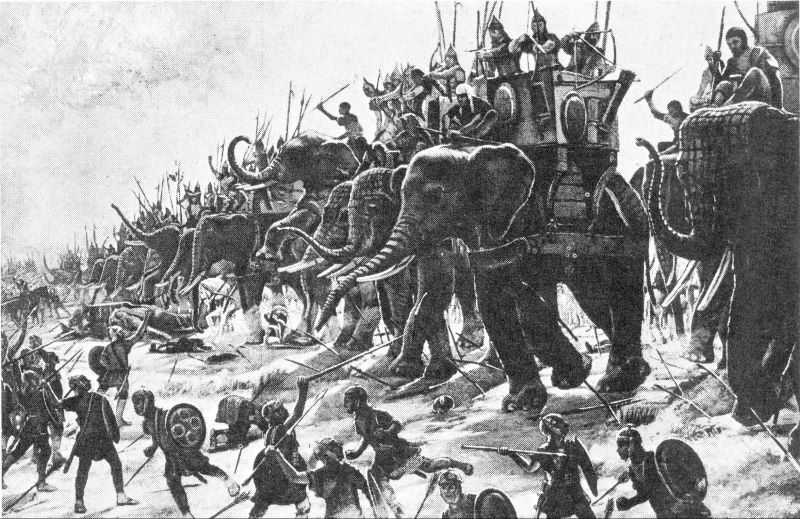
The Second Punic War (218–201 BCE) produced one of history’s most remarkable military campaigns. Determined to challenge Rome on its own soil, Hannibal led an army from Spain across the Pyrenees, through southern Gaul, and over the snow-covered Alps into Italy. Accompanied by thousands of soldiers, cavalry, and his famous war elephants, he accomplished what many believed to be impossible. His daring invasion shocked Rome and remains one of the greatest feats of military logistics ever recorded.
Hannibal’s victories earned him a place among history’s greatest commanders. Yet despite his extraordinary successes, he was unable to deliver a decisive blow that would force Rome into surrender. Rome’s resilience, vast manpower, and ability to replenish its armies gradually shifted the balance of the war. While Hannibal remained undefeated on Italian soil for years, Carthage lacked the resources needed to sustain the campaign indefinitely.
Eventually, the Roman general Scipio Africanus carried the war into North Africa, forcing Hannibal to return home to defend Carthage. The two commanders met at the Battle of Zama, where Hannibal suffered his first major defeat. The outcome effectively ended the Second Punic War and significantly weakened Carthage’s military and political influence.
Although Carthage survived, the peace terms imposed by Rome were severe. The city lost much of its territory, surrendered its navy, paid enormous financial reparations, and was prohibited from waging war without Roman approval. While Carthage gradually recovered economically through trade and commerce, its military was greatly reduced.
Source: Kosmos Society
The Fall of Carthage
The final chapter of Carthage’s independence unfolded during the Third Punic War (149–146 BCE). Following the Second Punic War, Carthage was bound by a treaty requiring it to obtain Rome’s approval before engaging in military action. Years later, neighboring Numidia, a Roman ally, repeatedly seized Carthaginian territory. After enduring repeated incursions, Carthage eventually responded militarily without Rome’s consent. Rome seized upon this action as the justification it had long sought. Declaring that Carthage had violated the treaty, the Roman Senate mobilized its forces and launched a full-scale invasion aimed at eliminating its greatest rival forever.
The initial stages of the siege produced little success for Rome. The Carthaginians mounted a determined defense, converting workshops into weapon factories and mobilizing virtually every able-bodied citizen. Men forged swords and shields, and other military equipment. Despite famine, disease, and dwindling supplies, the defenders refused to surrender.
The tide eventually turned under the command of the Roman general Scipio Aemilianus. Through disciplined leadership and careful planning, he reorganized the Roman assault, defeated Carthage’s remaining field army, and sealed off the city’s harbor, cutting off supplies and escape routes.
After a relentless siege lasting nearly three years, Roman forces finally breached Carthage’s walls. Fierce street-to-street fighting followed, with every barricade, courtyard, and fortified house becoming a battleground. The Carthaginians resisted with extraordinary determination, forcing Roman soldiers to fight for every street and every building.
By the eighth day of the final assault, organized resistance had collapsed. Thousands of civilians had perished, while many of the survivors were taken captive and sold into slavery. The once-great city that had dominated Mediterranean commerce for centuries was reduced to ruins.
Yet Carthage’s story did not end with its destruction.
Recognizing the immense strategic value of its location, the Romans later rebuilt the city. Under Roman rule, Carthage once again flourished, becoming one of the empire’s most important urban centers in North Africa. It evolved into a thriving administrative, commercial, and cultural capital.
Exploring the Ruins of Carthage
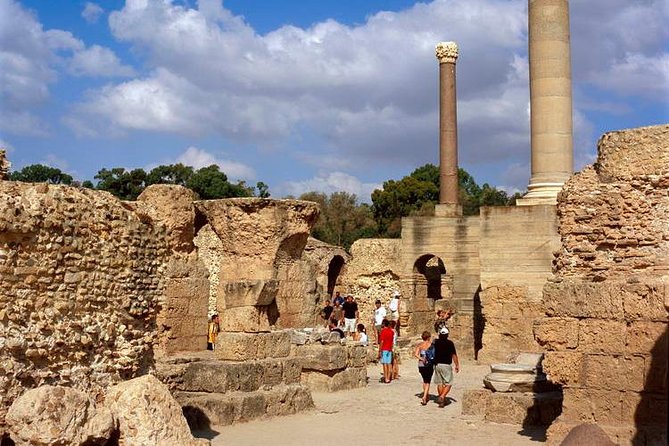
Today, the ruins of Carthage offer a remarkable glimpse into the many layers of history that shaped one of the ancient world’s greatest cities. Archaeological excavations have uncovered structures from both the Punic and Roman periods, allowing visitors to explore the remains of multiple civilizations within a single historic site.
Far more than piles of weathered stone, the ruins reveal the sophistication of urban life in ancient Carthage. Streets, public buildings, residential quarters, temples, workshops, and engineering works reflect a society that valued organization, innovation, commerce, and public infrastructure. Every excavation continues to deepen our understanding of how the Carthaginians lived, worked, governed, and interacted with the wider Mediterranean world.
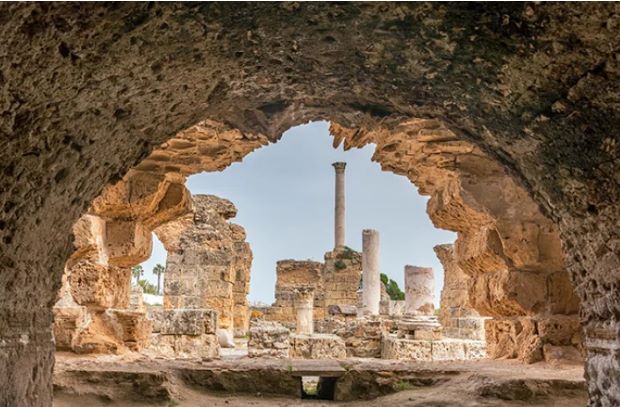
Among the most impressive monuments are the Antonine Baths. Constructed during the Roman period under Emperor Antoninus Pius, they rank among the largest public bathing complexes ever built outside Rome.
Overlooking the Mediterranean Sea, the baths remain a striking example of Roman engineering and architectural ambition. Although only portions of the complex survive today, visitors can still appreciate its immense scale and imagine the grandeur that once defined the site. Beyond serving as places for personal hygiene, Roman baths functioned as important social, cultural, and recreational centers where citizens gathered to conduct business, exchange ideas, and build relationships.
Another significant landmark is Byrsa Hill, the political, military, and religious heart of ancient Carthage. Rising above the surrounding landscape, the hill offered leaders a commanding view of the city, its ports, and the Mediterranean beyond.
Carthage and Its Relevance in Modern-Day Africa
While military campaigns, political achievements, and commercial success often dominate discussions about Carthage, its ruins also tell the stories of ordinary people whose lives shaped the city’s greatness.
Archaeological excavations also uncovered artifacts such as pottery, tools, jewelry, coins, inscriptions, and religious objects. This provided valuable clues about how the Carthaginians lived, worked, worshipped, and expressed their identities.
The ruins remind us that Africa possesses a rich and remarkable history of its own. Beyond the stories of kings, generals, and conquerors lies the history of merchants, craftsmen, farmers, sailors, architects, traders, and families whose collective efforts transformed Carthage into one of the ancient world’s greatest cities. Their achievements helped shape not only North Africa but also the wider Mediterranean world.
Echoing this perspective, Dr. Akinwumi Adesina, former President of the African Development Bank (AfDB), has consistently argued that Africa’s future lies in unlocking its immense economic potential through structural transformation, infrastructure development, industrialization, technological advancement, and greater investment in its people.
The ruins of Carthage ultimately remind us that civilizations may rise and fall, but their ideas, achievements, and lessons can endure for centuries.

Okechukwu Nzeribe works with the Onitsha Chamber of Commerce, in Anambra State, Nigeria, and loves unveiling the richness of African cultures. okechukwu.onicima@gmail.com