Source: mumbath
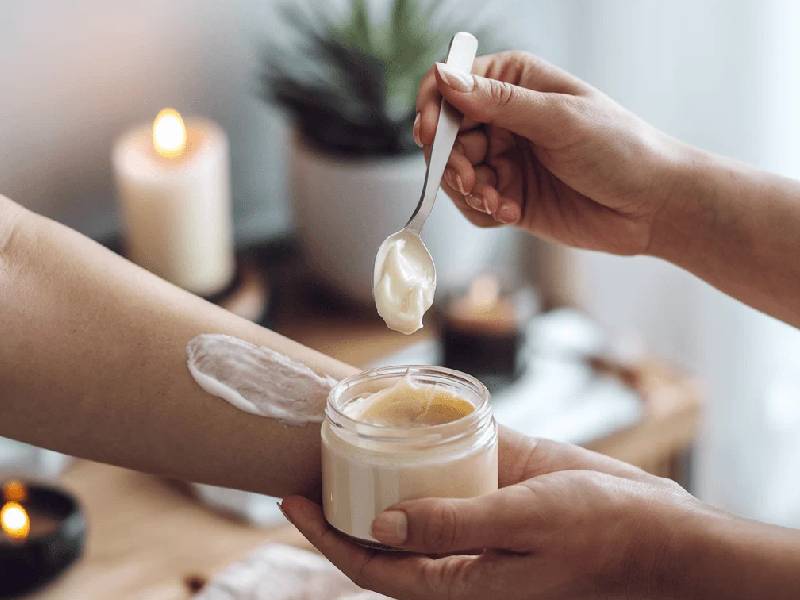
In Southwest Philadelphia, where a large share of the city’s West African community has settled, corner stores stock plastic tubs of raw, unbranded shea butter alongside relaxers, edge control, and bootleg incense. A few miles away, in a boutique on Walnut Street or on a shelf at a national retailer, the same substance sells under a brand name, packaged in glass, marketed as a recent discovery in clean beauty. The price difference can run five or ten times over. The ingredient has not changed. What changed is who gets to tell its story and who gets paid for it.
Shea butter has sustained West African households for centuries. Vitellaria paradoxa, the tree it comes from, grows across a belt stretching from Senegal to Uganda, and the labor of harvesting, cracking, roasting, and pounding its nuts into butter has for generations belonged almost entirely to women. In Ghana alone, an estimated 85% take part in the shea trade, work that provides as much as 70% of household income in shea-producing regions.
Across West Africa, the trade has existed for over 600 years. None of that labor is a metaphor for resilience. It is a physically demanding economy that has run largely on its own terms for longer than most American beauty brands have existed.
What hasn’t run on its own terms is the money. Exporters and a handful of large international manufacturers control most of the value chain, buying raw kernels cheaply and shipping them abroad for refining, where the markup occurs. Women who collect and process the nuts see a fraction of what their labor is worth once shea butter reaches a Western shelf as a body butter with a script-font label and a founder’s letter about rediscovering African beauty secrets. The knowledge was never lost. It was priced out of the hands of the people who built it.
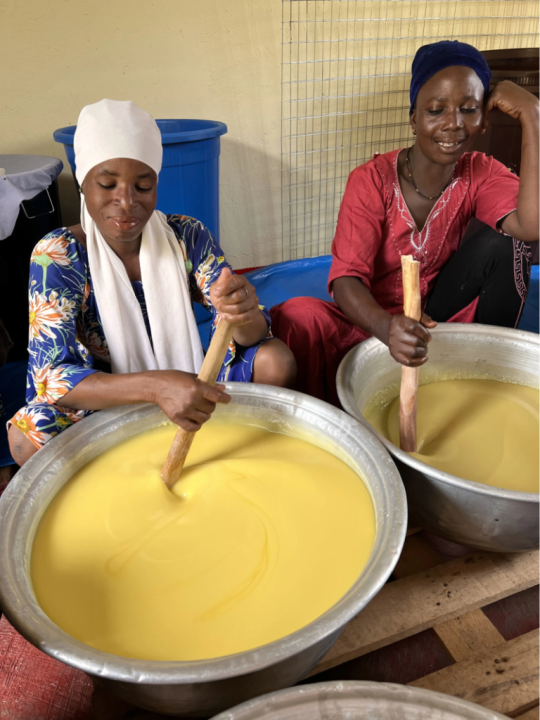
Source: Barakasheabutter
Philadelphia sits at an odd crossroads in this story because it holds both ends within its city limits. An estimated 50,000 African immigrants live in the greater Philadelphia area, the largest communities tracing back to Nigeria, Liberia, Ethiopia, and Ghana, concentrated in West and Southwest Philadelphia. They carry practical, inherited self-care knowledge that predates the modern wellness industry by centuries.
A few miles east, the University of Pennsylvania is where dermatologist Jules Lipoff analyzed dermatology textbooks and found that images of darker skin made up somewhere between four and eighteen percent of the total, in a field where diagnosis depends almost entirely on recognizing what a condition looks like on the page.
A colleague who reviewed the same literature noted that the darker-skin images that did appear were disproportionately tied to sexually transmitted infections rather than the ordinary range of skin conditions everyone develops. Nearly half of practicing dermatologists have reported that they were never adequately trained to recognize common conditions on Black skin.
Put those two Philadelphia-adjacent facts next to each other, and a pattern that has nothing to do with product formulation or textbook budgets appears. Black self-care knowledge gets treated as folklore until a non-Black company packages it, and Black skin gets treated as an afterthought, or worse, a cautionary example, until a study finally points out that it was left out.
Hydration, moisturizing, basic skin maintenance, and the routine care of a body keep getting handled as a specialty case for Black people instead of a baseline. The same industries willing to sell a shea-based serum at a premium have not bothered to make sure the doctor treating a Black patient’s dry, cracking skin actually learned what that skin looks like when something is wrong with it.
This is not a call for gratitude toward the brands that have finally noticed African ingredients, and it is not a request for a few more diversity slides in a dermatology curriculum. Both of those responses treat the current setup as basically fine and just needing a nicer face on it. The real problem is ownership: of knowledge, of profit, of who gets to be recognized as an authority.
A shea cooperative in the Upper West Region of Ghana should not need a foreign company’s approval to reach global shelves at a fair margin. A dermatology resident should not graduate having seen a dozen photographs of a rash on white skin for every one on Black skin. Self-care, as a word, has been stretched thin enough to cover candles, skincare routines, and mental health apps until it barely describes anything. But at its root, it named something specific: people caring for their own bodies with knowledge they trusted, often because no outside system was reliably doing that caring for them. That was true of women in Burkina Faso pounding shea nuts by hand long before the word wellness existed, and it is true of Black families in North Philadelphia who kept passing down home remedies because the clinic down the block was not always going to get the diagnosis right.
None of that history needs to be corrected into a market opportunity. It needs the people who built it, on both sides of the Atlantic, to be paid like experts and trusted like experts, instead of being discovered every decade or so by someone with a bigger marketing budget.

Anand Subramanian is a freelance photographer and content writer based out of Tamil Nadu, India. Having a background in Engineering always made him curious about life on the other side of the spectrum. He leapt forward towards the Photography life and never looked back. Specializing in Documentary and Portrait photography gave him an up-close and personal view into the complexities of human beings and those experiences helped him branch out from visual to words. Today he is mentoring passionate photographers and writing about the different dimensions of the art world.