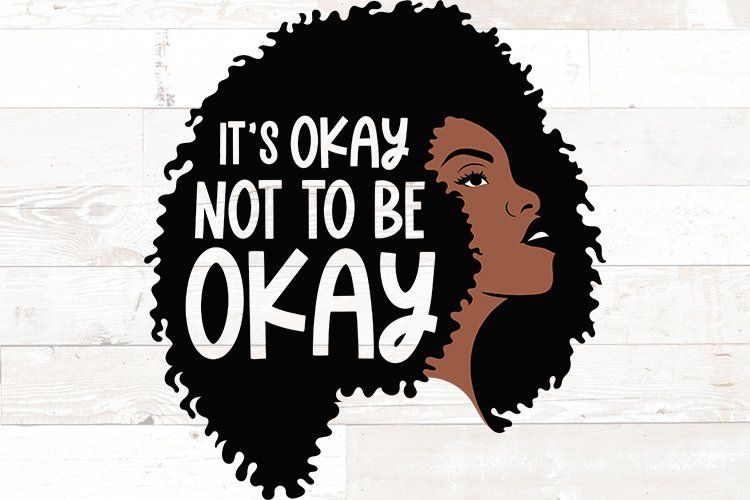
Source: Above Whispers
The most revealing sentence on the Loveland Foundation’s therapy page is not about healing. It is the instruction for when the signup form is closed: add your email to a waitlist. The fund pays for therapy for Black women and nonbinary people across the United States. Its form opens quarterly, and applicants can expect a follow-up email within four to six weeks of signing up.
On Saturday, October 10, the world marked World Mental Health Day. This year’s theme, according to the World Health Organization, is “Lived Experiences Heard: Real Voices, Real Change.” It asks systems to listen. My argument is that listening is the easy part. Awareness has outrun access, and Black women are filling the gap with their own organizations, which is admirable and unsustainable.
The familiar story is that Black women do not seek help because of stigma. There is truth in it. In a study led by nursing researcher Cheryl Woods-Giscombé, eight focus groups with 48 African American women in the southeastern U.S. described pressure to project strength, suppress emotion, and put caregiving ahead of themselves. Participants shared a blunt view of therapy: “African American women do not go to therapy.”
But the same paper describes a supply problem. Participants spoke of therapists who seemed to rush them or didn’t grasp their lives, and they said they wanted providers who did. The study was published in 2016, based on data collected earlier, and its authors note limitations: all participants were from the Southeast, and the faith perspectives were largely Christian. Even so, it points away from a purely cultural explanation.
Loveland was established in 2018 by Rachel Cargle. Speaking at its first gala, she told the room, “We are Black women serving Black women.” Help built from inside the community is a strength. It is also a sign of who has been left to build it.
Source: The Loveland Foundation
The fund covers four to twelve sessions. The page puts the cost of a session at $80 to $200. At those prices, the sessions the fund covers would cost roughly $320 to $2,400. A voucher is a lifeline, but a finite one, and the page itself describes a waitlist.
In 2023, Nigerian public health physician Ifeanyi Nsofor wrote that Nigeria had fewer than 250 psychiatrists for more than 200 million people, which he put at about one per million. He co-led a national survey of more than 5,300 Nigerians, conducted in 2019 and released in January 2020 by the Africa Polling Institute and EpiAFRIC. Nsofor reports that 54% cited possession by evil spirits as a cause of mental illness. He also highlighted the Mentally Aware Nigeria Initiative, which he said reached more than 3 million people monthly through social media. Its founder, Victor Ugo, has described mental health as “a continuum.”
Law hasn’t closed the gap either. Nigeria’s president signed a national Mental Health Act on January 5, 2023. More than three years on, Premium Times reported in June that implementation of several provisions remains slow. The advocacy group Nigerian Mental Health said the government missed its December 2025 target to fully decriminalize attempted suicide.
The most striking answer to scarcity comes from Zimbabwe. Psychiatrist Dixon Chibanda writes that he was one of a handful of psychiatrists in a country of nearly 17 million. His response was the Friendship Bench, which trains community members, whom the program calls grandmothers, to deliver talk therapy on park benches. In a randomized trial published in 2016 by a team that included Chibanda, 14% of treated patients still had depression symptoms after six months, compared to 50% receiving standard care. The program now reports 1,093,104 clients seen and a 78% reduction in depression and suicide ideation, as of April 2026. Those are its own figures.
The Africa Polling Institute’s press release even suggested replicating the Friendship Bench in Nigerian communities. The program is not built only for women, but it shows what care looks like when it is designed around the people who are actually there, rather than the professionals who are not.
Awareness work has a job to do. When 54% of surveyed Nigerians cite spirit possession as a cause, stigma is a real barrier, and a society that cannot talk about mental illness will not fund its treatment.
Funders should favor recurring, multi-year money for Black-led organizations so that help doesn’t depend on a waitlist. Employers should cover therapy with culturally matched providers instead of a generic wellness app.
Read also: Self-Care Was Never Missing From Black Communities. It Was Priced Out.
Source: Women of Global Mobility
Health systems in Africa should pay for community-delivered models like the Friendship Bench instead of treating them as charity. The risk in my approach is cost, and the evidence on culturally matched care deserves scrutiny. I would still rather argue over how to pay for access than keep celebrating awareness.
Where to start
| Resource | What it offers | Link |
| Loveland Therapy Fund (US) | Vouchers for 4–12 therapy sessions for Black women and nonbinary people; the form opens quarterly | Page |
| Therapist directories (US) | Loveland names Therapy for Black Girls and Black Female Therapists among its partner directories | Loveland page |
| 988 Suicide & Crisis Lifeline (US) | Call or text 988 in a crisis; the older 1-800-273-8255 also reaches the Lifeline | FCC fact sheet |
| Mentally Aware Nigeria Initiative | Free, volunteer-led virtual counselling and mental health first aid | Site ·Nigeria Health Watch |
| Friendship Bench (Zimbabwe) | Free talk therapy and peer support groups | Site |
| Basic Needs Basic Rights Kenya | Community mental health support for people with mental health conditions, those at risk, and their caregivers | Site |
The theme asks for real voices, and we already have them. A Black woman who built a therapy fund by herself. A focus-group participant who said what many are told. A Zimbabwean psychiatrist who was one of a handful in a country of nearly 17 million, and a Nigerian physician who counted his country’s psychiatrists and found about one per million. Each is a person describing a shortage, not a lack of willingness to speak. So the October 10 test isn’t about how many posts carry the hashtag. It is whether, the next time a woman opens a page like Loveland’s, the waitlist is shorter than it was. Until then, listening is not the same as helping.

Anand Subramanian is a freelance photographer and content writer based out of Tamil Nadu, India. Having a background in Engineering always made him curious about life on the other side of the spectrum. He leapt forward towards the Photography life and never looked back. Specializing in Documentary and Portrait photography gave him an up-close and personal view into the complexities of human beings and those experiences helped him branch out from visual to words. Today he is mentoring passionate photographers and writing about the different dimensions of the art world.