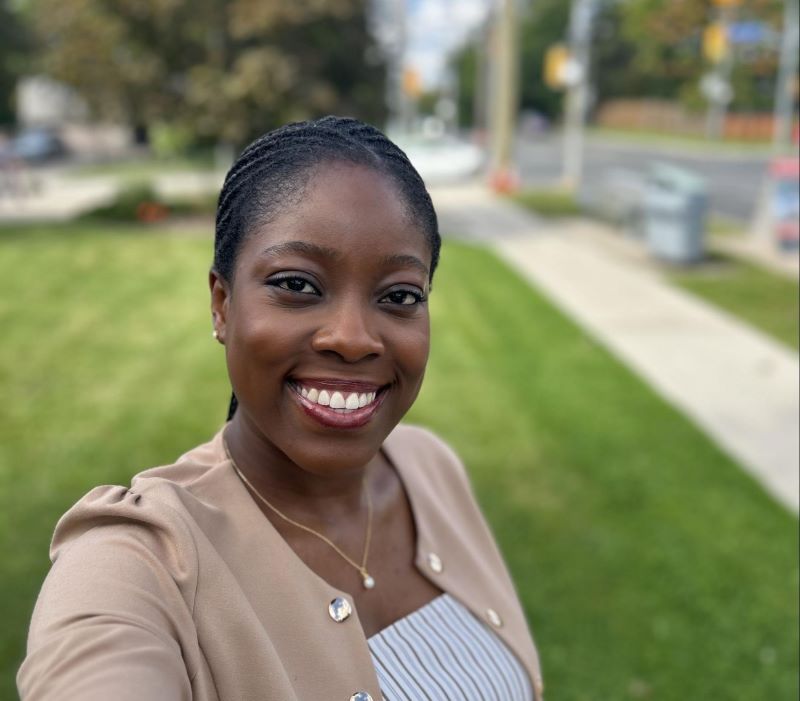

Photo source: Gift Wogu
Sometimes, the dream of relocating is rarely about escaping poverty. It is about chasing possibilities that feel just out of reach at home. You can have a good job, earn in foreign currency, enjoy a comfortable lifestyle, and still feel there is something more waiting for you elsewhere. That was the reality for Gift Wogu. In January 2022, she left Nigeria not because life had become unbearable, but because she wanted more opportunities and a future she felt Nigeria could no longer guarantee. Like thousands of young Nigerians, the aftermath of EndSARS, uncertainty about the country’s direction, and the daily frustrations of living in a system that often feels indifferent pushed her to look beyond its borders.
In this conversation with FunTimes, Gift opens up about the realities many immigrants face but rarely discuss, and how she has been able to overcome several challenges along the way.
What was life like in Nigeria, and what made you consider relocating?
At the time I considered relocating, life was not bad for me in Nigeria, to be honest. I had a job. I was freelancing on Upwork and Fiverr, and I was making a lot of money from those platforms. Aside from that, I worked as a lead local art strategist for an ad agency in California. But I wanted more for myself, more opportunities, and Nigeria was not giving me the more that I wanted. One of the things that strongly made me consider relocating was the EndSARS protests that happened in 2020. It made me double my relocation hustle. Secondly, poor electricity, noise, just a whole lot of things made me decide that, you know what, I do not want to stay here anymore. I can get better than this. I do not have to be here.
The government not caring about its citizens was the worse of it all. How they treated us, especially during the EndSARS. It was so heartbreaking, and I told myself, “I can’t do this anymore.” Also, my sister in Canada was a driving force. She encouraged me to relocate and was one of the main reasons I decided to pursue PR in Canada.
Tell us about your experience in the UK and why you left. Do you feel it was the right call?
The only word I have to say regarding the UK is that I suffered.
I would not say I was too rich, but I was just okay for a young girl my age. So, coming from having a comfortable life to struggling in the UK and starting from scratch was not a walk in the park. I am very grateful for my experience, but the UK was not an easy country. When I moved, I was paying all my bills with dollars. I was earning in dollars in Nigeria, so that was what I came with, but it was not sustainable given the exchange rate. I knew I had to get a job that paid in pounds.
There was also the time difference problem. Back in Nigeria, I was not studying and working at the same time; I was just working, so I could deal with the time difference. In the UK, I had to study and take my academics seriously. This meant I could not continue freelancing or the jobs I used to do in Nigeria.
My first job was in domiciliary care. It was a very difficult job, and honestly, I do not wish it for my enemy. I just knew I did not want to do this long-term.
I also got lucky and landed a job at a venture capital firm, where I worked part-time as a PR and communications strategist. They paid me £16.50. It was a remote job, and I would only go out when we had events. This gave me professional experience in the UK, but I only did that job for like four months. The main thing I did in the UK was mostly care, and later a bit of marketing.
Concerning leaving the UK, I didn’t want to come to the UK in the first place. It was not my first choice. I wanted to go to Canada as a permanent resident, but then, the UK was faster. So I knew that once I got to the UK and earned my master’s, I would continue my permanent residency journey. I studied the UK immigration system and understood the whole COS thing, but trust me, it was not what I wanted to do with my life.
Staying in a job for five years because of sponsorship didn’t cut it for me. I want my freedom. I want the opportunity to be able to send a letter that says, ‘please consider this as my notice of resignation.’ Not a situation where I have to stay and endure any bad treatment because they are sponsoring my visa. I did not want that. Also, most of the jobs would require people with a spousal visa or something because they did not want to sponsor. But to be honest, I did not focus on sponsorship at all while I was in the UK. I wanted to thrive in my career, and I did not think the UK would offer me that. Immediately after submitting my master’s project, I began my Canada PR journey. It was from Nigeria that I decided to go to Canada immediately after I finished my program.
Moving to Canada is one of the best decisions I have made in my life. I am so happy in this country. It feels like I’m home. I am happy with the city, the house, and the life that I’m living in this country. I know that it is the right call. I’m very happy that I made that move, and I have no regret.
Many Africans describe their first year in a new country as a “silent struggle.” What was yours, and what kept you going?
I really struggled in the UK. I think it was culture shock about getting a job, especially after coming from a comfortable life where I had been working from home in Nigeria since 2019, until I left for the UK. So, coming here and then having to do domiciliary care, my money was running out. I had to get a job, and then I got one. It was just a lot. There’s also the lonliness part. I like to be alone, but it is different abroad. You are not in close proximity to your friends and family. In Lagos, my friends lived close by, and we hung out on weekends and had a good time together. But here, I did not know anybody. I was new. My family was so far away from me, so I would cry a lot. I remember that first year, I really cried a lot. Also, dealing with the domiciliary care thing, I will leave the house by 6.30am and come back home by past 10pm, my mom would be on the call waiting for me to come back home before going to bed. It was really, really hard. What kept me going was knowing why I was there and that it was also not my final destination.
Discover More Migrant Stories of other Africans building their life abroad.
You experienced the UK’s immigration system firsthand. In your view, how have the constant policy changes affected African immigrants, and do you think the British government is being unfair to immigrants?
I don’t think the British government has been fair to immigrants. I remember my cousin sending me a video where someone was telling people to come to the UK to study, and you have your post-study and all of that. Now they are making it seem like they are doing us a favor. Contrary to what a whole lot of people think, immigrants, especially international students, are paying a lot of money to be here. That is why I always like to mention the amount of money I spent on my school fees, £14000, because a whole lot of people think we are getting these degrees for free and that the government is funding our studies.
They are not funding anything. We are not getting the NHS for free. We are paying for everything. So they make it seem like they are doing us a favor, and that’s not the case. We are actually paying a whole lot of money to be here. So they are not doing us a favor, and we are not getting anything handed to us. I do not think they are being fair with constantly changing their immigration policies and making people destabilized. People have been doing a particular job for 5 years, hoping that once they are done, they will be able to get permanent residency (ILR), and then they want to change it. I don’t think they are being fair to immigrants at all.
Many people ‘japa’ once, but you have done it twice. You have lived in Nigeria, the UK, and now Canada, three very different worlds. What has the experience of moving across continents been like?
The experience of moving across three continents has been interesting. The thing about North America is that I have worked across it before. I worked at two North American companies before moving to the UK. One was a brand manager, and the other was a lead ad strategist for an agency. So I kind of understood the working system in North America, not necessarily in Canada. It was not much of a culture shock in the workplace. I think it was in the UK that I had my first serious culture shock. I am usually happy to say that I have experience across three continents. I hae learnt a lot about myself. I have learnt how resilient I am and can be.
Also, my experience has taught me that I am not scared to start over. These experiences have been very different. The UK is very different from Canada, which is also different from Nigeria. However, the main thing is I have learnt a lot about myself. I am very happy to have experienced so many cultures.
Getting PR in Canada is a milestone many immigrants chase for years. What was the process like for you, and what advice would you give to someone looking to follow that path?
I did not start my PR process in the UK. I started in Nigeria. I did my WES evaluation in Nigeria, and because I did not have a master’s degree, I had to do a diploma that I was going to use to get more scores because Canada PR is a point-based system. I would say it’s not rocket science, though. If you have what they are looking for, the documents, the experience, education, and money they need, it’s not hard. The process was quite easy, and if you want to follow that path, I would say go for it. The peace of mind that comes from having this permanent residency, I can’t explain. I have no words for it.
You moved from healthcare in the UK to corporate roles in Canada. What made that possible? African professionals often face the frustrating “ Canadian experience” barrier. Did you experience that?
In Canada, if you come as a permanent resident, you have the opportunity to explore and expand your career. I am someone who has always been career-driven. I have always been a very ambitious person. So I knew that the UK was not for me because I do not want anything concerning my career to be tied with immigration or COS. For me, liking the job I am doing is very important, and I am very passionate about marketing communications, which is what I wanted to do. Even in the UK, while I did healthcare, I also did a bit of marketing communications.
So, I will say number one, ambition. Two, I never stopped learning. While I was working in healthcare in the UK, I would also brush up on my skills in marketing communication because I knew that the UK was not my final destination. I knew where I was going and had to ensure that I understood what was going on in the space, whether I was working in that space or not. Regarding the Canadian experience, not every company requires it. Some only care if you have had experience previously in that particular field, even if it is from your home country.
I was able to get a lot of interviews, and I think it was me working on my resume, which I did while I was in the UK. I even got like, “oh can you come downtown for the second stage of the interview?” But I could not because I was still in the UK. So I would say continue to pursue professional advancement, especially if you know your destination. Try to learn and understand that your experience from back home is valid. When you are coming to Canada, work on that resume. If you are struggling with the Canadian experience, you can volunteer. That is also a good way to get it.
You became a mother in Canada, far from family and familiar support systems. What does it actually feel like to raise a child in the diaspora, and what do you wish people back home understood about that experience?
I do have a support system. I have family in Canada. My sister is here, though we do not stay in the same province. She has been a very good support system. She is constantly on the phone, and if I am overwhelmed, I would call her to cry. I have a very supportive and hands-on partner. He is someone who is really interested in fatherhood. I think that helped a lot with me navigating motherhood.
Another thing was my mom, who was here with me. So that really helped me a lot. Also, I was speaking to my friends who were not here in Canada. They were really helpful with talking to me about the whole motherhood thing. I thought my world was going to come to an end when my mom left, but I have somehow been able to get the hang of it. When she left, my partner took some days off work to help us settle into being a family of three. Another thing that helped is that I’m currently on a one-year maternity leave, so when I stay at home with the baby, I do not do anything that does not concern the baby. You will not find me cooking, sweeping, cleaning, or doing anything that is not baby-related. I think that helps me mentally, so I am not overwhelmed with doing chores and also taking care of the baby.
Another thing that has helped our whole setup for parenting is anytime my partner is off work, or not going to work the next day, I get my days off being a mommy. That means nights off being a mommy. I am not going to stay with the baby, sleep with the baby, or wake up to feed the baby. I am going to have my night’s sleep without the baby disturbing me to feed. That has really helped. I think the main thing is having a supportive partner and a good support system, which is the way to do parenting abroad, so that you don’t go crazy.
You have been open about postpartum depression. How did being an immigrant influence that experience, and what helped you climb out of it?
Being an immigrant influenced my postpartum depression because it is not something we talk about or are very vocal about. It was even after I started sharing my own experience that I started hearing from a whole lot of moms saying they had this. But I have not seen a lot of women, especially Nigerian women, talk about postpartum depression, especially our mothers’ generation. It is something they do not talk about. They just find a way to deal with it.
My postpartum depression was not for lack of support. It was the kind of trauma that I had while giving birth. I had a third-degree tear. I had a postpartum hemorrhage. Even after I was discharged, I was bleeding. It was a very traumatic experience for me. I think that is what caused my postpartum depression. I was not able to bond with my baby until maybe two or three months in. I also was not happy being a mom in the beginning, and I also had thoughts of running away.
What helped me come out of it was support from family. Remember, my mum was here, and I have a supportive partner. Secondly, I was in pelvic floor physiotherapy. That helped me so much. It helped my healing so much. I have not healed completely, but it is way better than it was in the beginning. Therapy also helped. I went to my doctor to get help and talk about it. I would say go and get help. Go to the hospital, go to your family doctor, and complain about it. It is not something you pray away. You need to get help for it. If not, it can escalate into something more dangerous.
If a young mother came to you and said, “I want to japa, but I am scared I will mess up my kids’ lives,” what honest advice would you give her?
I would tell the young mother that you can still not japa and still mess your kid’s life up. These things are not like, I am staying in Nigeria because I want to raise better kids, or I am not going to leave Nigeria because I want to raise better kids. You have to do the work. If you have a partner, you guys have to come together, talk about how you intend to raise your kids, and what you intend to do. You have to be very intentional about being a parent. I was lucky. I was raised in so much love. My mom raised me, and the way she did it was very intentional. She was very hands-on in her parenting style. So I think that is also the way that I will be intentional and very involved in my kids’ parenting. You can decide to stay back in Nigeria and still mess your kids up. You can stay back in Nigeria and raise good children. You can raise good children abroad. It all depends.
Some people return home after years abroad; do you ever see yourself returning to Nigeria permanently?
To be honest, I do not know. Like once in a while, I actually have thoughts of going back to Nigeria permanently. Not right now, though. But with where things are going in Nigeria, I do not know. I have not really had that thought in like a hot minute. For now, Canada is my home. I am not relocating anywhere again. But maybe that might change in the future. If that changes, maybe you guys will be the first to know. But going back to Nigeria consistently, travelling and exposing my child to the culture and the society, definitely. But going back permanently, I do not know for now, but never say never.