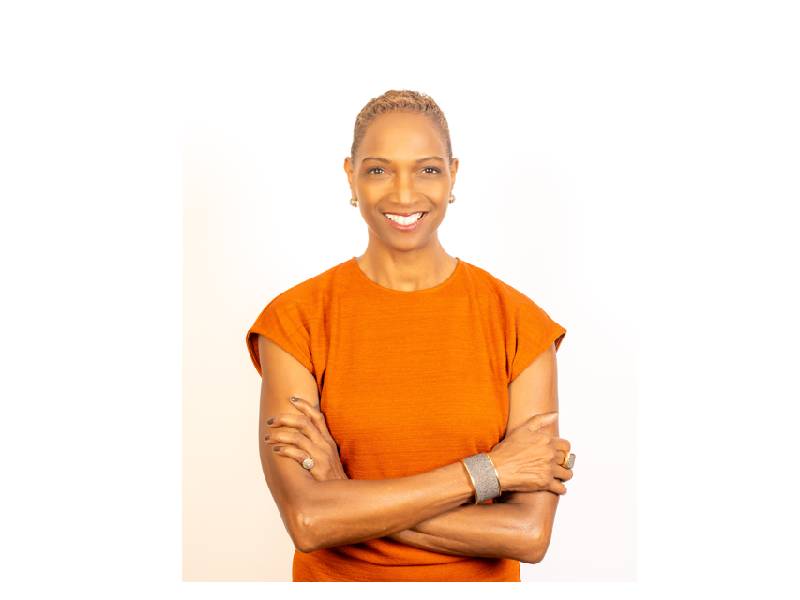
Photo credit: Leslie Short
“Don’t give up on yourself. Don’t allow others to determine who you can be or should be. Be open to opportunity.” — Leslie Short
Some people build careers. Leslie Short built a life that defies categories. She has been a professional ballerina, an international performer, a theater owner in Japan, a boxer, a marketing executive who helped shape the global FUBU brand, a hospital chaplain, a leadership strategist, a mediator, an accessibility advocate, and now, an author inspiring others to embrace the power of being “the first.”
Yet, if you ask her what connects these seemingly unrelated chapters, her answer is remarkably simple: “The passion that I have for them.”
That passion has carried her across continents, through industries, and into rooms where people never expected her to belong. Leslie’s journey began at just 7 years old, when she was selected for classical ballet training, at a time when Black ballerinas were almost invisible in the profession. She refused to accept the limitations others placed before her.
By age 12, she was already dancing professionally. By 15, she had left home to pursue her career, living in boarding houses for dancers and models while touring domestically.
Her parents were never afraid to let her chase her dreams. “They knew I wasn’t going to do anything I didn’t want to do.”
That fierce determination became the defining characteristic of her life.
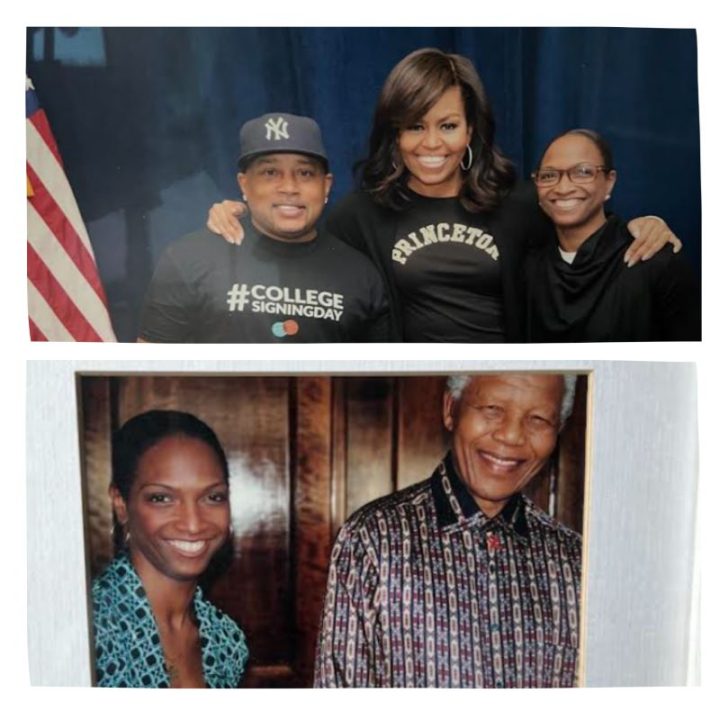
Photo credit: Leslie Short
Although Leslie’s career took her around the world, Europe always felt like destiny.
Her first international opportunity came in Greece, where she performed at the historic Rex Theater as part of the first American dance troupe to open there. She never looked back.
Soon, Vienna followed, despite the racial isolation she experienced there. “No one wanted to sit next to me on the bus,” she admitted. Still, she persevered. Her heart, however, belonged to Paris.
Standing on one of the city’s bridges during a visit, she remembered crying and promising herself she would return.
Four months later, she did. Paris became home.
She performed in some of France’s most celebrated theaters, portrayed the legendary Josephine Baker during a commemorative performance attended by Baker’s children, appeared in television productions and films, and eventually earned French citizenship.
Reinventing Herself in Japan
Many performers dream of longevity. Leslie dreamed of reinvention.
When she accepted a dance contract in Japan, she realized her performing career was approaching its natural conclusion. Rather than fearing the next chapter, she created one.
Walking past an abandoned building every day, she envisioned transforming it into a theater. But there was one problem, foreigners could not own businesses in Japan without Japanese partners.
She found a way anyway.
Partnering with theater owners, Leslie launched Japan’s first male revue production, a bold concept that many believed would fail. Instead of simply importing Western entertainment, she built the show around extensive conversations with Japanese women, learning what audiences genuinely wanted.
The result?
Her production became one of Japan’s most celebrated new business ventures of 1994. It was another reminder that listening often creates better innovation than assumptions.
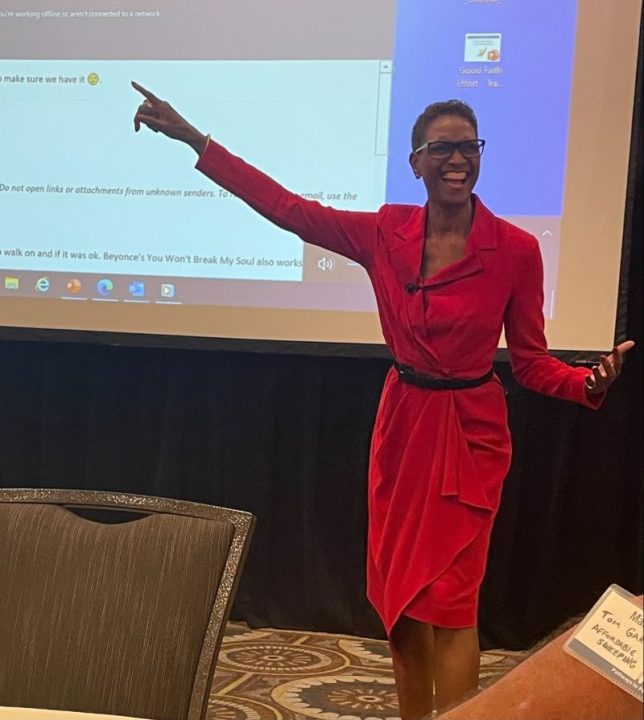
Photo credit: Leslie Short
The FUBU Gamble That Changed Everything
Returning to the United States introduced another unexpected chapter.
While working in special events at Macy’s, Leslie was assigned to coordinate an event for the then-emerging streetwear brand FUBU. She did, and the event exceeded expectations.
Later on, founders Daymond John and Keith Perrin invited her to join the company. She accepted, but only after negotiating her own terms. One condition seemed almost impossible.
Bring Will Smith into the FUBU family within three months.
She did not know him personally. She signed anyway.
Through persistence, networking, and timing, Leslie secured the relationship, helping establish one of FUBU’s earliest celebrity endorser. And over the next decade, she led marketing, advertising, public relations, entertainment, licensing, special projects, and corporate initiatives that helped transform FUBU into a global cultural phenomenon.
From Boardrooms to Hospital Rooms
Perhaps the most surprising turn in Leslie’s life came after the death of a close friend. She witnessed firsthand how overwhelming and often impersonal the funeral process could be for grieving families.
Rather than merely criticizing the system, she sought to improve it, and that journey led her into ministry. Initially resistant to attending seminary, Leslie eventually became a certified chaplain, later serving in a hospital where she discovered what she calls the most rewarding work of her life. “Being a chaplain is the best thing I’ve ever done,” she said. “It is the most rewarding. It’s the most humbling.”
Even while consulting for corporations and producing major events, she continued serving patients and families facing life’s most difficult moments.
Why Someone Has to Be the First
Leslie’s recently published memoir is titled Someone Has to Be the First.
The title is not about personal recognition. It is about responsibility. “If you’re going to take opportunities, there are times you’re going to step into rooms where you’re the only one.” For her, being first is not about collecting titles, but about opening doors. She believes that once you become the first person in a room, your responsibility is to ensure that you are never the last.
Too often, she says, pioneers become so focused on protecting their position that they forget to help others enter behind them. Her philosophy challenges ambitious professionals to embrace discomfort rather than avoid it.
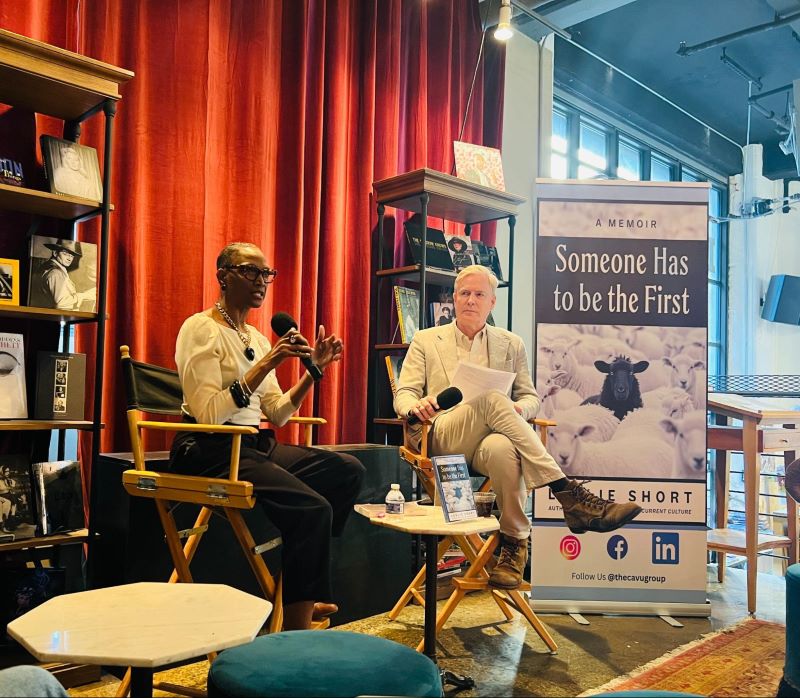
Photo credit: Leslie Short
Today, Leslie advises executives and organizations on leadership, branding, culture, and inclusion.
Her biggest frustration? Companies that confuse slogans with culture. “You have to take it off the wall and walk the halls.” Mission statements mean little if employees experience something entirely different. Real organizational culture, she argues, is lived daily, not framed on office walls. It requires leaders who understand both executive goals and employee realities.
That ability to bridge perspectives has become Leslie’s greatest professional strength. “I’m the thread or the glue that binds the whole thing together.”
Lessons for the Next Generation
Leslie believes too many people overthink life-changing moments rather than focus on the opportunity. They worry about criticism. They fear being misunderstood. They wait until certainty arrives.
She did the opposite.
Whether moving to Europe, launching a theater in Japan, joining FUBU, or entering hospital chaplaincy, she acted when opportunities aligned with her purpose. She rarely knew exactly where those decisions would lead. She simply trusted herself enough to begin.
In her words, she would change “nothing” if she could live her life over again. Not because life had been perfect, but because every experience, even the difficult ones, prepared her for the next opportunity.
Today, she continues learning new skills, including American Sign Language, while advocating for accessibility in film, television, and workplaces.
Her memoir is only the beginning. She hopes to transform its lessons into workshops, leadership programs, and educational curricula that empower others to recognize opportunities, embrace uncertainty, and confidently enter rooms where they may be the first.

Dr. Eric John Nzeribe is the Publisher of FunTimes Magazine and has a demonstrated history of working in the publishing industry since 1992. His interests include using data to understand and solve social issues, narrative stories, digital marketing, community engagement, and online/print journalism features. Dr. Nzeribe is a social media and communication professional with certificates in Digital Media for Social Impact from the University of Pennsylvania, Digital Strategies for Business: Leading the Next-Generation Enterprise from Columbia University, and a Master of Science (MS) in Publication Management from Drexel University and a Doctorate in Business Administration from Temple University.