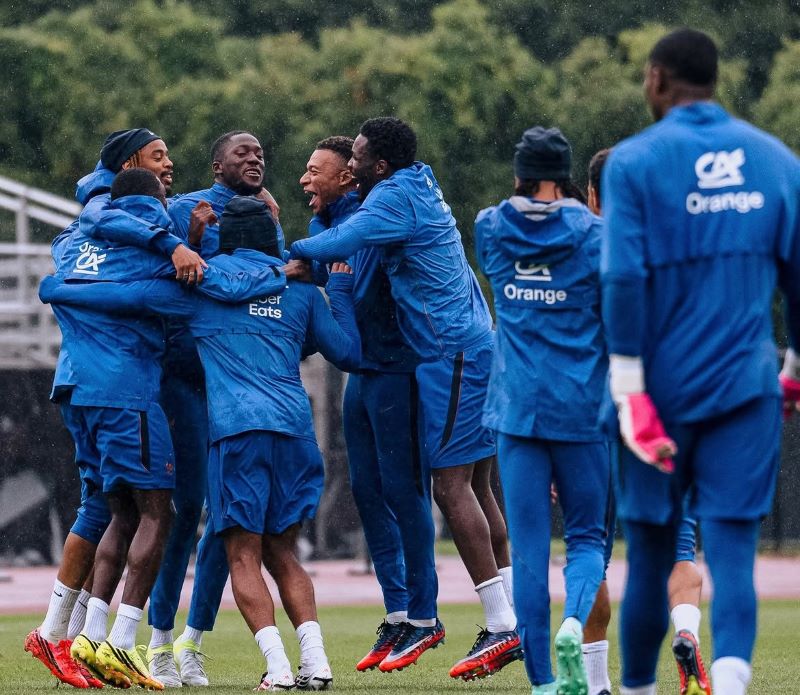
Source: Instagram / equipedefrance
Every four years, the world stops for a month of football. At the 2026 World Cup, Africa arrived in force, with a record 10 nations playing across North American stadiums, a sign of the continent’s rising power and growing depth. While a historic contingent of African nations made it to the tournament, a familiar conversation is bubbling up: why are some of Africa’s brightest lights shining for nations that weren’t the birthplace of their ancestors?
When France lifted the trophy in 2018, social media erupted with the phrase, “Africa won the World Cup.” This was because nearly 80% of that squad had African roots. It is no different in 2026. A former Paraguay goalkeeper, Jose Luis Chilavert, even referred to France’s team as “a squad from Africa.”
France remains the clearest example of African diaspora excellence. From Kylian Mbappé to Aurélien Tchouaméni and Eduardo Camavinga, the national team is stacked with players of African heritage.
Media outlets widely reported that England has 15 players of African descent or mixed heritage in its squad, including those with African and Caribbean ancestry. The country’s attack is anchored by the brilliant Bukayo Saka, a proud son of Nigerian Yoruba immigrants. The squad also features other players with Nigerian and Ghanaian heritage.
Eight of the 26 players representing Germany are said to have African roots. The squad includes Jamal Musiala (Nigeria), Karim Adeyemi (Nigeria), and Leroy Sané (Senegal). Belgium’s squad includes stars like Romelu Lukaku (DR Congo), Youri Tielemans (DR Congo), and Amadou Onana (Senegal).
The U.S. team features players with roots in Liberia, Nigeria, Ghana, and Sierra Leone, including Tim Weah (Liberia), Folarin Balogun (Nigeria), and Haji Wright (Ghana).
These are way beyond statistics. They are the accumulated result of decades of migration, parents who packed bags and crossed oceans.
In a LinkedIn post, Shuvai Madanhire shared her perspective on how diaspora identity shapes modern football.
“Watching the 2026 World Cup, one statistic caught my attention. There are around 122 players of African origin representing countries outside Africa. Some have roots in football powerhouses. Others trace their heritage to countries like Burundi, Equatorial Guinea, and Sudan. At this rate, Africa might actually qualify for the World Cup twice!
“But jokes aside, it got me thinking… This isn’t really a football story. It’s an African talent story. Whether it’s footballers in Europe, doctors in the NHS, software engineers in Silicon Valley, professors in North America, or CEOs running multinational companies, Africans are everywhere and thriving.”
Almost one in four players at the World Cup 2026 was born outside the country they represent, illustrating how modern international football increasingly mirrors patterns of migration. With 48 nations, 104 matches, and 1,248 players representing countries across six continents, this tournament is more than a competition for a trophy. It is a lesson in migration, nationality, economics, culture, and identity.
You watch a player with Nigerian, Ghanaian, Congolese, Senegalese, Angolan, Ivorian, or Tunisian roots take over a match for another country, and part of you celebrates the excellence. Another part wonders what African football would look like if all that talent flowed back home.
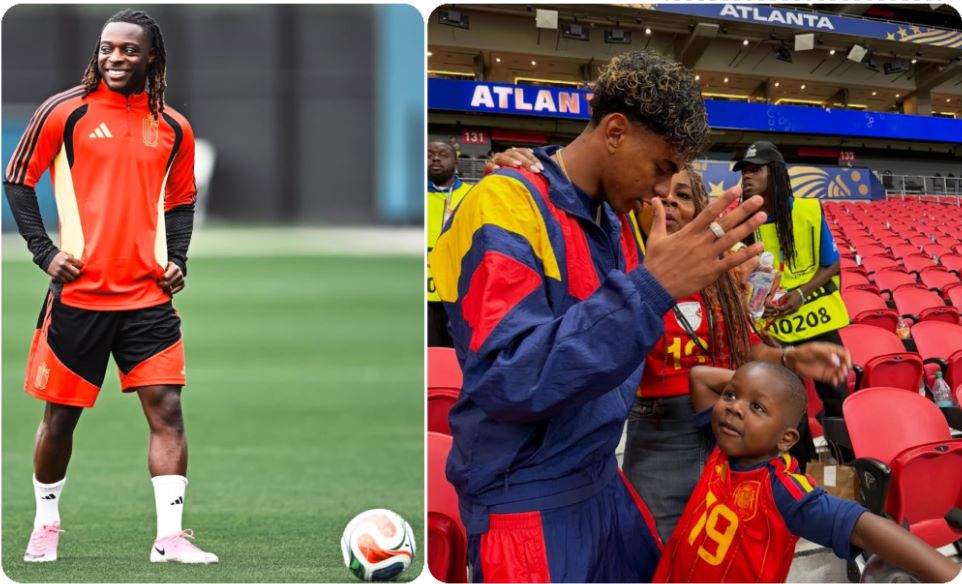
Source: Instagram / jeremydoku and lamineyamal
The rise of players with African roots representing European, American, and other national teams reflects a bigger story about migration. Behind many World Cup stars is often a family that left home in search of safety, education, or better opportunities. So when a player with African roots ends up wearing the jersey of France or England, it is about the systems, journeys, and sacrifices that shaped his career long before he became famous.
Look around this World Cup, and the diaspora story is impossible to miss. AP reported in June 2026 that decades of migration are now clearly reflected across major national‑team rosters. Reuters added, in a separate analysis, that a significant share of players represent countries other than where they were born, highlighting football’s increasingly global talent pipeline. Together, these numbers show how migration, identity, and opportunity shape the modern game far beyond the flags players wear.
The numbers make one thing clear: the World Cup is a map of the African diaspora. While African nations proudly fly the continent’s flag at the tournament, many of the biggest stars dazzling crowds are also carrying Africa with them, even though they represent other countries. Their surnames, family histories, and cultural roots span the continent, and many of these players openly acknowledge their African heritage.
Take Bukayo Saka. Born in England to Nigerian parents, he has become one of England’s most exciting talents and a fan favorite. He has never hidden his Nigerian heritage. From speaking proudly about his family to celebrating cultural traditions, Saka embodies what it means to embrace two identities at once.
Bukayo Saka proudly said: “My name is Bukayo Moses Ayoyinka Temidayo Saka. I’m very proud of my Nigerian heritage,” he said. Both my parents grew up in Nigeria, so many of their values have been instilled in me.”
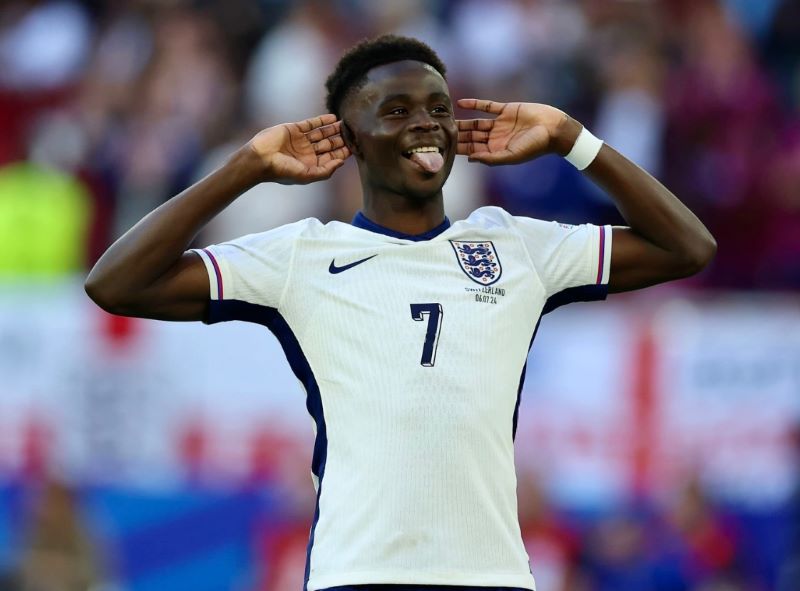
Source: Instagram / bukayosaka87
Even Belgium’s winger Jérémy Doku openly embraces his Ghanaian culture and language, Twi, acknowledging how it shapes exactly who he is on the global stage.
Then there is Lamine Yamal, the teenage sensation whose mind-blowing performances have captivated football fans around the world. Born in Spain to a Moroccan father and an Equatorial Guinean mother, Yamal chose to represent Spain, the country where he grew up and developed his football career. Yet his African heritage remains an important part of his story, illustrating how identity is often far more layered than a passport suggests.
Germany’s Jamal Musiala also reflects football’s multicultural future. With a Nigerian-British father and German mother, Musiala spent part of his childhood in England before committing to Germany.
Kylian Mbappé was eligible to play for Cameroon or Algeria because of his family background, but chose France, where he was born and raised.
For many of these dual-nationality players, choosing which country to represent is always among the most difficult decisions they will ever make. Though born and raised in Europe, some of them grew up immersed in African traditions at home. So, when the time came to choose, some players, like Saka, decided to represent the country where they were born and developed. Others chose to honour their parents’ homeland.
These athletes are products of two worlds. They represent the countries that nurtured their football careers while carrying the African values, traditions, and resilience passed down through their families. Their journeys are reminders that football, like the world itself, has become increasingly interconnected. It also highlights Africa’s extraordinary contribution to the global game.
For young Black children watching from all over the world, these players send a simple yet powerful message: your identity does not have to fit into a single box. You can honor your family’s roots while embracing where life has taken you.
African nations may not lift the trophy, but African talent shapes the tournament in every direction.