
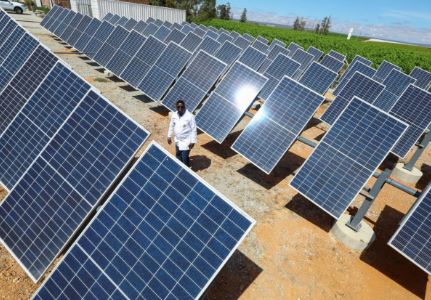
Source: Context News
In many parts of Africa, reliable power supply is a significant challenge for homes, businesses, and communities. Across the continent, millions of people still lack consistent access to electricity, forcing many households and enterprises to depend on generators. While generators provide a temporary solution, they are often noisy, expensive to operate, and harmful to human health and the environment due to carbon monoxide and other emissions.
Many of these generators run on Premium Motor Spirit (PMS), whose cost has continued to rise over the years. This has further exacerbated the cost-of-living crisis, creating an energy poverty situation in which homes and businesses struggle to thrive. The consequences extend far beyond inconvenience. They affect education, healthcare, economic productivity, and the overall quality of life.
Africa is often described as a continent of immense potential. From its youthful population to its abundant natural resources, the continent possesses many of the ingredients necessary for sustained development. Among its most abundant yet underutilized resources is the sun.
With vast stretches of land receiving some of the highest levels of solar irradiation in the world, Africa is uniquely positioned to become a global leader in solar energy. As governments, businesses, private investors, organizations, and local communities increasingly embrace renewable energy solutions, solar power is emerging as one of the most important tools for transforming the continent’s future.
Africa’s Solar Advantage
The World Economic Forum reports that Africa possesses 60% of the world’s best solar resources but accounts for only 1% of global solar generation capacity. Few regions in the world are as naturally suited for solar energy production as Africa. Many African countries enjoy more than 300 days of sunshine annually, making solar power not only viable but highly efficient.
For decades, however, much of this potential remained untapped. Energy development across the continent largely focused on fossil fuels, hydroelectric power, and conventional grid infrastructure. While these sources have contributed significantly to economic development, they have not been sufficient to meet the growing energy demands of Africa’s rapidly expanding population.
Today, technological advancements and the increasing availability of solar equipment are making the transition to renewable energy more achievable. Solar panels are becoming increasingly visible in homes and businesses across the continent, while improvements in energy storage systems and innovative financing models are helping make solar solutions more accessible to households and enterprises.
This shift is creating new opportunities for countries seeking to expand electricity access while reducing dependence on costly and environmentally damaging energy sources.
Bridging Africa’s Energy Gap
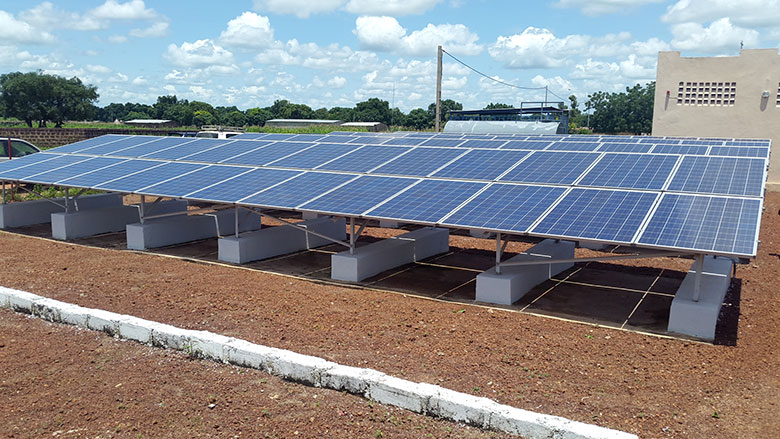
Source: World Bank
One of the most significant benefits of solar energy is its ability to address Africa’s long-standing electricity deficit.
Many rural communities remain far from national electricity grids. Extending conventional power infrastructure to these areas is often expensive, time-consuming, and, in some cases, impractical. As a result, some communities wait years or even decades to gain access to reliable electricity.
Solar technology offers a practical solution to this challenge.
Through solar installations, communities can generate electricity locally without relying on extensive transmission infrastructure. Households can power lights, charge mobile phones, operate fans, and run small appliances. Community-based solar projects can also provide entire villages with access to electricity, creating opportunities for businesses and stimulating local economic activity.
Powering Economic Growth Through Policy Reforms
Reliable electricity is one of the foundations of economic growth. Without it, productivity suffers, businesses incur higher operating costs, and investment opportunities diminish.
Across Africa, many entrepreneurs spend a significant portion of their earnings on fuel for generators. Frequent power outages disrupt production schedules, damage equipment, and discourage business expansion. Solar energy offers a more sustainable and cost-effective alternative.
As businesses adopt solar solutions, they reduce dependence on diesel generators and lower long-term operating expenses. This allows entrepreneurs to reinvest savings into expansion, innovation, and job creation.
The impact is particularly significant for small and medium-sized enterprises, which form the backbone of many African economies. Shops, restaurants, salons, agro-processing facilities, and manufacturing businesses can all benefit from reliable solar-powered electricity.
However, access to solar energy remains challenging for many homes and businesses due to prevailing economic realities. Several parts of Africa continue to grapple with poverty and a rising cost of living, creating obstacles for businesses already struggling with increasing production costs and economic uncertainty.
-High upfront installation costs are also a major barrier, and access to financing is often limited, particularly in rural communities. Regulatory uncertainties, inadequate infrastructure, and policy inconsistencies can also discourage investment.
This is where government policies and reforms become critical. By creating an enabling environment for investment in the renewable energy sector, governments can attract the capital needed to drive solar adoption. Increased investment can help reduce the cost of solar equipment, improve accessibility, and stimulate demand across the continent.
This point was highlighted by Dr. Kevin Kanina Kariuki, Vice-President for Power, Energy, Climate and Green Growth at the African Development Bank (AfDB), during the launch of the report The Renewable Energy Investment Case for Africa. He noted that one of Africa’s major obstacles is the lack of reforms, stating: “Investment capital follows the path of least resistance. That is why reforms are at the heart of unlocking Africa’s energy future. Policy reforms plus capital equal investments, and once those reforms are in place, countries become viable investment destinations.”
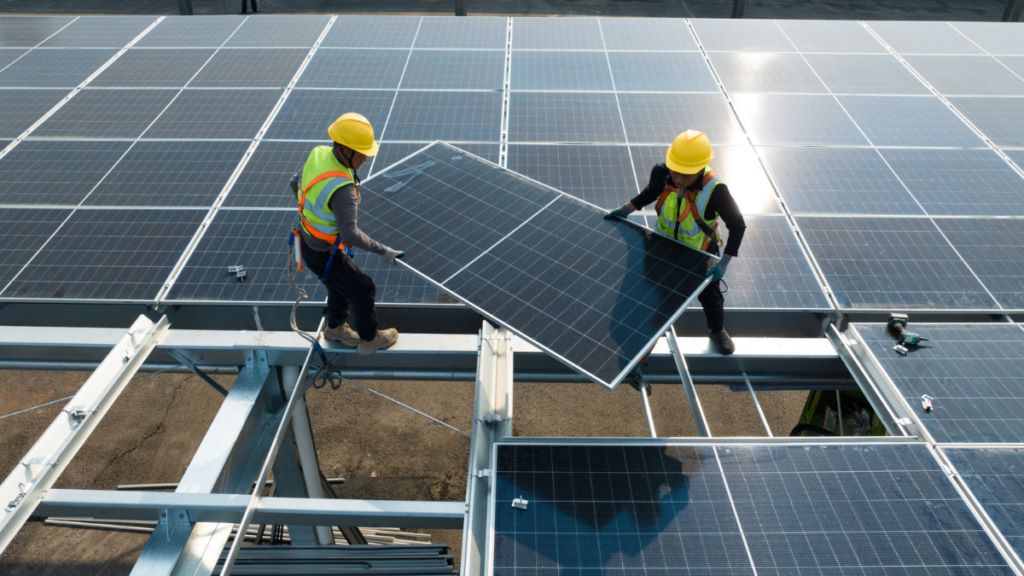
Source: Engineering & Mining Africa
Beyond supporting homes and businesses, the renewable energy sector itself is becoming a significant source of economic opportunity across Africa. The growing demand for solar installations has created new markets for engineers, technicians, electricians, project managers, sales professionals, and maintenance specialists. Young Africans are increasingly acquiring skills in renewable energy technologies, opening pathways to employment in a rapidly expanding industry.
Former Vice President of Nigeria, Prof. Yemi Osinbajo, also highlighted this potential during an interview on strategies to promote renewable energy. As Global Advisor to the Global Energy Alliance for People and Planet (GEAPP), he said, “It is possible to make Africa the solution to energy issues. Africa can create millions of job opportunities for its youth population using renewable energy.”
The benefits of solar energy extend beyond employment and business growth.
Hospitals and clinics require reliable electricity for lighting, refrigeration, diagnostic equipment, communication systems, and life-saving medical devices. Similarly, solar-powered schools have the potential to transform education across the continent. Access to reliable electricity extends learning hours, supports digital classrooms, and enables access to online educational resources.
For Africa, the conditions are ripe for embracing solar energy.
Supportive policies, investment incentives, workforce training programmes, and innovative financing mechanisms are creating opportunities to attract investors and accelerate solar adoption. These initiatives can help ensure that solar energy becomes a key driver of industrial growth and sustainable development across the continent.

Okechukwu Nzeribe works with the Onitsha Chamber of Commerce, in Anambra State, Nigeria, and loves unveiling the richness of African cultures. okechukwu.onicima@gmail.com