
Let’s be honest, leaving Nigeria is never just one decision. It is a hundred small ones, each quiet moment where you did the math and realized the country you love isn’t currently loving you back in the ways that matter most.
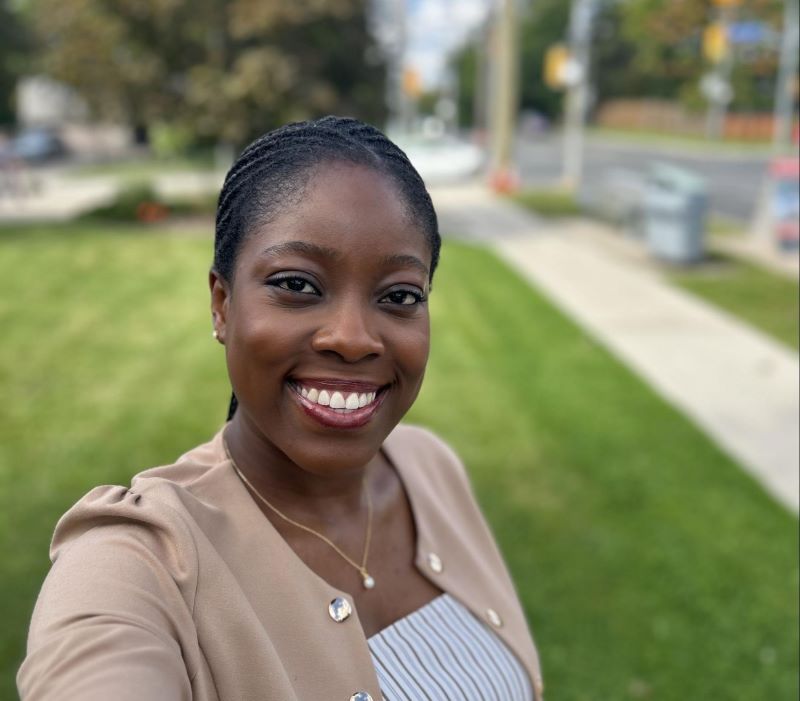
Henrrietta Chima, a Public Health Professional and the Founder & Global Institutional Strategist for Women Advance, poured everything into a business in Nigeria, her savings, her time, her assets, and watched the system swallow it whole. That was the moment she discovered that the problem wasn’t her hustle; it was the ground she was building on. In 2025, she found new ground, very far away in Canada. Her journey is a sobering look at why some of Nigeria’s brightest minds choose to leave.
When did you leave Nigeria, and where do you live currently?
I left Nigeria in 2025 after several years of building and navigating both business and social impact systems within the country. I currently live in Canada, where I am continuing to expand Women Advance, a cross-border platform focused on advancing leadership, policy engagement, and global positioning for women and girls. My work is not just about empowering women; it is about structuring access so they can lead, influence, and shape systems globally. I am deeply committed to building systems that move women from participation into influence, particularly in spaces where decisions are made and policies are shaped.
Can you take us back to the moment you decided to leave Nigeria? What was happening in your life, and what pushed you to take that bold step?
The decision to leave Nigeria did not come from a place of comfort. It came from a place of pressure, exhaustion, and a deep realization that the system I was operating in could no longer sustain the level of growth I was pursuing. At the time, I was running a detergent manufacturing business based in Agbara, Ogun State. We had built a product, Hygienic Clean, and we were ready to scale. But when we launched the product, we encountered a major challenge. Our detergent was denser, which meant the volume appeared smaller compared to popular brands like Viva and Ariel, whose products had more volume but lower density. This created a perception problem.
Customers felt our product was not meeting the expected weight, even though it was correctly measured. We were advised to go back and fix it. To compete at that level, we needed a detergent spray tower, a major industrial structure that allows detergent to come out in the proper granular form. Without it, we could not meet market standards.
But that machine costs millions, sometimes billions, to import. We decided to seek funding. We wrote to the Central Bank of Nigeria, no response. We approached commercial banks, and they asked for three years of financial records, collateral, and established structures that no new manufacturing company would realistically have. So we turned to microfinance banks.
What we needed was over ₦500 million, but the highest we were offered was about ₦13 million, and after deductions, it dropped to around ₦12 million. Another gave us ₦5 million, and another around ₦10 million. It was completely inadequate. But we kept pushing. We decided to try a local solution, a Nigerian contractor who promised to replicate a spray tower. He told us to give him three months. We believed him. We waited. When it was time for delivery, what he gave us was completely unusable, dead on arrival. Nothing worked. Everything failed. And at that point, everything started collapsing at once. The loans had already started running. The banks were calling. Production had stopped.
We couldn’t go back to the market. We had no income flow. We had to start selling everything. I sold my car. We sold properties. We sold assets just to repay loans. It got to the point where we had to sell one of our houses in Amuwo and move funds around just to stay afloat. We bought another property in Lekki, trying to stabilize, but the reality was already clear: the system had drained us. We did not fail because we lacked capacity; we failed because the system could not carry our growth.
At that point, my husband said something that changed everything. He said he was done investing in Nigeria. After everything we had done, skincare, manufacturing, and multiple business attempts, the system gave us nothing in return. No structured support, no grants, no accessible financing, no protection for growing businesses, just pressure. That moment broke me.
I remember going on my knees, crying, asking God what’s next. It felt like everything we had built was collapsing at once. And in that moment of stillness, I was led to a scripture passage: Jeremiah 40:2-5. Something shifted in me. I had a realization: maybe the answer wasn’t to keep forcing growth in a system that was not ready, but to reposition entirely.
That was when the idea came to apply through a student pathway to Canada, to leave everything behind if necessary, and start again. The difficult part was convincing my husband. He was not interested in full relocation. But somehow, I found the words, and he agreed we could try. Leaving Nigeria was not just a decision; it was a surrender to a bigger direction. I didn’t leave because I wanted to. I left because staying meant shrinking. And I was not willing to shrink.
What route or pathway did you come through, and how easy or difficult was that process?
I came to Canada through the Express Entry pathway, a structured but highly competitive immigration system. It requires not just eligibility, but strategic positioning; education, work experience, language proficiency, and timing all play critical roles.
The process was not easy. It demanded patience, consistency, and emotional resilience. I spent time in the pool navigating uncertainty, particularly as my age began to impact my score. There were moments where it felt like the window was narrowing. However, I remained consistent, trusted the process, and in 2025, we received our Permanent Residency. It was not a quick process, but it was a defining one. It taught me discipline, patience, and the power of positioning.
What were your earliest memories of arriving in your new country?
Arriving in a new country comes with a quiet shift, one that is not always dramatic, but deeply internal. For me, the most immediate realization was the structure of systems: things worked, processes were predictable, and there was clarity about how to navigate daily life. That in itself was both reassuring and humbling. The emotional transition, however, is often understated. You move from being established in one environment to becoming a learner again in another. It requires humility, observation, and adaptation. The real culture shock is not always external; it is the internal adjustment of identity, expectation, and pace.
You first relocated to Finland and spent some time there. Why did you leave Finland?
My time in Finland was an important learning phase, but it highlighted a key reality: access to opportunity is not always equal across systems. While Finland offers stability and structure, integration, particularly in terms of employment, can be challenging without strong local language proficiency. The language barrier significantly limits access to the job market, and for someone driven by purpose and productivity, that limitation becomes difficult over time.
At the same time, our Canadian Permanent Residency was approved, which presented a more strategic pathway. The decision to leave Finland was therefore not emotional. It was intentional and forward-looking.
How do you compare your experiences in Finland and Canada in terms of integration, opportunities, and community?
Both countries offer strong systems, but they differ in how accessible those systems are to immigrants. Finland provides structure and stability, but economic integration can be slow, especially without language assimilation.
Canada, on the other hand, offers a more inclusive and diverse environment, where immigrants can easily plug into opportunities, networks, and communities. There is a stronger ecosystem for participation and growth.
Discover More Migrant Stories of other Africans building their life abroad.
What is the hardest part of parenting abroad, and how do you keep your children connected to their Nigerian culture and values?
One of the most understated challenges of parenting abroad is intentional identity building. Children naturally adapt to their environment, so their sense of identity can shift quickly if it is not consciously guided. Preserving cultural values requires deliberate effort, through conversations, exposure, and consistency. It is about creating a balance that allows them to integrate while ensuring they remain grounded. Culture does not transfer automatically. You have to teach it, model it, and live it. For me, it is a continuous process of guiding, not forcing, ensuring they understand where they come from while preparing them for where they are going.
What are some misconceptions people have about the immigrant experience that your own journey has proven wrong?
One of the biggest misconceptions is that migration automatically leads to immediate success or ease. In reality, migration is a process of rebuilding; rebuilding networks, systems, identity, and positioning. Opportunities exist, but they are not handed over. They require strategy, visibility, and effort.
Another misconception is that once you leave, everything instantly improves. Migration does not remove challenges; it changes their nature. The difference is that in the right system, those challenges can be navigated with clearer pathways.
What has been the most challenging and rewarding part of your immigrant journey?
The most challenging part has been starting again within a new system while maintaining clarity of identity and purpose. You move from familiarity into uncertainty, and that requires resilience and discipline. The most rewarding part, however, has been access. Access to global platforms, networks, and systems that enable scalable impact. That access has allowed me to think, build, and operate beyond limitations.
Tell us about Women Advance, the inspiration behind it, and how your migration experience is influencing how you support other women.
Women Advance is a global women’s leadership and advocacy platform founded in 2019 to bridge the gap between potential and access for women and girls across emerging and global communities. What began as grassroots engagements across multiple states in Nigeria has evolved into a cross-border movement focused on leadership development, policy participation, and global positioning. Through strategic collaborations, including early exposure initiatives aligned with global digital ecosystems, Women Advance introduced women to innovation, technology, and forward-thinking leadership frameworks. Today, the organization operates at the intersection of advocacy, leadership, and global influence, equipping women to move from participation to decision-making spaces.
With a growing presence across Nigeria and Canada, Women Advance is building a North–South bridge, connecting local communities to international systems and institutions.
Our mission is clear: “To ensure that where women are present, they are not overlooked, and where decisions are made, they are represented.”
If Nigeria became everything you hoped it could be in the near future, would you move back permanently?
Nigeria remains a significant part of my identity and long-term vision. However, my approach is not defined by geography. It is defined by impact and scale. If the systems evolve to fully support innovation, enterprise, and leadership development, there would certainly be opportunities for deeper engagement.
My focus is not on where I am; it is on where impact can be built at scale. I see my work as building bridges, ensuring that wherever I operate, I am contributing meaningfully to both local and global systems.