Source: ahra.info
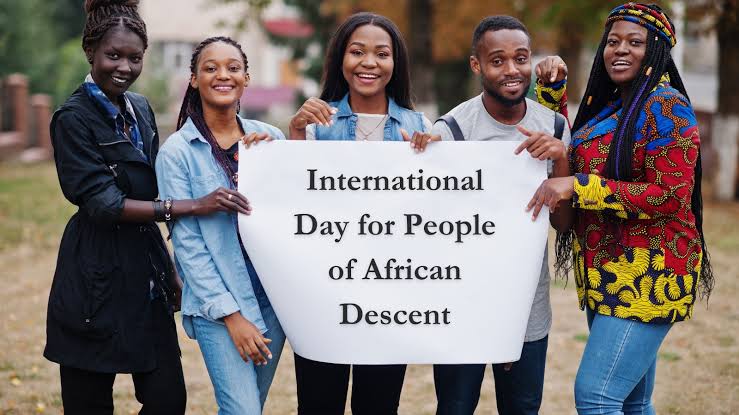
Every August 31, Black communities across the world pause to celebrate the International Day for People of African Descent, a United Nations observance dedicated to recognizing the heritage, culture, achievements and human rights of people of African descent around the world. If you have never heard of it, you are not alone, as it does not get nearly the attention Black History Month does. But it deserves a place on your calendar because it reminds the world that we are here, that we have shaped history and continue to rise, and that the story Black communities across the diaspora have been telling for over a century still matters.
The day is meant for everyone, for communities of African descent celebrating their identity, for governments reflecting on equality, and for the wider public learning histories that are too often overlooked, and it is observed globally by UN bodies, national governments, civil society organizations, schools and community groups in every region of the world.
There is often confusion about who is included when we talk about people of African descent, largely because the term appears broad. They are those who trace their ancestry, in whole or in part, to the continent of Africa.
They include African Americans in the United States, Afro-Caribbeans, Afro-Latinos, Afro-Europeans, and people of African ancestry living throughout the Americas, Europe, the Middle East, and other parts of the world. It also includes descendants of Africans who were forcefully transported through the transatlantic slave trade, as well as more recent African migrants and their children.
Offering her perspective, Yemi Adenuga, a Nigerian-Irish politician, community organizer and advocate for social justice initiatives, said:
“I had a phone conversation with a community leader and advocate I’ve worked with before. They asked me: “Yemi, can we progress against racism without collectively agreeing on who we are?” That question stayed with me and got me thinking. So here are some thoughts that have gone through my mind. In Ireland, we sometimes spend energy on whether we are Black, African, or People of African Descent, that it slows down conversations about the real challenges we face.
“On reflection, perhaps our strength isn’t in agreeing on a single label but in moving forward together, embracing our differences, and focusing on the shared goal of tackling racism and inequality. Whether you identify as Black, African, Black-Irish, or a Person of African Descent, you are part of a global community that continues to resist, challenge, and thrive in the midst of adversity. You are truly resilient.”
The International Day for People of African Descent was proclaimed by the United Nations General Assembly in December 2020, following a proposal led by Costa Rica, with August 31 designated as the annual observance. The first official UN observance took place on August 31, 2021.
The purpose is twofold. First, it is a celebration of the enormous contributions people of African descent have made to societies around the world. Those contributions can be found everywhere, from science and medicine to politics, business, literature, sport, fashion, music, food and the arts.
Second, it is a reminder that celebration cannot be separated from the struggle for equality. The UN says the day is also intended to help eliminate discrimination against people of African descent and promote their human rights.
Source: UN News
The date itself carries real historical weight. It traces back to August 31, 1920, when Marcus Garvey’s First International Convention of the Negro Peoples of the World wrapped up in New York, resulting in the Declaration of Rights of the Negro Peoples of the World. That gathering was, in many ways, one of the earliest large-scale expressions of global Black unity, so the UN’s choice of date was deliberate, tying a modern observance back to a moment that already meant something to the diaspora over a century ago.
The day also builds on years of UN groundwork, including the International Decade for People of African Descent (2015–2024), which centered on three pillars: recognition, justice, and development. When that decade wrapped up, the UN did not stop there; it launched a Second International Decade for People of African Descent, running from 2025 to 2034, carrying the same three-pillar framework forward for another ten years.
Recognition means acknowledging the immense contributions people of African descent have made across science, art, politics, literature, and every other field of human achievement, contributions that have too often gone uncredited. Justice means confronting the ongoing legacies of slavery, colonialism, and systemic racism that still shape outcomes in health, policing, education, and economic opportunity today. Development means pushing for real investment and inclusion, not just symbolic recognition, in the communities the day is meant to honor.
Why does this matter for Black communities in the U.S. and beyond?
According to the UN, roughly 200 million people across the Americas alone identify as being of African descent. That is not a small number; it is a large, historically important community whose story, from the transatlantic slave trade through colonialism to today, still shapes global inequality. It is part of why this day insists on holding two things at once: celebration and confrontation. It is a day to genuinely celebrate a diaspora that has produced extraordinary art, science, music, and political movements against enormous odds.
UN human rights bodies have also used the day to highlight hard, current data, including findings that Afro-descendant communities worldwide continue to face disproportionately high rates of police violence, alongside persistent gaps in health access, education, and representation in public life.
For Black communities in the US and across the diaspora, the day offers something Black History Month, as valuable as it is, doesn’t quite replicate: a specifically global lens. It is a reminder that the fight for recognition and equity playing out in Philadelphia is connected to the same fight playing out in the U.S., Johannesburg, London, and across the world, all on the same day, under the same banner.
If you are wondering how you can celebrate this year’s International Day for People of African Descent, here are a few ideas.
You can support Black-owned Businesses by intentionally directing your spending toward local Afro-descendant entrepreneurs, artists, and creators.
You can engage with global Afro-descendant culture by reading literature by Afro-Latino, Afro-Caribbean, or African authors, or by exploring diaspora art exhibitions.
You can also participate in local events. Check community calendars for panel discussions, cultural festivals, or service projects happening on or around August 31.