
Source: Tech in Africa
The nature of work as we know it has continued to evolve as the global economy becomes increasingly interconnected. Every industrial age has brought with it new innovations and a gradual shift towards technological transformation. From the First to the Third Industrial Revolution, humanity witnessed the birth of mechanized production powered by steam engines, the introduction of electricity, which gave rise to mass manufacturing, and the emergence of the digital age, where computers and the internet connected millions of workers worldwide.
Today, the Fourth Industrial Revolution is being driven by artificial intelligence (AI), a technology that is rapidly reshaping industries, governments, education, healthcare, finance, agriculture, manufacturing, and nearly every aspect of modern society. Unlike previous technological revolutions that primarily automated physical labour, AI is increasingly automating cognitive tasks once considered exclusive to human intelligence. This shift is redefining how work is performed and also where opportunities for employment and economic growth can emerge.
Artificial intelligence, often portrayed as a marvel of automation, is recognized as a technology capable of learning, reasoning, problem-solving, and decision-making with minimal human intervention. From generating essays and creating digital artwork to powering virtual assistants and improving medical diagnosis, AI continues to demonstrate remarkable capabilities. Yet behind this impressive sophistication lies a reality often overlooked.
Before AI can function intelligently, it must be trained by humans first.
Every chatbot response, facial recognition system, language translation tool, recommendation engine, or autonomous algorithm is built upon enormous amounts of human-labelled data. Millions of images must be identified, voices transcribed, documents categorized, conversations reviewed, videos annotated, and online content evaluated before an AI model becomes sufficiently accurate to perform these tasks independently.
This largely invisible labor, commonly referred to as AI micro-work, has quietly become one of the fastest-growing segments of the global digital economy, with Africa increasingly playing a significant role.
Across the continent, thousands of young professionals are contributing to the development of AI systems used by some of the world’s leading technology companies. As Africa possesses one of the youngest populations globally, the concept of AI micro-work has not only been embraced but continues to expand, creating new opportunities for employment, digital skills acquisition, entrepreneurship, and economic inclusion.
Unlike traditional employment, AI micro-work is typically completed remotely through digital platforms, making it accessible to freelancers, university graduates, students, stay-at-home professionals, and young people with reliable internet access and basic digital skills. Tasks may include data annotation, image classification, transcription, sentiment analysis, language translation, content moderation, audio validation, and quality assurance. While each assignment may appear relatively small, collectively they form the foundation upon which modern AI systems are built.
As the demand for artificial intelligence continues to accelerate globally, so does the need for high-quality human input. Despite advances in machine learning, human judgment remains indispensable in ensuring that AI systems understand context, culture, language, emotions, and ethical considerations that machines alone often struggle to interpret.

Source: African Business
In Africa, AI micro-work is gaining considerable traction, providing valuable opportunities for a continent with a growing youth population. Every year, millions of young Africans enter the labour market, yet only a fraction secure formal wage employment. This widening employment gap has created an urgent need for alternative sources of income and meaningful work. AI micro-work offers one such opportunity, allowing young professionals to earn income while developing valuable digital competencies that are increasingly in demand across the global economy.
Several emerging AI companies, including DataProphet, Synapse Analytics, Cleva, and Sama, have already demonstrated Africa’s ability to deliver high-quality AI data services. Beyond supporting global technology companies, an increasing number of African startups are moving beyond outsourced labour to develop indigenous AI solutions, ethically sourced datasets, and machine-learning models tailored to African realities.
These innovations reflect a growing recognition that Africa should not merely contribute labor to the AI economy but should actively participate in designing technologies that solve local challenges while serving global markets.
However, the significance of AI micro-work extends far beyond employment alone.
Africa’s extraordinary linguistic and cultural diversity presents one of its greatest advantages in the AI ecosystem. With several languages spoken across the continent, global AI systems increasingly require linguistic experts to train models that understand local dialects, accents, expressions, and cultural nuances. Their contributions ensure that AI technologies become more inclusive, representative, and useful for diverse populations rather than serving only a limited number of widely spoken languages.
As broadband connectivity, mobile internet penetration, cloud infrastructure, and digital technologies continue to improve across Africa, particularly in underserved rural communities and remote locations, private investors have begun establishing innovation hubs, technology incubators, startup accelerators, and digital entrepreneurship programs. These investments are steadily creating an ecosystem capable of supporting a thriving AI economy while connecting African talent to international markets.
Digital services have now become one of the fastest-growing sectors of international trade. Unlike traditional exports that depend on shipping physical goods across borders, digital services allow countries to export knowledge, technical expertise, creativity, and innovation almost instantly. This transformation significantly lowers entry barriers for developing economies while opening new pathways for participation in global commerce.
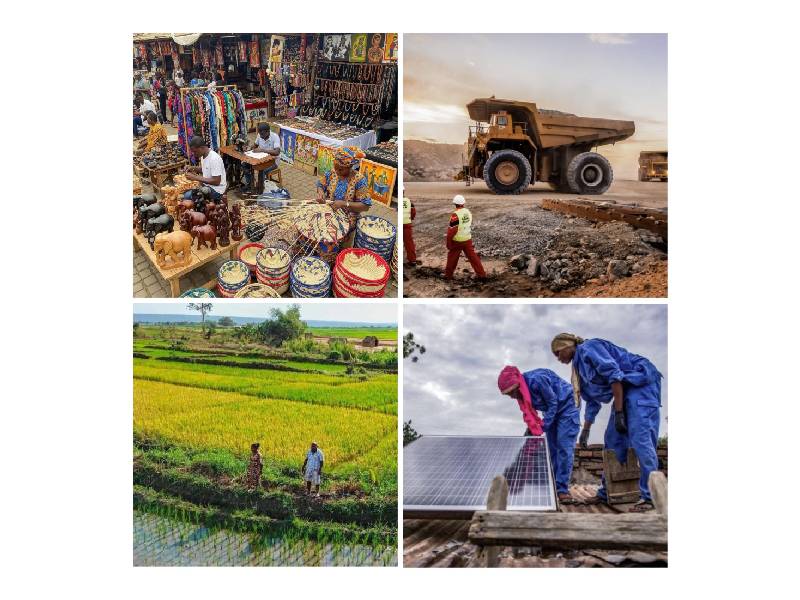
For Africa, this presents a unique opportunity to diversify economies that have historically relied on commodities such as crude oil, minerals, and agricultural exports. Rather than exporting only natural resources, African countries now have the opportunity to export digital expertise, technical talent, and AI-enabled services.
For this transformation to achieve its full potential, governments must position themselves not merely as regulators but as strategic enablers of innovation. Their responsibilities extend beyond policymaking to include investments in digital infrastructure, electricity, broadband expansion, education, research, innovation funding, and digital literacy. Strategic investments across these areas can stimulate broader economic development while positioning Africa as a competitive player in the global AI economy.
This reality was aptly highlighted by Karima Bounemra Ben Soltane, Director of the Institute for Economic Development and Planning (IDEP), during a meeting of the United Nations Economic Commission for Africa (ECA) in Addis Ababa. She observed that, “Africa is building an emerging AI ecosystem, but unlocking its full potential will require bold investment in infrastructure, research and human capacity.”

Source: OpenEdition Journals
Her observation reinforces an important point. Africa possesses the demographic advantage, entrepreneurial talent, and growing digital infrastructure required to participate meaningfully in the AI revolution. What remains essential is sustained investment, visionary leadership, and policies that encourage innovation while protecting workers.
This also requires a change in mindset, particularly among policymakers and business leaders. The AI micro-work economy should not be viewed merely as another outsourcing opportunity or a temporary employment solution. Rather, it should be recognized as a strategic enabler of economic transformation, capable of driving innovation, improving productivity, and expanding Africa’s participation in the global digital economy.
Governments must therefore establish fair and forward-looking policies that encourage investment while ensuring workers receive equitable remuneration, transparent contracts, adequate workplace protections, and opportunities for continuous skills development. Ethical standards governing data privacy, responsible AI development, and worker welfare must also remain central to the continent’s AI ambitions.
Beyond government, the private sector has an equally important role to play. Businesses can accelerate Africa’s AI economy by investing in research, supporting startups, expanding digital infrastructure, and developing AI solutions that address pressing challenges across healthcare, agriculture, education, financial inclusion, climate resilience, logistics, and public service delivery.
Designing AI systems that respond to African realities may well become the foundation for globally competitive technologies developed, patented, and commercialized from the continent.
Ultimately, Africa’s rise in the AI micro-work economy represents far more than the expansion of another outsourcing industry. For millions of young Africans, AI micro-work offers employment opportunities, practical digital skills, international exposure, and access to the global knowledge economy. For governments, it provides a credible pathway towards economic diversification, increased digital exports, and long-term competitiveness in an increasingly AI-driven world.

Okechukwu Nzeribe works with the Onitsha Chamber of Commerce, in Anambra State, Nigeria, and loves unveiling the richness of African cultures. okechukwu.onicima@gmail.com