Source: 2025 ODUNDE Festival in Philadelphia: What to Expect | Visit Philadelphia
By the time this runs on May 30, ODUNDE 2026 will already feel like a festival in motion rather than a festival in waiting. The official schedule places the week of events on June 7–14, 2026, with Festival Day on Sunday, June 14, and the festival’s own May office hours have already moved through a series of public vendor-prep windows. In other words, the story is about what the festival has already made visible, measurable, and public.
That matters because ODUNDE is not simply a date on Philadelphia’s cultural calendar. Its own site describes it as the largest African American street festival in North America and a long-running institution in the city, with a history that stretches back to 1975. The practical question for 2026 is not only how to attend, but how the festival’s vendor structure, public timing, and business-facing programming shape who gets to participate and on what terms.
The vendor ecosystem is the clearest place to see that logic at work. ODUNDE’s official vendor page says the festival has 100-plus vendors, lists current booth pricing at $650 per space, and notes that booth spaces are 8 feet by 4 feet. It also says first-time food vendors must attend a mandatory meeting with ODUNDE staff before the festival. This is not a soft invitation to “join the fun.” It is a structured marketplace, with rules, deadlines, and costs that matter to the businesses trying to get in.
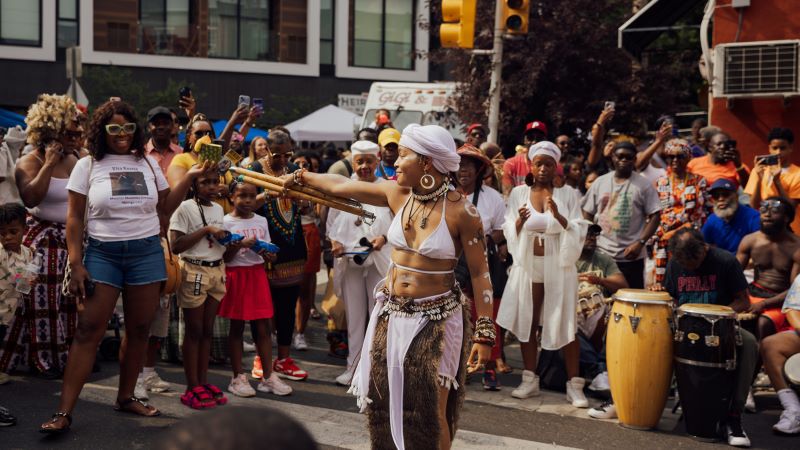
Publicly confirmed vendor details include 100-plus vendors, $650 booth pricing, a 16-block footprint, and the festival’s day-of vendor sale at 6:00 a.m. on Sunday, June 14. ODUNDE also says the event can draw up to 500,000 visitors. These figures are part of the festival’s own public-facing case for why the vendor process matters.
The official website also states that ODUNDE has an economic impact of $30 million on the Commonwealth of Pennsylvania and $28 million on the City of Philadelphia. That is a reminder that the festival functions as an economic node as much as a cultural one.
Why the vendor question matters
A festival like ODUNDE can be discussed in celebratory terms so easily that the machinery beneath it disappears. But the public information for 2026 suggests the opposite: the machinery is the story. Booth pricing, office hours, insurance requirements, licensing, and mandatory meetings are the infrastructure that allows the cultural surface to exist.
That is one reason ODUNDE’s business-facing programming deserves more attention than it often gets. The official schedule includes a June 11 African Business Roundtables event, described on the festival’s social media as a networking and collaboration opportunity for African and African American entrepreneurs and business leaders. In the same week, ODUNDE also lists events such as ODUNDE365 Fitness, Listen, Learn, Connect, Lois Lunches, Afro Beats and Vibes, and A Conversation with the CEO. That sequence matters because it shows the festival thinking beyond entertainment and into institutional habit: connection, commerce, and cultural continuity.
There is a reason this model feels consequential in 2026. Black entrepreneurship often gets celebrated at the level of aspiration, but ODUNDE gives it a public stage with rules attached. Vendors have to apply, pay, meet conditions, and show up on time. That may sound mundane, but mundane is what makes participation durable. The festival’s own processes force the conversation away from symbolism and toward access.
Source: ODUNDE Festival – Encyclopedia of Greater Philadelphia
The historical weight, without the mist
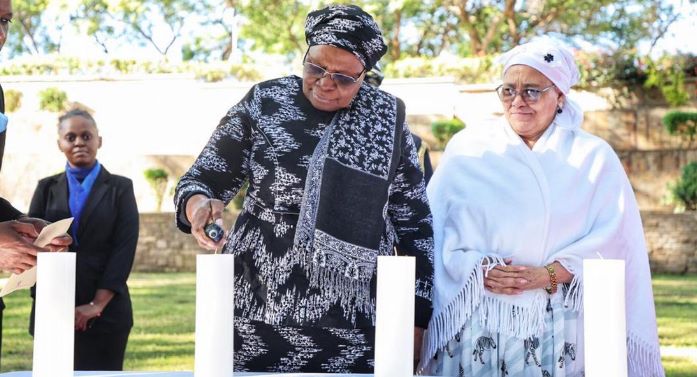
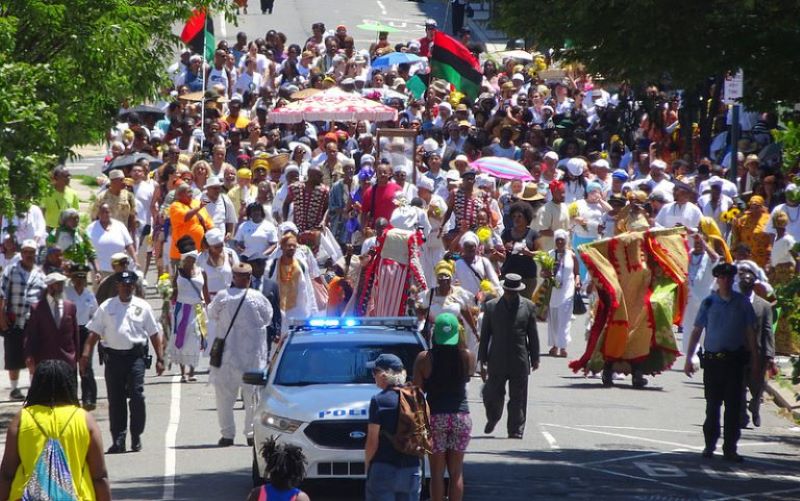
ODUNDE’s official history says the festival began in 1975, when Lois Fernandez helped bring South Philadelphia together to celebrate African heritage and the Yoruba New Year. The site says the celebration begins with a procession from 23rd and South Street to the Schuylkill River, where fruit and flowers are offered to Oshun, the Yoruba goddess of the river. Those details are specific enough to resist romanticization.
The official about page also includes the line that ODUNDE “IS FOR EVERYONE.” That statement matters because it sets the tone for the festival’s public life: open, but not unstructured; expansive, but not vague. In a city where cultural events can become either insular or excessively market-driven, ODUNDE’s challenge is to remain legible to the community that built it without flattening the traditions that give it shape.
That tension is part of what makes the 2026 edition worth watching closely. ODUNDE is now large enough to function like a regional event and old enough to carry a historical memory that cannot be improvised. Its official materials suggest that the festival is trying to do both things at once: preserve an inherited cultural grammar while also managing the practical demands of scale, sponsorship, vendor selection, and public expectation.
Why 2026 matters
The strongest argument for ODUNDE 2026 is not that it will be bigger or louder than before. It is that the festival’s public process already reveals a usable civic idea: culture survives when it is scheduled, funded, and explained with enough precision that ordinary people can enter it. The festival’s open office hours, published booth prices, day-of vendor rules, and business roundtables all point to a model in which cultural visibility and economic participation are treated as inseparable.
That matters for Black entrepreneurship in particular because visibility alone is not equity. A vendor listing on a festival site is not the same thing as meaningful access, but it is a real mechanism of access, one that converts cultural belonging into economic opportunity. ODUNDE’s 2026 setup does not solve that problem. It does, however, show a community institution trying to make the conversion explicit rather than accidental.
ODUNDE 2026 is now close enough to feel real and far enough away to still reward preparation. The important thing, as of May, is not to talk about the festival in the future tense as though it were still a concept. It is already a schedule, a vendor system, a set of office hours, and a public promise. The week of June 7–14 will only make that clearer.

Anand Subramanian is a freelance photographer and content writer based out of Tamil Nadu, India. Having a background in Engineering always made him curious about life on the other side of the spectrum. He leapt forward towards the Photography life and never looked back. Specializing in Documentary and Portrait photography gave him an up-close and personal view into the complexities of human beings and those experiences helped him branch out from visual to words. Today he is mentoring passionate photographers and writing about the different dimensions of the art world.