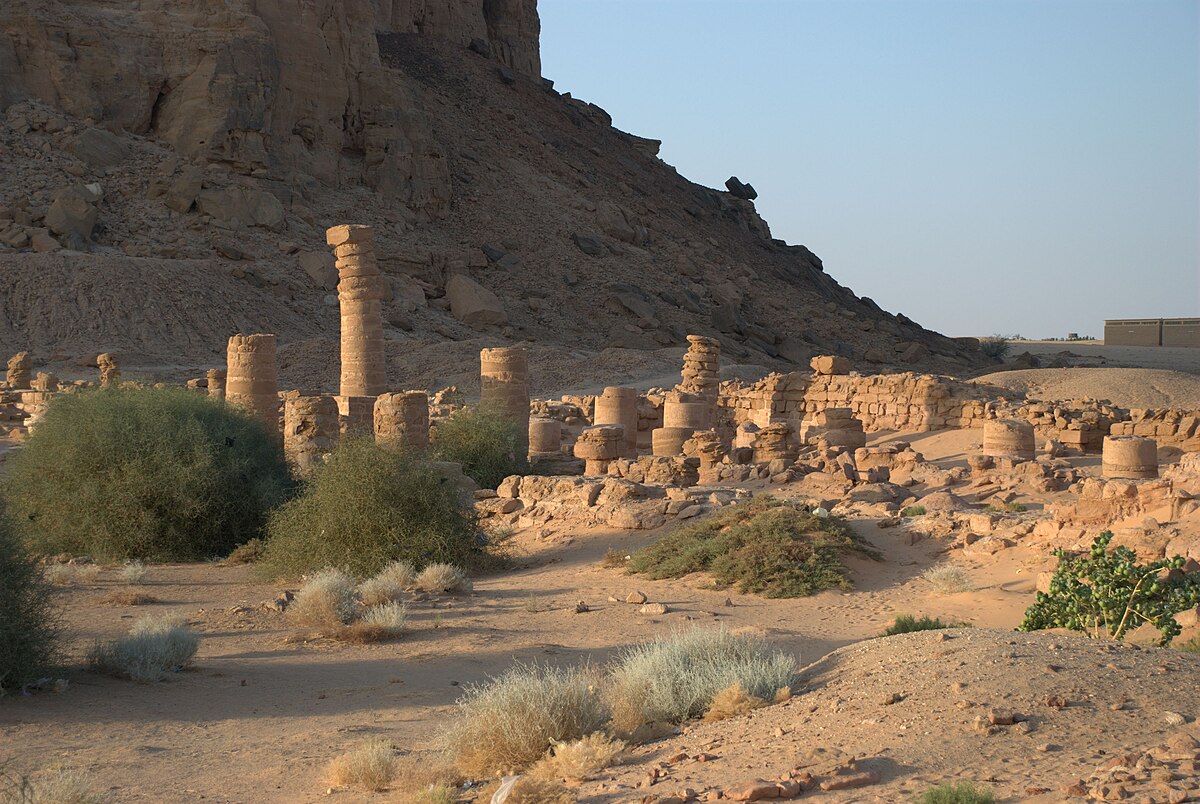
Temple of Amun, east of Jebel Barkal, Sudan.
Bertramz, CC BY 3.0, via Wikimedia Commons
Africa has always been referenced in studies that reviewed the historical advancements of humans throughout history. With early civilizations dating back through centuries and hosting major events in human history, Africa not only showcases the early progress and achievements of knowledge in various fields of human study, but discoveries as well as early art and culture attest to the place of the continent as being the birthplace of humanity.
Over the years archaeologists have been exploring historical locations around the continent and making discoveries of cultural and historical significance. From ancient kingdoms to century-old innovations, these archaeological sites and discoveries strengthen the argument for the role of the continent and its place in charting humanity’s progress.
Ancient Civilizations
Egypt
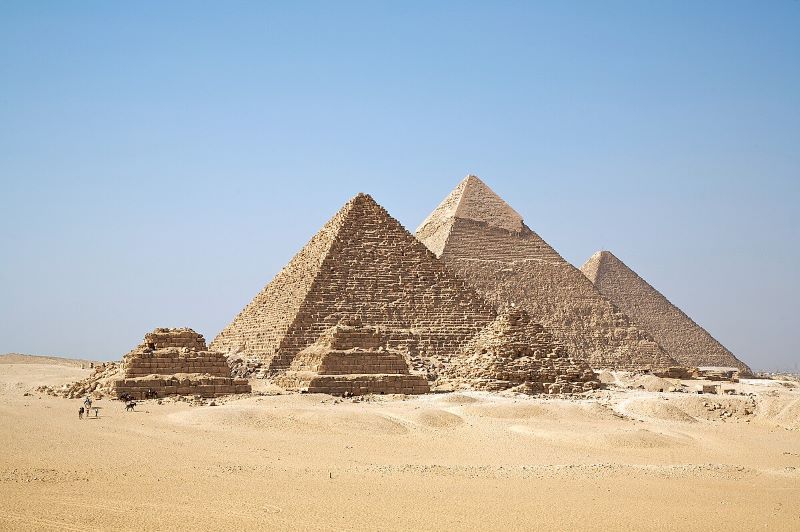
The pyramids of Giza
Ricardo Liberato, CC BY-SA 2.0, via Wikimedia Commons
One of the notable examples of the start of civilization in Africa is the place of ancient Egypt and its influence in the advancement of knowledge in writing, mathematics, medicine, agriculture, architecture, urbanization, organized religion, and governance.
Along the Nile River, Ancient Egypt would advance to develop agricultural innovations due to the presence of this natural resource which was a reliable source for nutrients and fertility to the land for agriculture.
Beyond Agriculture, ancient Egypt made commendable strides in science and technology with documents like the Ebers Papyrus and Edwin Smith Papyrus pointing to an in-depth knowledge of medical treatments, diagnostics, anatomy, and the practice of surgical techniques.
The Great Pyramid of Giza or Pyramid of Khufu which is among the seven wonders of the world along with other pyramids and its several temple designs and constructions lends credence to their engineering prowess as an ancient civilization.
Mathematical systems, astronomy, and the application of a 365 calendar system dividing the year into three seasons of four months each Akhet (Inundation), Peret (Emergence), and Shemu (Harvest) which not only helped them predict the flooding of the Nile but also made necessary agricultural adjustments.
Ethiopia and Eritrea (Kingdom of Aksum)
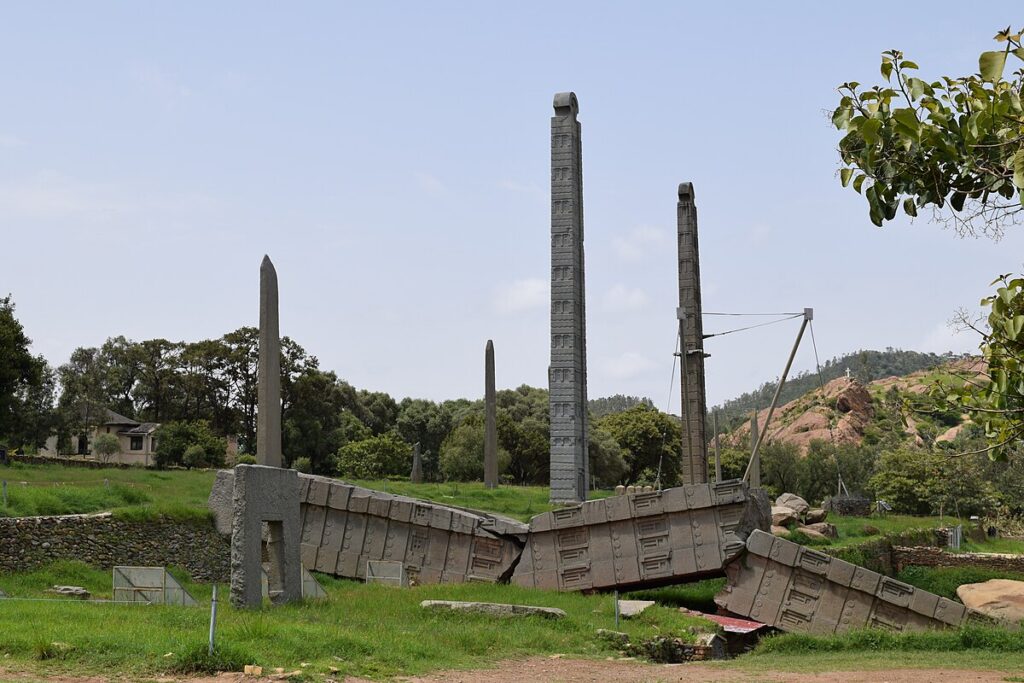
Remains of the Obelisk of Aksum.
Allamiro, CC BY-SA 4.0, via Wikimedia Commons
Like Egypt in its advancement, Ethiopia and Eritrea also known at that time as the Kingdom of Aksum located in the Tigray province were a major naval trading power. Records indicate that from the 1st to the 7th centuries C.E., Aksum’s power and influence extended all through the Roman Empire up to the Arabian desert, Europe, Egypt, and Asia.
The Aksumites operated a governance system that was hierarchical in nature with a King/Ruler governing over them and a plethora of nobles overseeing concerns of the empire, economy, and general population. It is the only indigenous empire to develop the first known written script from Africa which is known as Ge’ez.
Northern Sudan (Kingdom of Kush)
The Kingdom of Kush was an ancient civilization located in what is now Sudan, within the larger region once known as Nubia. It was a civilization that existed twice, once during the Napatan Period (c. 1070–656 BCE) and the other during the Meroitic Period (c. 656 BCE–350 CE).
Its territory stretched from the south of Egypt all the way to the Libyan desert in the west up to the Red Sea in the east. One of the most prosperous early civilizations in Africa, Kush operated a complex economic and political society that helped it achieve great feats in trade and commerce.
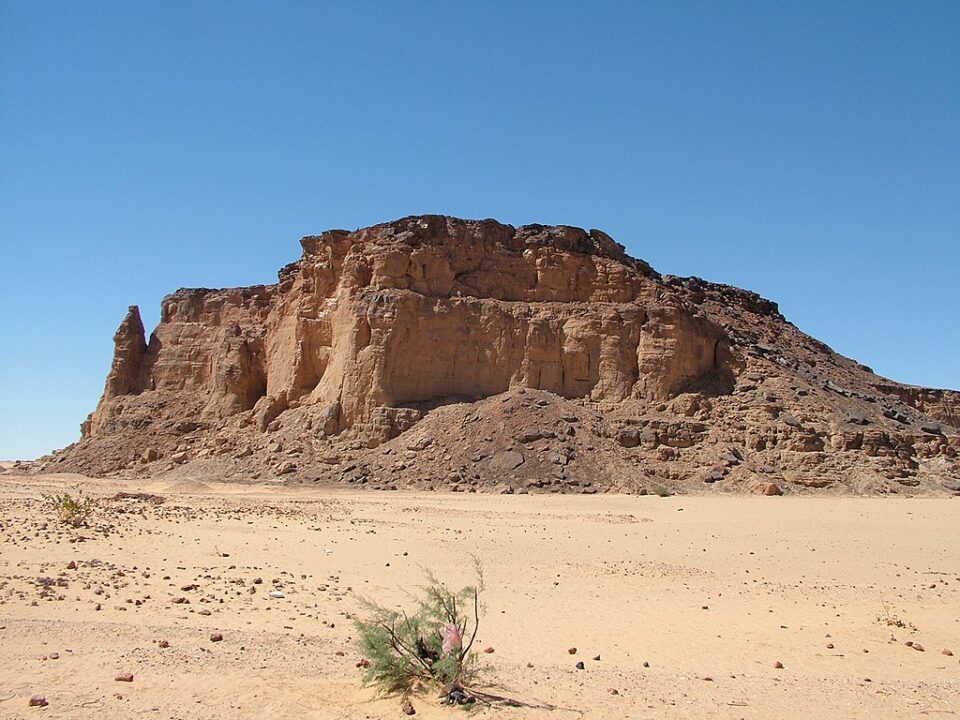
Jebel Barkal, where many artifacts of the Kingdom of Kush were found
LassiHU, CC BY-SA 4.0, via Wikimedia Commons
Evolving from the earlier Kerma Culture, the kingdom of Kush had strong relations with the early dynastic period of Egypt. Archaeological findings reveal early contact between the Nubians and Egyptians. Over time, Kushite culture absorbed many Egyptian influences adopting several Egyptian gods, especially the state god Amun (associated with air, wind, and fertility).
At the height of its power and with the decline of Egypt’s influence, the kingdom of Kush became an independent kingdom, rising and surpassing Egypt’s influence and strength, and powerful enough to impose its dominance over Egypt to the extent of becoming pharaohs of Egypt in the 25th dynasty.
The Carthaginian Empire
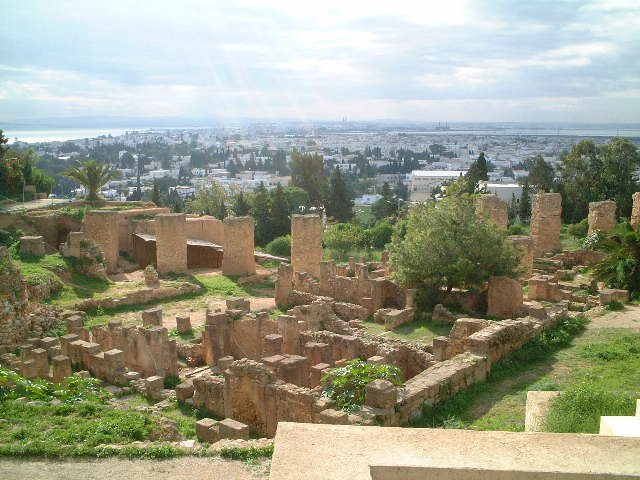
Carthage ruins. Neil Rickards, CC BY 2.0, via Wikimedia Commons
Carthage located in what is now known as present-day Tunisia was a powerful civilization that existed from the 2nd century. A dominant maritime force, the Carthaginians were known for their capability as expert sailors capable of warfare at sea. They were also reputable merchants and traders who travelled through the Mediterranean seas trading with other kingdoms, tribes, and empires.
The Carthaginian Empire was focused on building relationships with other cities through various trade agreements. Their reach extended from North Africa even up to Spain with the proposition to open trading routes along that corridor in exchange for military protection especially from Rome who were their strongest rivals. With their well-equipped Naval force, they were able to move goods seamlessly through the Mediterranean.
War would later break out between both empires in 264 BC and despite the Carthaginian empire leveraging the strength of their naval forces to defend their outposts in Corsica and Sardinia while dealing a heavy blow to the Roman forces, the empire would eventually capitulate to the Roman forces while ceding their posts on Sicily, Sardinia, and Corsica.

Okechukwu Nzeribe works with the Onitsha Chamber of Commerce, in Anambra State, Nigeria, and loves unveiling the richness of African cultures. okechukwu.onicima@gmail.com