

Source: Shutterstock
Lome operates as the primary maritime gateway for West Africa. The city rests squarely on the Gulf of Guinea. Its massive port features a sixteen-meter draft, allowing it to berth vessels carrying twenty-four thousand shipping containers. This immense physical capacity has historically dominated the nation’s economic identity.
The port moves physical goods into landlocked countries like Mali, Niger, and Burkina Faso.
The scale of maritime operations requires continuous technological modernization to remain globally competitive. For decades, the narrative was purely physical. Now, a different infrastructure is emerging. Technology investors from the United States and Africa are taking notice, not for outsized startup valuations, but to track a shift in how international capital views Togo’s long-term market potential.
Lome is showing up on investor maps right now because venture interest is finally following the hard scaffolding of aggressive digital policy, streamlined company formation, and regulatory alignment. The central question for April 2026 is whether Togo can turn its impressive port strength and emerging support structures into a real investment pipeline.
The 2026 Economic Baseline
The economic data provide a compelling reason for optimism. The International Monetary Fund projects real GDP growth for Togo at 5.0% in 2026. Consumer prices are expected to stabilize at a manageable 2.8% over the same period. These specific metrics provide a baseline of predictability that is often missing in neighboring West African economies.
This top-down stability is reflected directly in bottom-up business creation.
According to data published by Togo First, the country registered exactly 4,357 new companies between January 1st and March 31st, 2026. This quarterly data proves that the foundational entrepreneurial drive within the local population remains incredibly resilient. The figure also represents a 2.2% increase from the same period in the previous year.
Startup formation is picking up again. Founders are formally registering their corporate entities at a steady, reliable pace. But registering a business and funding a technology company remain two very different exercises.
A severe disconnect exists between company formation and actual liquidity. Currently, 94% of entrepreneurs in Togo either self-finance their operations or rely entirely on family and close contacts for early capital. This number reveals the market’s actual state. Without access to larger pools of capital, even the most innovative local companies will struggle to expand beyond Togo’s borders. Business creation still depends heavily on personal savings, underscoring how far the local market has to go before it can be considered a mature technology hub.
Source: Togo First
The Togolese government understands this capital bottleneck. Officials are attempting to bridge the gap between early company registration and formal funding rounds by building highly visible digital infrastructure. The state officially launched a one-stop infrastructure mapping platform in Lome on April 2nd, 2026, as reported by the Togolese Government Portal. The platform gives investors a transparent, centralized view of available physical and digital assets. By digitizing the map of state assets, the government hopes to accelerate due diligence for international venture funds. It is an engineered attempt to reduce the friction of doing business in a developing market.
This strategy relies heavily on intentional policy design. Cina Lawson, the Minister of Digital Economy and Digital Transformation, has spent years laying the groundwork for this transition. The state’s focus has shifted from basic mobile connectivity to complex institutional frameworks. When discussing the future of the technology ecosystem, Lawson consistently emphasizes the importance of collaboration in digital sector deals. These efforts are designed to signal to the global market that Togo is ready to conduct business at an international standard. The government is actively standardizing the rules of engagement to reduce risk for foreign venture capital and diaspora investors.
For African American investors and diaspora funds, Lome presents a unique proposition. The major venture capital markets in Lagos, Nairobi, and Cape Town are increasingly saturated and highly priced. Togo offers a ground-floor opportunity. The government has spent the last decade laying the specific groundwork required to attract this exact profile of international investor. The underlying infrastructure is rapidly modernizing. The deep-water port provides an unmatched physical asset for supply chain startups. Many venture funds are looking for alternative entry points into the West African market. They want jurisdictions with stable currencies and clear rules of engagement.
Regulating Intellectual Property for Foreign Capital
Capital requires legal certainty. Investors need absolute confidence that their proprietary software, logistics algorithms, and digital platforms will be protected under local law. Without these legal guarantees, the risk profile of investing in early-stage African software companies simply remains too high for conservative funds. They also need assurance that commercial disputes will be handled by a competent and specialized judiciary. Lome is actively addressing these concerns through direct regional engagement.
This legal framework extends far beyond Togo’s borders. Denis Loukou Bohoussou serves as the director general of the African Intellectual Property Organization. He attended the Lome workshop to reinforce the importance of judicial readiness across the continent. Bohoussou noted that specialized courts and trained judges are essential to reassure investors, protect innovations, and strengthen economic sovereignty. By hosting these specific conversations, Lome is quietly positioning itself as a secure, predictable jurisdiction for regional technology holding companies.
Lome now hosts regional events dedicated to future industries, such as the upcoming Space Forum Africa. While these gatherings may not yield immediate funding, they gradually integrate the local startup ecosystem with the broader global technology conversation by attracting international talent, diaspora investors, and tech media to the city.
The hard truths remain impossible to ignore. Formal financing is exceptionally scarce. Investor appetite for emerging markets does not automatically become ecosystem depth. A founder building a logistics software company in Lome might have access to world-class port facilities and progressive digital regulations. Closing this specific funding gap is the most urgent challenge facing the Togolese technology sector today. Yet that same founder will likely struggle to secure a standard venture funding round from a local bank or a regional private equity firm. The physical and legal plumbing is built, but the financial water is not yet flowing freely.=

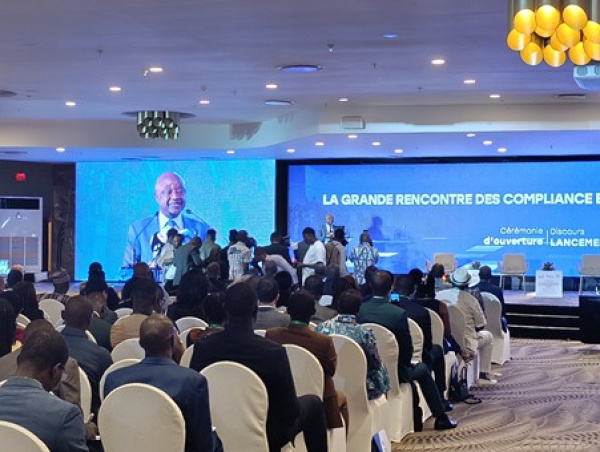
Source: Africanlanders
When entrepreneurs cannot access bank loans or institutional venture capital, their ability to hire senior software engineers or secure enterprise server space is strictly limited by their personal bank accounts. Founders are forced to grow slowly through revenue rather than capturing massive market share through heavily funded expansion strategies. Until local wealth managers and commercial banks start writing checks to software founders, the ecosystem will remain heavily dependent on external validation and diaspora capital.
The investment case for Lome in 2026 therefore, sits squarely between genuine optimism and stark reality. The government has successfully transformed the city into an active intersection of maritime logistics, regional trade, and technology policy. It is a market where macroeconomic stability is slowly colliding with microeconomic friction.
Lome is not yet a finished ecosystem, but it is undeniably becoming a place where infrastructure, policy, and ambition are starting to meet in public.

Anand Subramanian is a freelance photographer and content writer based out of Tamil Nadu, India. Having a background in Engineering always made him curious about life on the other side of the spectrum. He leapt forward towards the Photography life and never looked back. Specializing in Documentary and Portrait photography gave him an up-close and personal view into the complexities of human beings and those experiences helped him branch out from visual to words. Today he is mentoring passionate photographers and writing about the different dimensions of the art world.