Image: Sickle Cell Disease Association of America
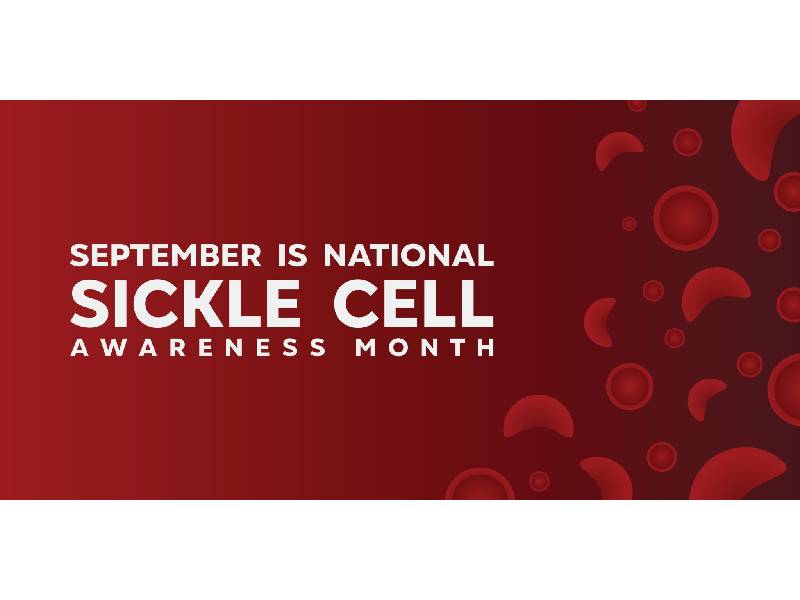
Every September, our community holds a quiet kind of vigil. We wear the red and burgundy. We share the statistics. We think of the aunties who’ve spent decades managing pain crises with grace nobody outside the family ever sees, and the little ones who learn to read their own bodies before they learn to read chapter books.
Sickle Cell Awareness Month has always been about honoring that resilience. But this year feels different. Because for the first time in a long time, science is finally catching up to the strength our families have carried alone for generations.
Taking charge of your health, and your family’s health, has always been an act of community care. This year, that act comes with more real options on the table than we’ve ever had.
What 2026 Actually Changed
Let’s translate the headlines into real talk.
Gene therapy stopped being theoretical. Two FDA-approved treatments, Casgevy and Lyfgenia, are no longer experimental promises. They’re available treatments, working directly on the genetic root of sickle cell rather than just managing the pain it causes. Patients who’ve received them are reporting freedom from the vaso-occlusive crises that used to define their calendars.
Being clear-eyed matters here too. Lyfgenia carries an FDA boxed warning: a small number of patients in early trials developed blood cancers, including leukemia, which is why anyone who receives it commits to lifelong monitoring, blood counts checked at least every six months for a minimum of fifteen years. It’s a real risk, not a footnote, and it’s exactly the kind of thing worth asking your hematologist about directly, not something you find out about later. Knowing it going in is what makes this an informed choice rather than blind faith.
The treatment process itself is getting gentler, for some patients. One of the hardest parts of gene therapy has always been the preparation beforehand: harsh chemotherapy needed to make room in the bone marrow for corrected cells, chemotherapy that also reduces fertility in most people who go through it today. That’s why fertility preservation, freezing eggs or sperm before treatment starts, needs to be part of the conversation with your care team from day one, not an afterthought.
On the research side, early trial results are showing that reduced-intensity and nonmyeloablative regimens can get patients to a similar outcome with a noticeably less brutal recovery: less time hospitalized, less need for heavy pain support. These gentler regimens aren’t yet part of the approved Casgevy or Lyfgenia protocol, so they’re not what a patient gets today, but the direction of the research matters when the treatment process itself has kept people away for fear of what it would take out of them.
Kids are finally part of the conversation, and it’s not just trials anymore. In July 2026, the FDA expanded Casgevy’s approval to patients as young as two years old, based on trial results in children as young as five. Families no longer have to wait until adolescence, or even elementary school, to explore curative options.
Pain management is finally expanding past “more opioids.” A 2026 research review built stronger evidence for multimodal approaches, combining anti-inflammatory medication, targeted anesthetics, and even cognitive behavioral therapy alongside opioids rather than opioids alone. It’s not a perfect science yet. But it’s a real shift toward treating our pain as complex instead of just loud.
The next frontier is already forming. Scientists at CHOP and Penn right here in Philadelphia are developing gene editing that could someday be delivered without stem cell harvesting or bone marrow prep at all, using the same lipid nanoparticle technology behind mRNA vaccines. It’s early. But it points toward a future where the cure is less physically brutal to receive.
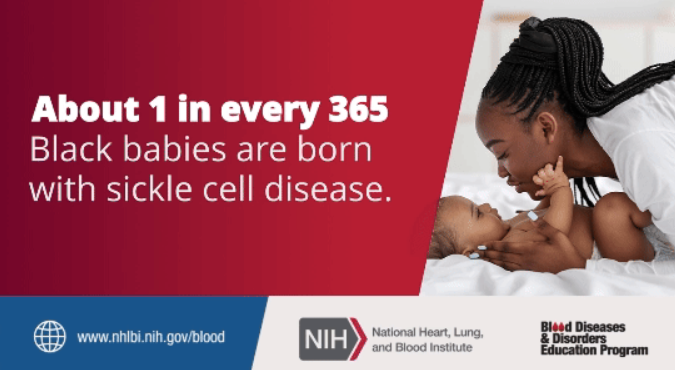
Source: NIH National Heart, Lung, and Blood Institute
Read also: From the Tuskegee Experiments to the COVID-19 Vaccine: Understanding COVID-19 Vaccine Hesitancy
Our City Is In The Room Where It Happens
If you’re a Black Philadelphian living with sickle cell, or loving someone who is, you are geographically closer to this revolution than almost anyone else in the country.
Penn Medicine’s Comprehensive Sickle Cell Program is actively administering gene therapy and running clinical trials right now, and works closely with the Children’s Hospital of Philadelphia (CHOP) to guide young adults through the transition from pediatric to adult care. CHOP’s Curative Therapy Center, known as CuRED, isn’t just treating patients, it’s a clinical site for next-generation gene editing approaches from companies like Editas and Beam Therapeutics, aimed at reactivating the fetal hemoglobin that can override the sickle mutation. Temple Health’s hematology team has spent years building expertise specifically in sickle cell care for this city’s residents.
That’s three major academic medical centers, doing frontline research, a short drive apart. That’s not a coincidence Philly should take lightly.
This city also has a culture of showing up for its own. Community organizations like the Sickle Cell Disease Association of America’s Philadelphia/Delaware Valley Chapter and the Health Promotion Council exist specifically to help families navigate this system without doing it alone. Use them. Advocacy here isn’t a side conversation. It’s baked into how Philly takes care of its people.
Claiming Our Seat, Not Being a Guinea Pig
We have to name the elephant in the room. Our community’s hesitation around clinical trials didn’t come from nowhere. It came from Tuskegee. It came from Henrietta Lacks. It came from generations of being studied without being cared for.
That history is real, and it deserves respect, not a rushed dismissal.
But here’s the shift worth sitting with: sickle cell disease overwhelmingly affects people of African descent, and for most of medical history, the people designing treatments for it didn’t reflect the people living with it. Participating in today’s trials isn’t about being experimented on. It’s about making sure the therapies of tomorrow are actually built with us in mind, tested on bodies like ours, dosed for us, understood for us.
Being in the room isn’t the same as being used. It’s how we make sure the next breakthrough doesn’t leave us behind the way past treatments sometimes did.
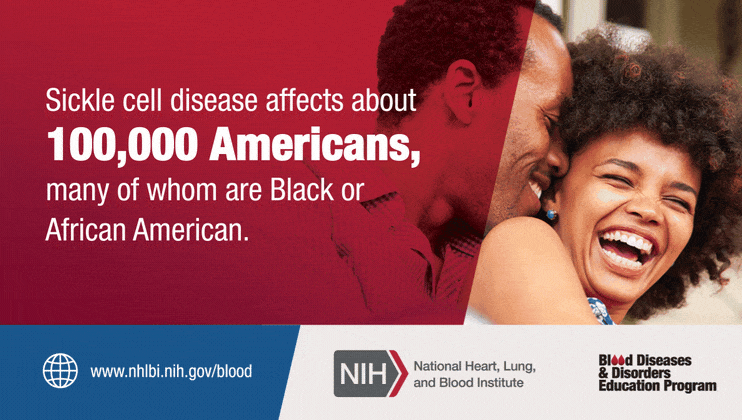
Source: NIH National Heart, Lung, and Blood Institute
Questions to Bring to Your Next Hematology Appointment
Print this list. Bring it in. Your doctor should welcome every one of these.
- “Am I, or is my child, a candidate for Casgevy or Lyfgenia?” Ask directly, don’t wait to be offered.
- “Are there any active clinical trials I could qualify for, especially for reduced-toxicity treatment options?”
- “What would the recovery process actually look like for me, day by day?”
- “What’s my specific long-term monitoring plan for cancer risk, and how often will I be checked?”
- “What are my fertility preservation options before treatment begins?”
- “What financial assistance or reimbursement programs exist to help cover this?” Cost and insurance coverage remain real barriers, so ask specifically about outcomes-based coverage programs.
- “Beyond opioids, what pain management combinations could work for my specific pain pattern?”
- “Can you connect me with a local sickle cell community organization for support through this process?”
The Future Is Being Written Right Now
Our grandmothers survived this disease with prayer, pressure, and each other. Our generation gets to survive it with prayer, pressure, each other, and a real cure on the table.
That’s not a small thing. That’s a generational turning point.
Sickle Cell Awareness Month has always asked us to remember our warriors. This year, it’s also asking us to walk them, and ourselves, into rooms we once approached with understandable caution, and claim what’s rightfully ours: full access, full information, and a future where sickle cell disease is something our community survived, not something that survives us.
The science moved. Now it’s on us to walk through the door it opened.

Anand Subramanian is a freelance photographer and content writer based out of Tamil Nadu, India. Having a background in Engineering always made him curious about life on the other side of the spectrum. He leapt forward towards the Photography life and never looked back. Specializing in Documentary and Portrait photography gave him an up-close and personal view into the complexities of human beings and those experiences helped him branch out from visual to words. Today he is mentoring passionate photographers and writing about the different dimensions of the art world.