Source: AfroTech
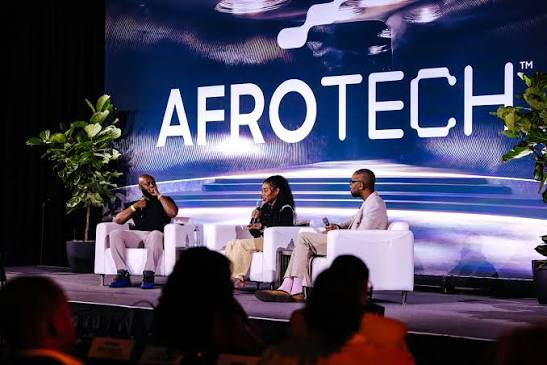
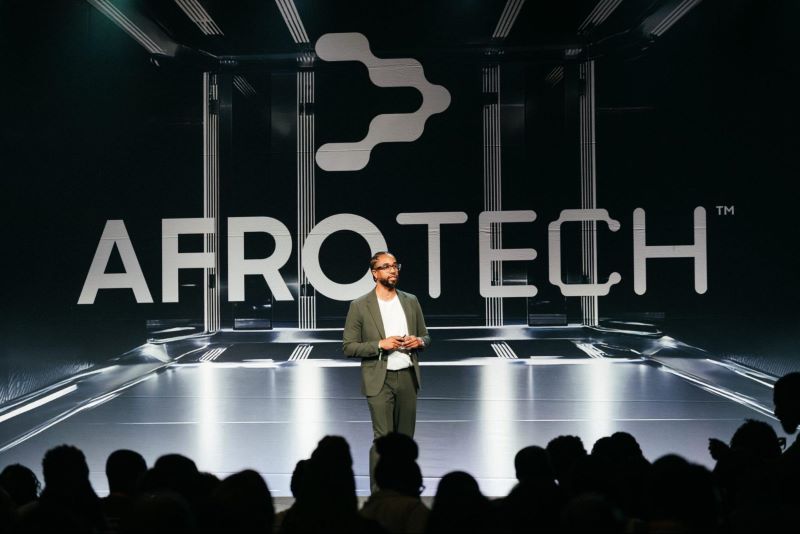
AFROTECH 2026 conference centered on Black technology professionals and innovation, takes place in Houston from November 2 to 6. Its program spans artificial intelligence, entrepreneurship and healthcare, bringing people from different industries into conversations about the technologies shaping work and business.
You do not need a conference pass to have a stake in those conversations. If you run a small business, work in a field adopting AI, or care about how digital services reach your family, the useful question is what these technologies can do and who gets to influence their development.
Looking back at 2025 gives that question some substance. The organizers’ conference recap describes discussions of human-centered AI and equitable medical technology. Disney’s account of its participation adds another dimension: the engineering behind entertainment and immersive experiences.
AI should answer to the people using it
An AI tool should have a purpose you can explain. What task does it handle? What information can it access? What happens when it gives the wrong answer?
Consider a business owner exploring an assistant for customer questions. A convincing demonstration is a starting point. Before handing it responsibility, that owner should also understand when a person can step in and how mistakes will be corrected. Those questions belong in the same conversation as speed and convenience.
For Black professionals, participation in technology can include helping define those requirements. Knowing the needs of a customer, a workplace or a community can inform what a product should do. Learning the tools is one part of that work; deciding which problems deserve attention is another.
That idea has a practical counterpart in the 2026 agenda. Its workflow-mapping session introduces Model Context Protocol servers, which connect AI assistants to tools and data. The distinction is useful: an assistant that drafts a response and one that can interact with a business system have different responsibilities. A small business exploring those connections should be able to identify the task it wants to improve before choosing the software. Mapping who supplies information and who approves the result gives that discussion a starting point.
Read also: Africa’s Rise in AI Micro-Work Economy
Digital healthcare has to reach people
The 2025 Health Stack Summit, presented by UnitedHealth Group, put women’s health and equitable medical technology on the agenda, according to the organizers’ recap. The recap says the Summit led to new conversations among health systems, startups and investors about expanding access.
A conference discussion does not establish that access has improved. It does, however, give readers a reason to examine how a proposed service would work for the people expected to use it.
A patient-facing tool should be understandable. Someone considering a digital appointment should be able to find out what the service provides, what it costs and how to reach a person for help. If those answers are difficult to find, a polished interface leaves important work unfinished.
-These are questions about the quality of a service, not a demand that every reader become a software engineer. Patients and caregivers should be able to ask them without needing the vocabulary of the people building the product.
Why this matters across the African diaspora
For readers with Caribbean, African, and African American roots, AFROTECH offers a way to follow technical ideas while considering how they could be useful in different communities. A tool designed for one setting may need different languages, business practices or access arrangements elsewhere.
Source: AfroTech
In the Caribbean, the Caribbean Telecommunications Union launched a regional AI task force in July 2025. Its priorities include developing talent, coordinating policy and bringing governments, universities and businesses into the discussion. That gives readers a regional reference point when following AFROTECH’s AI sessions and thinking about who builds these tools and who they serve.
Across Africa, ministers endorsed a continental AI strategy in June 2024 calling for an Africa-owned, people-centered approach. At that meeting, African Union Commissioner Amani Abou-Zeid argued that AI should account for African languages, cultural diversity and geography. Readers can bring that perspective to technologies presented in Houston: what would need to change for a tool to serve a particular community well?
For African American readers, the PROPEL Center HBCU Innovation Challenge in the 2026 program provides a concrete connection between higher education and building technical solutions. Its problem-solving focus also offers something to compare with work being developed elsewhere across the diaspora.
These connections create possibilities for exchanging knowledge and finding collaborators. They do not depend on everyone having the same circumstances, and regional priorities should help shape what gets built.
What to watch in the 2026 program
The published AFROTECH 2026 program offers several ways to follow these themes. One AI Edge training session introduces the connections between AI assistants and business tools through workflow mapping. A digital-health session examines who telehealth is failing to reach. The student program includes a PROPEL Center HBCU innovation challenge built around developing a technology-enabled solution to a problem facing Gen Z.
Those are scheduled activities, not completed achievements. Their value for readers will be in the specific ideas and examples that emerge. Watch for clear explanations of a problem, the people affected and what a proposed solution can realistically change. That is a more useful basis for assessing an announcement than the size of the company making it.
How can you attend or participate virtually?
For readers able to travel, the official registration page lists conference pass options and their restrictions. Check access against the sessions that interest you: the Premier pass, for example, explicitly excludes Tuesday’s AI Edge Training.
There is also a separate AI Edge Training Virtual Access offering for November 3. Its organizer listing includes a full day of streamed AI training, live questions and answers, and 30 days of replay access. Review that offering’s own inclusions rather than assuming it provides a livestream of every conference track.
Whether you attend or follow from home, look for examples that explain what was built and how it could be useful. Use those details to decide what you want to learn or try in your own work.