Source: Facebook / BOLE Festival
There are some foods you can eat anywhere, and there are others that simply belong somewhere. Just as pasta belongs to Italy, so does bolé belong to Port Harcourt.
Growing up in Port Harcourt, bolé and fish were legendary. It was “let’s stop and grab some on the way home, it was a lunch plan, it was a break time meal, it was for the rich and the poor.” We knew the good spots and sometimes had to walk long distances or travel to another location to buy from a favorite vendor. It was one of those Port Harcourt experiences that needed no introduction.
Then I moved to Lagos and saw someone selling bolé and groundnuts. Groundnuts? It struck me as odd, like someone had taken a dish I understood in my bones and rearranged it into something unrecognizable.
No disrespect to anyone enjoying their own regional version of bolé , but anyone who has lived in or tasted Port Harcourt bolé knows the difference. There is bolé, and then there is Port Harcourt bolé. There is something about the perfectly roasted plantain and fish, paired with spicy pepper sauce that feels impossible to recreate anywhere else.
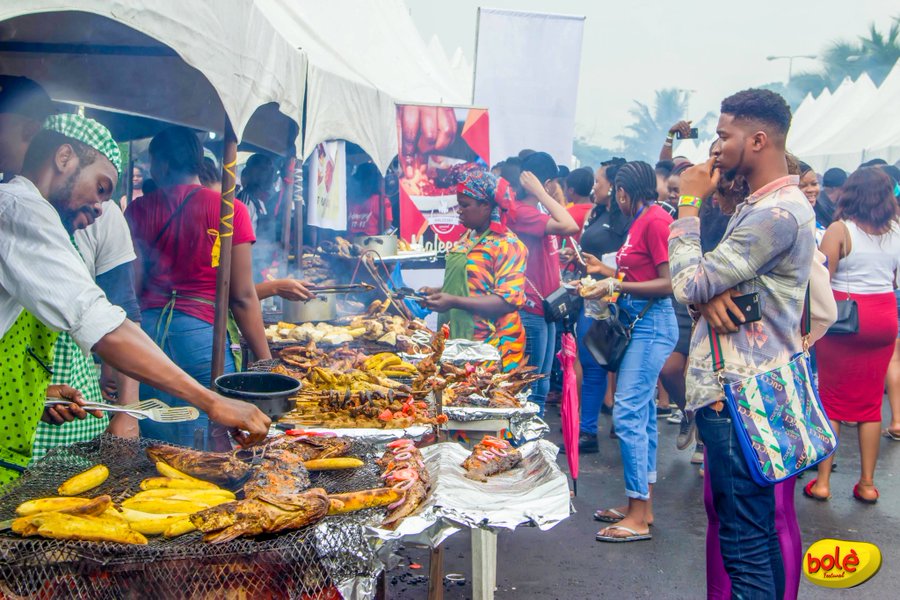
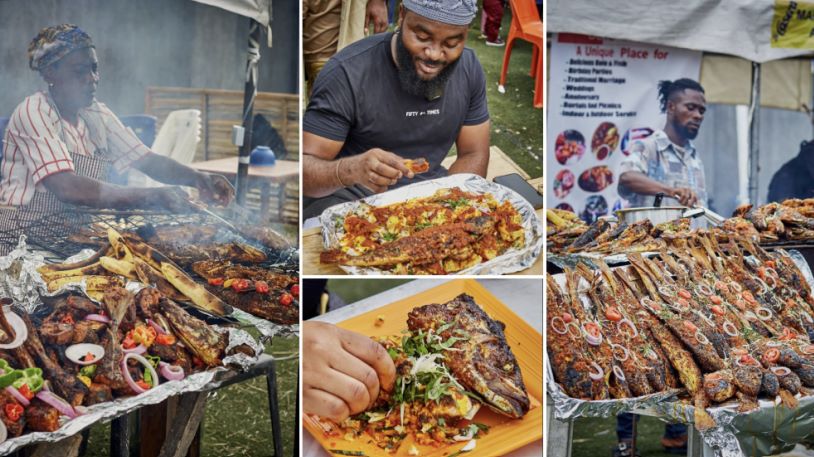
If you have never been to Port Harcourt, you may be wondering what this dish is and why there is so much buzz about it. Bolé is roasted plantain, traditionally cooked over charcoal or an open grill. Depending on your preference, you might have ripe, half-ripe, or unripe plantain. It is often served with fish and a spicy sauce. These days, some include freshly shredded Utazi (Gongronema latifolium) leaves and ugba (African oil bean seed), giving it a more local flavor.
The experience is something else. You stand by the roadside near the grill, watching the vendor expertly turn the plantains over hot coals, the fish looking appetizing beside it. When it is cooked, she expertly shreds the plantains, scoops the sauce generously, and pours it over the plantains and fish. You eat with your hands, no cutlery, just the old-fashioned way.
Source: Facebook / BOLE Festival
From a simple roadside delicacy, bolé has grown into something much larger, even inspiring an entire festival. The Bolé Festival began in 2016 to celebrate this beloved delicacy from Nigeria’s Niger Delta region and the culture that surrounds it.
The festival, organized by Nonii Entertainment, has become one of Nigeria’s most exciting cultural events, a place where food, music, entrepreneurship, and African pride collide in the best possible way, attracting thousands of people from diverse backgrounds each year to eat, socialize, and connect. For many people, especially Port Harcourt indigenes, residents, and the Nigerian diaspora who miss the tastes of home, bolé carries memories. It reminds you of streets, neighborhoods, childhood, evenings out, and the simple joy of standing beside a roadside grill waiting for your turn to be served.
Nonii Entertainment Chief Executive Officer, Chinonso Iwuh, noted that this growth reflects the power of culture to drive economic and social development.
“What started as an idea has now turned into a cultural movement. The festival has become a platform that generates jobs, promotes local businesses, and fosters community development.
“It celebrates bolé , a roasted plantain delicacy from Nigeria’s Niger Delta, often served with fish. But beyond food, the festival has broadened its scope to include live music, fashion shows, art exhibitions, and food demonstrations.”
Last year, this event received sponsorship from global brands such as Guinness, Johnnie Walker, MTN, Campari, Maggi, and Moniepoint. The British Council Nigeria also backed the festival by supporting 10 emerging artists, offering young Nigerians a platform to showcase their talent.
This year, the festival is marking its 10th anniversary, under the theme “Bolé Festival X: A Decade of Fire.” The official website says the three-day event will take place from Friday, September 4, to Sunday, September 6, 2026, at Yakubu Gowon Stadium in Port Harcourt, Rivers State. There are also Regular, VIP, and VVIP ticket categories, allowing visitors to choose the type of experience they want. Tickets are sold online through the festival’s official platforms.
Bold, flavorful, loud, warm and full of life, the festival captures the spirit of Port Harcourt while spotlighting the need to protect local traditions. Its cultural impact is significant, as it plays a key role in ensuring that culinary practices tied to the Niger Delta region continue to be passed down and celebrated.
Read also: Exploring Street Food in Lagos That Will Delight Your Taste Bud
Source: Facebook / BOLE Festival
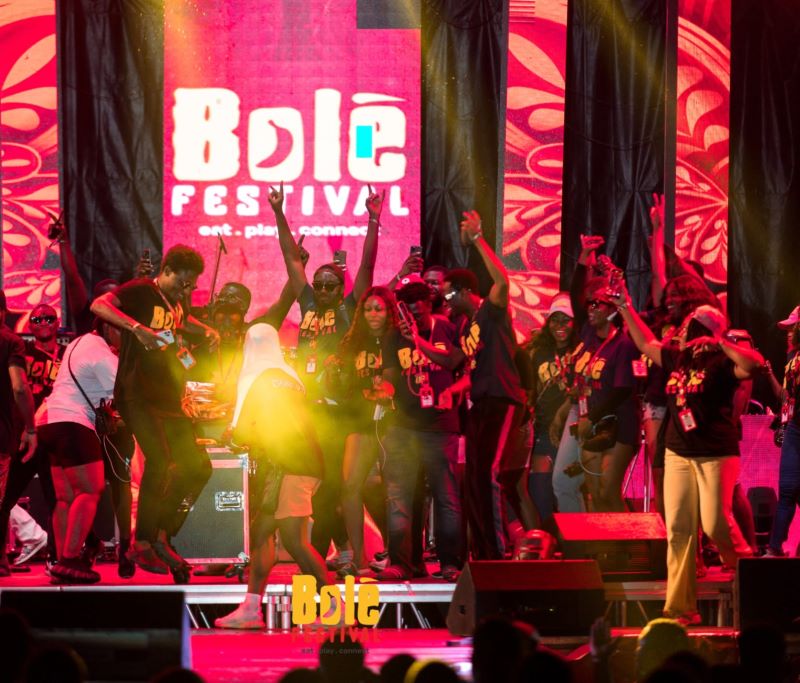
The festival brings together food vendors, music, performances, DJs, dance, competitions, fashion, creative businesses and other forms of entertainment. According to the organizers, the event is designed as an experience where food, music, and community come together, featuring more than 200 vendors and a projected audience of more than 35,000 festival-goers.
That is what makes the Bolé Festival interesting from a cultural perspective. It is not asking people to come, eat, and go home. It is asking them to spend time together, to dance, to discover new food vendors, to support businesses, to take pictures, to listen to music, and to meet people. All of this matters because African food culture has always been communal.
For visitors, the festival is an opportunity to experience Port Harcourt’s culture beyond the usual oil and gas headlines. For residents, it is a celebration of something that belongs to them.
Beyond its cultural significance, the festival has also proven to have a positive economic impact. The influx of tourists and the bustling trade from food and non-food vendors have contributed to the local economy, providing income for both local and visiting vendors. It also gives local vendors a platform to become national brands.
The Bolé Festival is one of those events where African flavor meets cultural pride. Bolé began as street food. It did not need a five-star restaurant. It did not need a celebrity chef or a complicated menu. It simply needed plantain, fire, fish, spice, and people who loved it.
Now, that same food tradition has inspired a major festival bringing together vendors, musicians, creatives, families, and visitors. That is cultural pride, and proof that African traditions can evolve without losing their roots.
If you have not tasted Port Harcourt’s smoky roasted plantain and fish with spicy pepper sauce, Bolé Festival 2026 is the perfect way to dive into this delicious part of Nigerian culture.