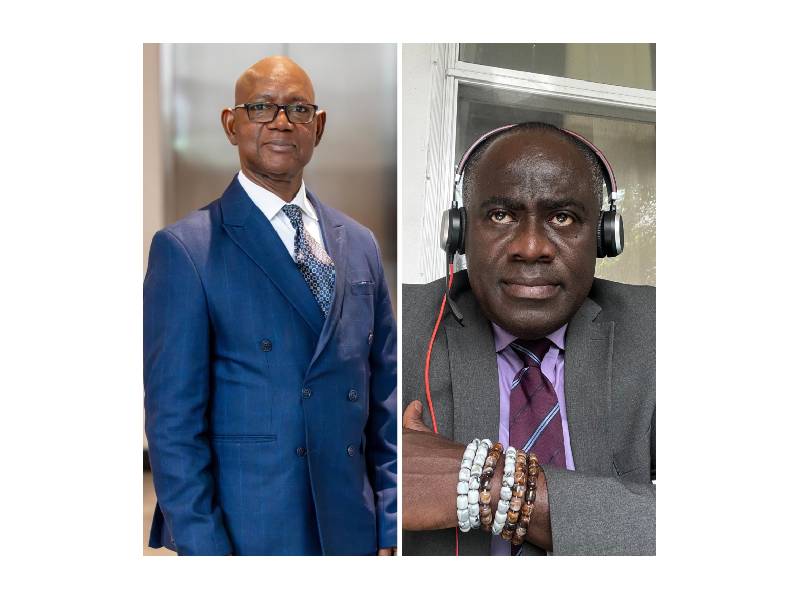
Courtesy: FunTimes Magazine: L-R, Mr. Bamba Ibrahim and Dr. Eric Edi
How Côte d’Ivoire’s World Cup Base Camp in Chester Connects African Football Pride, Local Black History, and a City Fighting to Be Seen
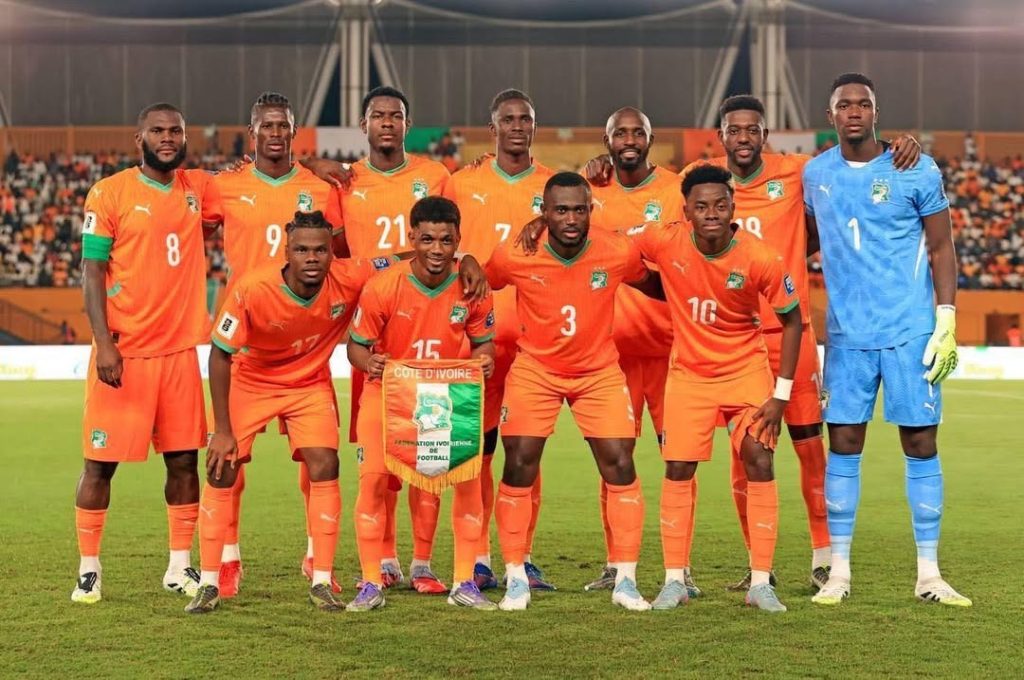
When Côte d’Ivoire’s national football team arrives in Chester for the 2026 FIFA World Cup, it will not come as a sentimental underdog story. Les Éléphants arrive as three-time African champions, a team with global stars, a proud football culture, and a diaspora ready to welcome them.
Their choice of Subaru Park and WSFS Bank Sportsplex as a World Cup base camp places them, one of Africa’s most respected teams, in a city that knows both struggle and history. Chester is often described as being in poverty, in bankruptcy, and as an environmental burden. But that is not the whole city. It is also a Black waterfront city tied to labor, civil rights memory, migration, and community endurance.
Côte d’Ivoire is making its fourth World Cup appearance, after competing in 2006, 2010, and 2014. The country returns with expectation, not pity. For Dr. Eric Edi, a community leader in the Philadelphia diaspora, the measure of success should be bold.
“Like for any other African team, how far are we really to go?” Dr. Edi said. “Are we going to witness one of those days when an African nation, maybe Côte d’Ivoire, is playing in the final? I’m not saying the semi-final, because we have had some teams in the past that led us to the gates of the semi-final… but we truly want the stars we have today playing in the European Leagues to get there. There is no reason for me why any African nation is not getting there.”
That is the deeper point. Les Éléphants are not coming to Chester to be admired as a charming surprise. They are coming to prepare, compete, and represent a nation whose football history already commands respect.
Chester Is More Than a Backdrop
Chester’s selection as the team’s base camp matters because place matters.
The city has endured years of fiscal distress, state oversight, and bankruptcy proceedings. It has faced long-standing complaints about environmental burden in a majority-Black community. Those facts cannot be ignored.
But Chester cannot be reduced to hardship.
It is a sacred ground in the broader story of Black struggle and public conscience. Dr. Martin Luther King Jr. studied nearby at Crozer Theological Seminary from 1948 to 1951 and worshiped at Calvary Baptist Church in Chester. The region also carries deep ties to labor organizing, civil rights work, and Black civic life.
At its World War II peak, Sun Shipbuilding & Dry Dock employed an estimated 35,000 workers, making it the largest shipyard on Earth and the largest employer of African Americans in the entire mid-Atlantic region. Its story has never been small. What has changed is how much of that story the wider public chooses to remember.
That is why Côte d’Ivoire’s presence feels larger than sports. A West African national team will train in a majority-Black American city whose residents know what it means to be overlooked. The pairing is not a rescue story. It is a moment of recognition.
Les Éléphants bring global attention. Chester brings history, dignity, and a living community that deserves to be seen beyond crisis headlines.
The Diaspora Knows What This Means
Source: mickyjnrofficial/Instagram
For Ivorians and West Africans across Greater Philadelphia, football is more than a game. It is a language of belonging. It is one of the easiest ways to explain home to people who may not know the map.
Bamba Ibrahim described this plainly.
“To tell you the truth, Côte d’Ivoire is not well known worldwide,” he said. “Every time you talk about Côte d’Ivoire, people don’t know that country. When you tell people Ivory Coast or Côte d’Ivoire, they tend to ask, “Where is that located?” Sometimes you have to say, Didier Drogba’s country. Then they’ll say, ‘Oh yeah! That’s, yeah, we know Drogba!’ They know Drogba, but they don’t know Ivory Coast.”
That “Drogba effect” says a great deal about the immigrant experience. Diaspora communities sometimes use athletes, artists, food, music, and family stories to locate their homelands in their neighbors’ imaginations.
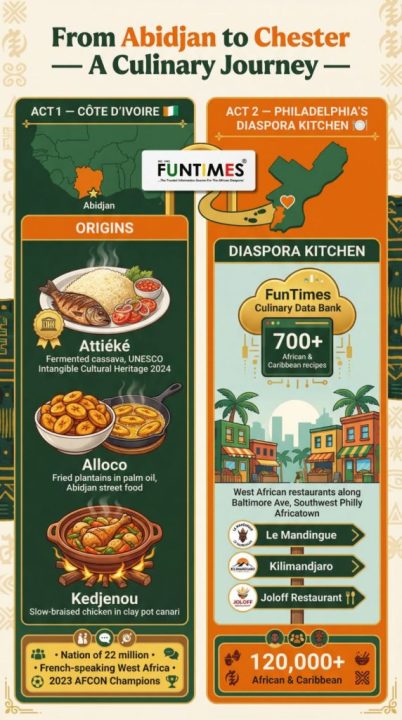
The World Cup gives Côte d’Ivoire another opening. It allows the country to be seen through excellence, movement, discipline, and joy. It gives Ivorian families in Philadelphia, Chester, Upper Darby, Southwest Philadelphia, South Jersey, and across the region a public moment to gather around a shared flag.
That joy is real. So are the barriers.
Dr. Edi also noted the cost of participation. For many working families, World Cup tickets can feel out of reach.
“Did you get that they’re very expensive?” he said. “The tickets are $700, the last time I checked.”
His point is not to dampen the celebration. It is to remind the public that access matters. A global event should create space for the people whose cultures, neighborhoods, and labor help make the region so rich.
A June 14 Convergence
The timing gives the story added weight.
On Sunday, June 14, Côte d’Ivoire opens its Philadelphia World Cup schedule against Ecuador at Lincoln Financial Field. That same day, ODUNDE Festival marks its 2026 Festival Day in South Philadelphia, closing a week of events celebrating African and African American culture.
That overlap is rare.
In one part of the city, one of the largest African American cultural festivals in the country will fill the streets with music, commerce, heritage, food, and community pride. In another, an African national team will step onto one of the world’s biggest sporting stages.
For Philadelphia, it is a reminder of the city’s place in the global Black world.
ODUNDE has long connected Philadelphia to African cultural memory. Côte d’Ivoire’s match brings another expression of that connection: sport as national pride, migration as community, and public celebration as a form of belonging.
For FunTimes Magazine, this is the story beneath the schedule. Philadelphia will not simply host matches. It will host meaning.
Joy With Responsibility
The arrival of global fans will bring energy, movement, and economic opportunity. It will also bring traffic, costs, security concerns, and pressure on local systems.
Dr. Edi’s message to visiting fans is simple: celebrate with care.
“We ask them to be careful,” he said. “And then make sure that we avoid any erratic behaviors because we come here for fun, not for anything related to traffic or any other thing that may be jeopardizing their fun or stay in Philadelphia.”
That is a community elder’s advice: protect the joy.
The diaspora understands celebration as something that must be guarded. Too often, Black joy is misunderstood, misread, or policed. A World Cup moment calls for pride, but also for wisdom. It calls for hospitality, but also for preparation. It calls for visibility, but also for respect for the people who live in the neighborhoods receiving that visibility.
Chester should benefit from this attention. Philadelphia should benefit from it. The Ivorian and West African diaspora should be part of the public story, not treated as background color.
Courtesy: FunTimes AI
What the World Should See
Côte d’Ivoire’s World Cup journey gives the region a chance to see the country beyond clichés.
It is a nation of culture, commerce, football brilliance, political complexity, and diaspora reach. It is a country that gave the world Didier Drogba, Yaya Touré, and a generation of players who carried African football into global conversations. It is also a country whose people abroad continue to build community wherever they settle.
In Chester, that story meets another one.
A city often described by what it has lost will become a training home for a team defined by ambition. A waterfront associated with disinvestment will carry the movement of international football. A majority-Black city will stand at the centre of a World Cup story that belongs to the African diaspora as much as it does to FIFA.
That is why this moment matters.
Dr. Edi offered an image that will stay with many in the diaspora long after the tournament ends.
“One day, who knows, we will be retiring, sitting under our coconut trees in Côte d’Ivoire and then remembering that, ‘Ah! That year, I was actually in Philadelphia, and we were the community that hosted or welcomed our national team to the United States to play in this game.”
That memory is already forming.
Les Éléphants are coming to Chester. Not as underdogs. Not as charity. Not as a passing spectacle.
They are coming as a proud African team with a global stage before them and a diaspora ready to meet the moment.
For Chester, Philadelphia, and the wider Black world, this is more than football. It is recognition.

Dr. Eric John Nzeribe is the Publisher of FunTimes Magazine and has a demonstrated history of working in the publishing industry since 1992. His interests include using data to understand and solve social issues, narrative stories, digital marketing, community engagement, and online/print journalism features. Dr. Nzeribe is a social media and communication professional with certificates in Digital Media for Social Impact from the University of Pennsylvania, Digital Strategies for Business: Leading the Next-Generation Enterprise from Columbia University, and a Master of Science (MS) in Publication Management from Drexel University and a Doctorate in Business Administration from Temple University.