Source: The Africa Report
Education has always been one of the most powerful instruments for transforming societies. It shapes how people think, equips young people with knowledge and skills, creates opportunities, and, to a large extent, determines how effectively nations can respond to the challenges of their time.
For Africa, where a youthful population is entering an increasingly competitive global economy, the question is no longer simply whether people are going to school, but whether what they learn prepares them to build the societies they want.
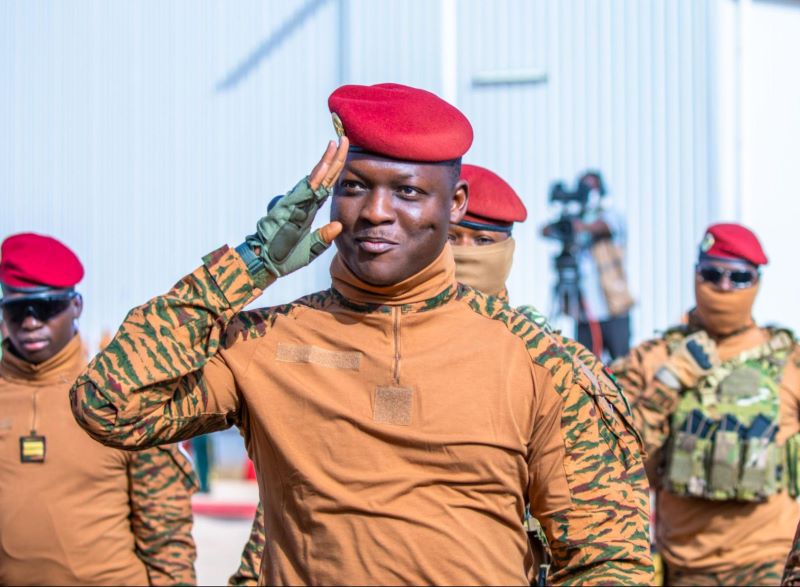
This question has gained renewed attention following debates surrounding Burkina Faso’s President, Captain Ibrahim Traoré, and his comments about students who had travelled from Burkina Faso, not to study engineering or acquire practical technical and vocational skills, but to invest their time and resources in Islamic studies.
In his view, education, development and nation-building skills should be among the priorities African societies set for their young people. While his position was applauded by sections of the African population, others criticized it as an overreach that could have significant implications for his support base and public image.
Traoré has become one of Africa’s most influential and controversial political figures since taking power in 2022. His popularity among sections of Africa’s youth is partly connected to his emphasis on self-reliance, sovereignty and reducing dependence on external powers.
Yet, beyond the arguments surrounding his comments, the more important question that should not be lost in the deluge of opinions is: What kind of education does Africa need to achieve sustainable development?
This is a question that warrants consideration beyond Ibrahim Traoré’s personality.
Traoré himself has a scientific background. According to the official biography of the Presidency of Burkina Faso, he studied at the University of Ouagadougou in the Faculty of Science and Technology, where he obtained a master’s degree in geology before joining the military. His educational background, therefore, makes the argument about practical knowledge, science and national development particularly relevant.
While many may approach the debate from a religious standpoint, Ibrahim Traoré, a practicing Muslim, raises a valid question about the future of his country and Africa as the world moves deeper into technological innovation and advancements designed to improve citizens’ lives.
-Traoré’s comments should not necessarily be interpreted as an attack on religion or religious education. Religion remains an important component of African societies and has historically contributed to moral instruction, community cohesion and the preservation of cultural values. The real issue is whether the same vociferous debates and reactions surrounding religion are being applied to the question of whether African educational systems are producing enough scientists, engineers, agricultural experts, technology developers, entrepreneurs, medical professionals, technicians and other skilled people capable of solving the continent’s development challenges.
Source: Africa Tech Schools
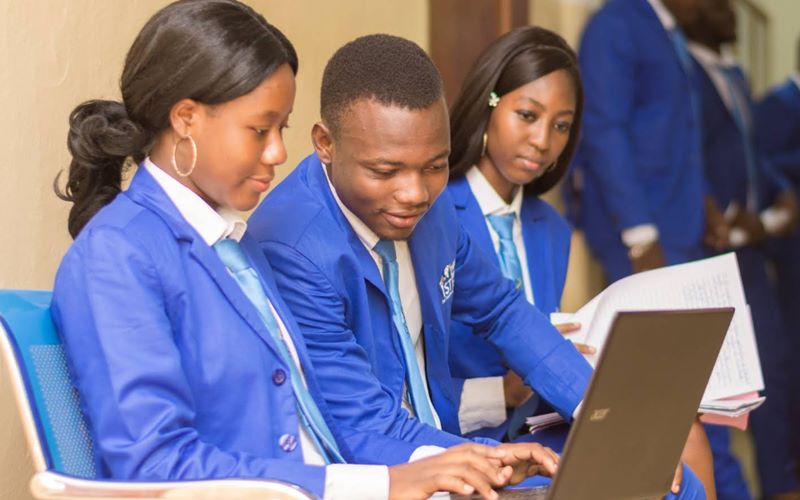
For decades, many African societies have measured educational success primarily by certificates. A young person completes primary school, proceeds to secondary school, enters university and eventually graduates with a degree. Yet, the possession of a certificate does not automatically translate into employability, innovation or economic productivity.
This is where a shift in Africa’s educational conversation becomes particularly important. Africa needs an education system that places greater emphasis on what students can do, not merely what they can memorize.
A student who understands agricultural science should be able to apply that knowledge to improve farming. Someone studying engineering should be encouraged to design solutions to local infrastructure problems. A student studying computer science should be exposed to coding, artificial intelligence, cybersecurity and digital entrepreneurship. Those studying business should understand how to create, manage and scale enterprises.
More importantly, Africa, with its vast pool of scientists and intellectuals, should never be in short supply of solutions to the many challenges confronting its societies.
This is what Ibrahim Traoré appears to desire for Burkina Faso and, more broadly, for Africa. The continent not only needs more graduates. It needs competent electricians, mechanics, software developers, welders, construction professionals, machine operators, laboratory technicians, agricultural specialists, renewable energy technicians and thousands of other professionals who can build and maintain the infrastructure required for development, not only relying on tools and technologies designed primarily to solve problems in Western societies and then attempting to adapt them to Africa’s unique realities.
Africa has enormous agricultural potential, but continues to struggle with food insecurity and low agricultural productivity in many countries. It possesses significant mineral resources but often exports raw materials instead of processing them into higher-value products. Its cities are expanding rapidly, while infrastructure, transportation and housing remain major challenges.
Should these challenges not become classrooms for innovation? Should engineering students not be challenged to develop affordable water systems for rural communities? Should agricultural students not be encouraged to develop technologies for reducing post-harvest losses? Should technology students not be challenged to build digital solutions that address local problems?
Such an approach would transform education from a process of obtaining qualifications into a process of developing problem solvers.
Religious education has a place. Africa’s religious institutions are important social structures. Churches, mosques and other faith communities provide education, charity, counselling and community support. Religious studies can also contribute to moral reasoning, discipline, history and an understanding of cultural traditions.
But religious education cannot be a substitute for critical and innovative thinking. Africa’s future requires both values and capabilities.
The greatest value of the current debate is that Africa should not reduce the conversation to whether Ibrahim Traoré is right or wrong. The more important lesson is that Africa needs to rethink where it wants to be as the world moves towards greater efficiency in the way nations operate and deliver value to their citizens.
Lawalley Cole, Executive Director of the Coalition on Media and Education for Development Africa Forum (CAFOR), reinforces this perspective in a UNESCO publication, noting that technology can play a transformative role in Africa’s education sector by expanding access, improving the quality of learning and encouraging innovation. He argues that by harnessing technology effectively, Africa can build an education system that is more inclusive, dynamic and responsive to the demands of the future.
But if millions of young people spend their formative years studying courses that leave them without employable skills, entrepreneurial capabilities or opportunities to contribute meaningfully to the economy, the demographic dividend could become a major socioeconomic challenge.
Africa does not have to choose between faith and science, tradition and technology, or morality and economic development. It needs to design an education system that brings these dimensions together while placing greater emphasis on the knowledge and skills required to solve African problems.

Okechukwu Nzeribe works with the Onitsha Chamber of Commerce, in Anambra State, Nigeria, and loves unveiling the richness of African cultures. okechukwu.onicima@gmail.com