Photo courtesy of BBC
The long wait is finally over.
For years, Cameroon’s women’s national football team had lived with the frustration of coming close to continental glory without ever touching it. The Indomitable Lionesses had established themselves as one of Africa’s most competitive women’s football teams, reaching the WAFCON final in 2004, 2014 and 2016, only to return home without the trophy.
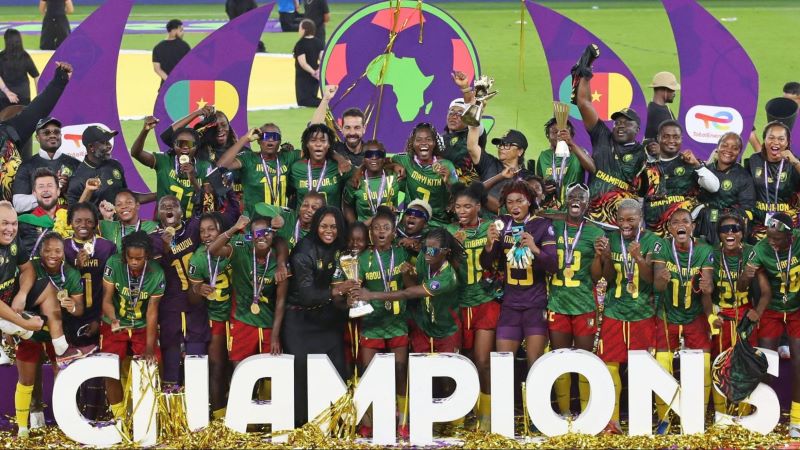
In 2026, however, the tides finally turned in their favour. In a final that will be remembered as one of the defining moments in African women’s football, Cameroon defeated Malawi 3–0 in Rabat, Morocco, to win their first-ever WAFCON title.
To the Indomitable Lionesses and the Cameroonian nation, this victory is more than a football result. It represents the culmination of years of perseverance, repeated disappointment, continued talent development and an unwavering determination to finally win one of Africa’s most coveted prizes in women’s sport.
With the remarkable grit and determination of the Malawi team, many expected an evenly contested encounter in which a new champion would be crowned. The Indomitable Lionesses, however, quickly put an end to speculation about who would be crowned Africa’s new women’s football champion.
Cameroon came out strongly in the first half. Marie Gisèle Divine Ngah opened the scoring in the 20th minute before Naomi Ndjoah Eto doubled the advantage 10 minutes later. Ngah then struck again in first-half stoppage time to complete her brace and give Cameroon a commanding 3–0 lead before the interval.
From there, the Lionesses held their ground, and when the final whistle sounded, Cameroon finally achieved what had eluded them for decades: becoming WAFCON champions for the first time.
But for Malawi, first-time debutants in the competition, the defeat, while painful, does not diminish their extraordinary campaign and achievement. The Scorchers entered the tournament facing more established teams and expectations, yet they defied the odds to reach the final, announcing Malawi as an emerging force in African women’s football.
Their campaign included a stunning victory over Nigeria in the group stage and further impressive performances in the knockout rounds, carrying them into the championship match. The Chawinga sisters, particularly Tabitha and Temwa, became central figures in Malawi’s historic run and helped capture the imagination of football fans across the continent.
Finishing second is by no means an easy feat, especially for a nation that had never previously appeared at the WAFCON. Many had welcomed Malawi’s qualification as a historic achievement but had rarely spared much thought for how far the team could progress beyond the group stages.
Their remarkable run has earned them a place at the 2027 FIFA Women’s World Cup in Brazil, alongside the other African teams that secured qualification through the WAFCON. The tournament served as Africa’s continental pathway to the global showpiece, with the four semi-finalists earning automatic qualification.
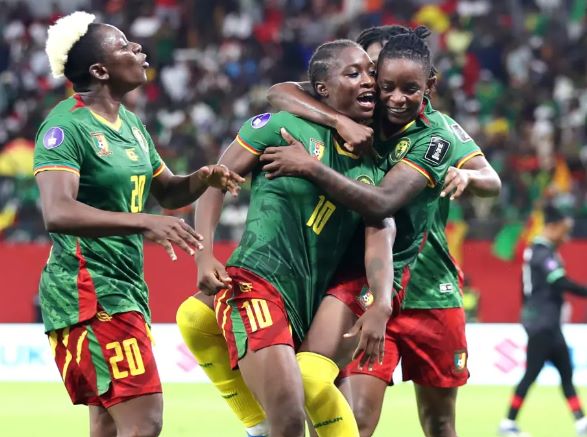
Photo courtesy of CAF Online
Read also: Viral Dances, Songs, and WAFCON Debut Bring Malawi’s Culture Alive
The success of Cameroon and Malawi in this year’s competition demonstrates what is possible when players are given the platform, investment and opportunity to compete at the highest level.
As Malawi Football Association president Fleetwood Haiya noted, the achievement is evidence that the country’s deliberate investment in girls’ and women’s football is beginning to bear fruit. He stressed the importance of continuing to invest in young girls, strengthening the pathway from grassroots to elite football and creating opportunities for the next generation.
For the new Women’s Africa Cup of Nations champions, their achievement becomes even more significant when their history in the competition is considered. Having reached the final several times and suffered the disappointment of finishing second, the 2026 victory became particularly meaningful.
The 2026 WAFCON will ultimately be remembered for much more than Cameroon’s 3–0 victory over Malawi. It will be remembered as a tournament that challenged assumptions about the direction and possibilities of African women’s football.
It showed that historic reputations do not guarantee future success. It showed that debutants can reach the biggest stage. It showed that countries that have persevered in knocking on the door of success can eventually break through. Most importantly, it demonstrated that African women’s football is moving forward.
The emergence of Malawi, the resilience of Cameroon, and the competitive performances across the tournament point to a continent where women’s football is increasingly creating its own stories, heroes and moments of continental significance.
Read also: 10 WAFCON 2026 Stars to Watch

Okechukwu Nzeribe works with the Onitsha Chamber of Commerce, in Anambra State, Nigeria, and loves unveiling the richness of African cultures. okechukwu.onicima@gmail.com