Source: Political Organisation of the Zulu
When people talk about the Zulu nation, one might be forgiven if the conversation quickly turns to the life and influence of Sigidi kaSenzangakhona, commonly known as Shaka Zulu, who was both king and military leader of his people. His military reforms, political expansion and the kingdom he helped build have made him one of the most recognizable figures in African history. But Zulu society existed long before the coming of Shaka.
Before the emergence of the Zulu Kingdom, the Zulu existed as a relatively small Nguni clan. Traditionally, the clan is associated with Zulu kaMalandela, who is believed to have established the Zulu lineage around the beginning of the 18th century. At this stage, the Zulu were one of many communities occupying the region, with political influence that was modest compared with some of the larger powers around them.
The political landscape of the region began to change as different clans and chiefdoms developed stronger relationships with one another. One of the most important forces in this transformation was the Mthethwa polity, which became a major political and military power under Chief Dingiswayo.
Rather than functioning as a single, tightly controlled kingdom, the Mthethwa polity brought together numerous Nguni communities, including the Zulu, through an alliance system. While individual groups retained their own leadership structures, cooperation created greater security and collective strength. This arrangement allowed Dingiswayo to extend his influence without immediately eliminating the traditional structures of the communities that came under his influence.
The Mthethwa system also introduced young men to a more organized form of military service. From their teenage years, young men could become part of age-based groups that combined military training with discipline, loyalty and community responsibilities. These institutions helped create a generation of young men who were increasingly accustomed to serving a wider political authority rather than remaining focused only on their individual clans.
When Shaka eventually emerged as a leader of the Zulu, he inherited a small chiefdom operating within a political environment that had already been reshaped by the Mthethwa. His later rise therefore cannot be separated from the institutions and relationships that existed before him. He built upon ideas of military organization and political unity that were already developing in the region, while introducing his own methods of centralization and expansion.
The transformation from a small Zulu chiefdom into a major kingdom was consequently not an isolated event. It was part of a broader period of political change among the Nguni-speaking communities of southeastern Africa. The Mthethwa provided an important model for political cooperation and military organization, while the Zulu under Shaka took some of these developments much further.
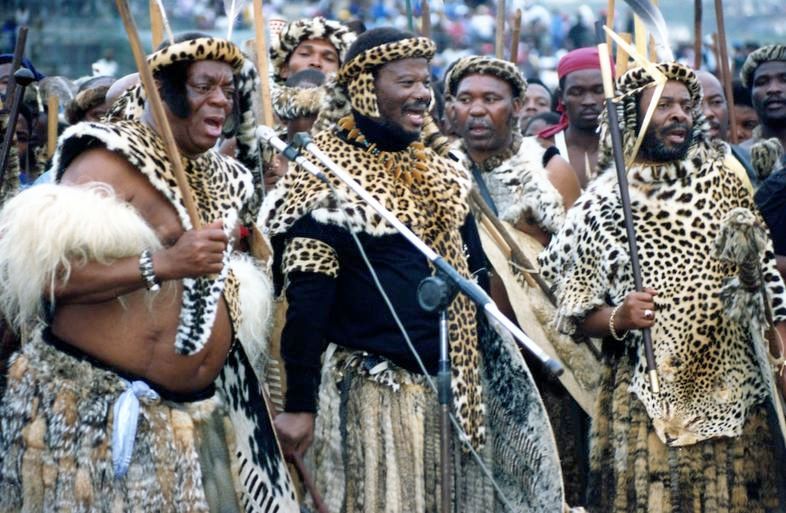
Early Zulu society was also largely organized around kinship. Families and extended households formed the foundation of community life, while clans provided people with a strong sense of identity, ancestry and belonging. Leadership was closely connected to lineage, with chiefs exercising authority over communities through relationships that were both political and social.
This was not a society where power existed only at the top. Communities depended on networks of families, elders, headmen and local leaders who helped maintain order and settle disputes. Authority was often negotiated through relationships, traditions, customs and obligations. A leader’s ability to maintain loyalty, protect the community and provide stability was an important part of political legitimacy.
At the center of everyday life was the homestead, or umuzi, which was more than simply a place where people lived. It was an important social and economic unit. Families worked together, cared for livestock, cultivated crops and participated in rituals that connected the living with their ancestors.
Family identity was similarly organized around kinship and lineage. Authority and inheritance generally followed male lines, while senior members of families and clans played important roles in maintaining traditions and settling disputes. These relationships meant that an individual’s identity was closely connected to the wider family and clan rather than being understood only in individual terms.
Read also: Zulu monarchy: how royal women have asserted their agency and power throughout history
Source: African History Group/ Facebook
Access to land was also critical because society was predominantly agrarian. Matters concerning land were managed through established community structures. Land was essential for farming and grazing, and political leaders had responsibilities in determining how it was used. This did not mean that every community operated according to exactly the same system, but access to land was generally connected to kinship, authority and communal needs.
Maintaining peace within and between communities required rules and systems for resolving disagreements. Elders and chiefs could help settle disputes, while compensation could be required when a person caused harm or loss. The objective was often to restore relationships and prevent individual disputes from threatening the wider community. Values emphasizing respect, mutual responsibility and generosity helped reinforce social cohesion.
The ownership of cattle was also crucial to Zulu society. Cattle represented wealth, social status and economic security. They were also important in marriage negotiations and other social relationships, helping establish obligations between families and households. This is one reason cattle became closely associated with traditional marriage practices.
In Zulu and other Nguni societies, lobola, or bridewealth, involved the transfer of cattle or their equivalent between families as part of marriage negotiations. Among some Nguni communities, polygyny was also practiced, particularly by men with sufficient resources and livestock to support more than one household.
Agriculture was equally important to survival. Communities cultivated crops and depended on seasonal cycles, while livestock provided food, materials and economic value. This agricultural and pastoral foundation meant that access to land, water and grazing areas could become a source of competition between communities.
Religion and ancestral traditions were another important part of early Zulu life. The relationship between the living and their ancestors was deeply embedded in community traditions. Ancestors were understood to continue to have an interest in the wellbeing of their descendants, and rituals helped maintain this connection.
Spiritual beliefs were therefore woven into everyday life rather than separated from social and political affairs. Ancestors occupied an important place in the religious worldview of many Nguni communities, while rituals were used to maintain connections between the living and the deceased. Traditional healers and diviners, known as izangoma, were also respected for their knowledge of spiritual and medicinal practices.
Growing into adulthood was also an important transition for young Zulu men and women. Young men learned practical skills such as hunting, tending livestock and protecting their communities, while elders passed down knowledge about customs, responsibilities and acceptable behavior. Young women were similarly prepared for the responsibilities expected within family and community life. These traditions helped connect generations and ensured that knowledge was preserved within the community.
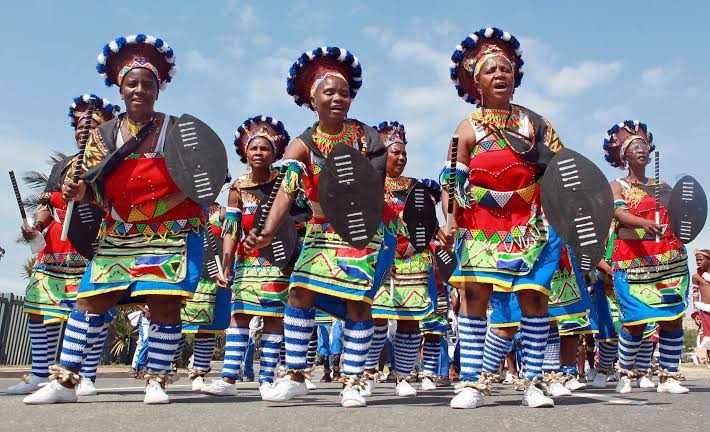
Art, music and dance played an important role in preserving community identity. Beadwork, pottery, weaving and other crafts served practical purposes while also communicating aspects of identity and social status. Music and dance accompanied ceremonies, celebrations and other important community occasions. Songs also provided a way to preserve and pass down stories, memories and cultural knowledge from one generation to another.
Shaka’s later transformation of the Zulu chiefdom therefore took place within an existing social world. His significance lay partly in the way he reorganized and expanded institutions and relationships that had developed over generations. The discipline of young men, the authority of chiefs, the importance of cattle and kinship, and the relationships between neighboring communities all formed part of the foundation upon which a larger political organization could eventually be built.
Understanding these foundations makes the rise of the Zulu Kingdom easier to appreciate. Before Shaka’s armies and military reforms changed the political landscape, there were already communities with their own traditions, leaders, economies and systems of cooperation. The kingdom that emerged in the 19th century was shaped not only by the ambitions and actions of one leader but also by the social and political foundations that existed before him.

Okechukwu Nzeribe works with the Onitsha Chamber of Commerce, in Anambra State, Nigeria, and loves unveiling the richness of African cultures. okechukwu.onicima@gmail.com