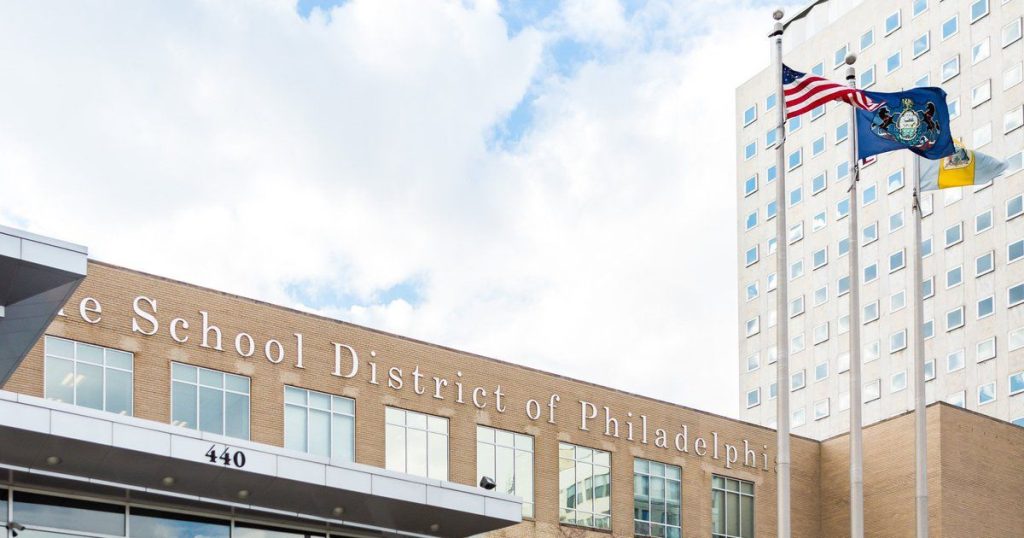
Source: Thom Carroll/PhillyVoice
Grades one through twelve in the School District of Philadelphia go back on August 24, and by the second week, a familiar arithmetic will start showing up in group chats and church bulletins across the city: how many degrees outside, how many schools sent home early, whose building made the list this time. Classes for grades one through twelve start August 24, with kindergarten following a few days later. For a sizable share of families, that date carries a second, quieter question underneath the excitement of a new year. Not whether school will start, but whether the building it starts in can actually hold their children through it.
At Kensington High School for the Creative and Performing Arts, the answer this year is yes, mostly. The building is more than a century old, and for nearly two years, it was a construction site as much as a school, crews moving through occupied classrooms to install new ductwork and replace windows that had gone cloudy with age. The upgrade came with a price tag of about $17 million. Isabelle Ouyang, a special education teacher there, has made her peace with the dust and the disruption because of what it brought. “Having AC in our school, I feel really lucky,” she said, though she is still bracing for more construction chaos this year, saying the whole process felt like it was being figured out as they went along.
Kensington is the version of this story with a happy ending, and even it comes with an asterisk. Roughly fifty other Philadelphia schools, close to a quarter of the district, will open this month without what officials consider adequate cooling. That is down from 118 schools four years ago, the result of COVID relief dollars and a $200,000 donation from Eagles quarterback Jalen Hurts going toward HVAC upgrades. It is also, by the district’s own earlier promise, a broken one. Philadelphia once set a goal of air conditioning every school building by 2027. That deadline is now widely understood to be out of reach.
For the schools still waiting, the district has a protocol instead of a fix. When forecasters expect a school-day morning to hit 85°C or higher before 9 a.m., students at buildings without sufficient cooling learn remotely from home rather than sit in the heat. The district used that option twice at the end of last school year, sending roughly fifty schools home to log in from their kitchen tables instead of their classrooms.
John F. McCloskey Elementary in Cedarbrook was one of them, and it likely will be again this fall. The local utility has spent a year and a half studying whether a geothermal system could cool the building along with a neighboring recreation center, at an estimated cost of nearly nineteen million dollars, but there is still no funding or timeline attached to actually building it.
One Philadelphia math teacher, who spoke on condition of anonymity because she was not authorized to talk to reporters, described what those days actually feel like inside a building without enough cooling. Absences climb on the hot days that fall just short of the district’s threshold for going remote. The children who do show up sit through class in a kind of low-grade misery that makes the lesson beside the point. “Nobody feels good,” she said. “Nobody’s learning.”
None of this is new, which is part of what makes it maddening for the parents living through it a second, third, or fourth time.
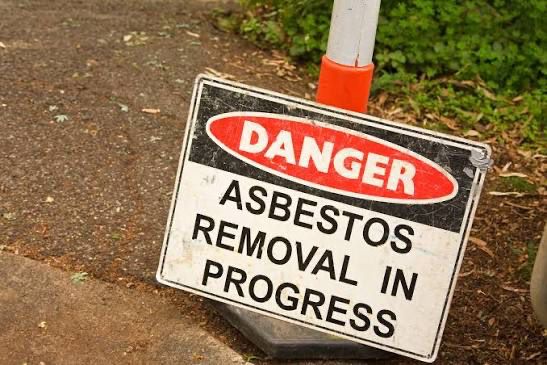
The heat is only the most visible piece of a larger inheritance. Asbestos is present in roughly 300 of the district’s 339 buildings, most of them built when the material was standard construction practice and nobody yet worried about what would happen when it aged and crumbled. Last year, the U.S. Attorney’s Office filed the first criminal charges in American history against a school district for asbestos violations, alleging the district failed to conduct legally required inspections at seven schools between 2018 and 2023. The district has since entered a deferred prosecution agreement, still awaiting judicial review, and points to real changes since then.
Source: Getty Images
Read also: Keeping Black Family Gatherings Safe During a Dangerous Cookout Season
Ask why any of this persists, and the district’s own spokespeople will point, not incorrectly, to the buildings themselves. Many run on two-pipe systems that physically cannot provide heat and air conditioning at the same time, which is why every spring, crews move building to building, switching the whole district over, a process that used to wait until May Day and now increasingly starts weeks earlier as summers arrive hot. A principal writing to parents in 2023, after older test results on her building’s plaster turned out to be unreliable, put it in the dry language of compliance. The records, she wrote, were “no longer consistent with current sampling protocol.” Behind that sentence was a school closed for the rest of the year, and children relocated across the neighborhood.
Superintendent Tony Watlington’s answer to all of it is a ten year facilities plan, approved by the Board of Education, that would close seventeen schools, combine several others, and modernize close to 170 buildings district-wide. Touring an elementary school in Southwest Philadelphia this summer, he framed the goal simply: “We don’t have to send kids home early” once the plan is further along. Patterson Elementary, the school he was visiting, is slated for a forty-five million dollar overhaul that would finally bring cooling to key parts of the building. It doesn’t have that yet.
The math behind that plan is where parent advocates start to lose patience with the timeline. State lawmakers this year set aside just one hundred million dollars for facilities out of an eight billion dollar statewide education budget, roughly one and a half percent, an amount that would cover perhaps two new school buildings statewide, let alone renovate hundreds of aging ones. Arthur Steinberg, president of the Philadelphia Federation of Teachers, has watched optimism curdle into something more guarded over the past few years. He once called the moment after a major state funding win, a “once-in-a-lifetime opportunity to get things on the right track.” The opportunity came and went without the facilities crisis meaningfully closing.

What has shifted more recently is the language the district itself uses to talk about who bears this. Its long-term facilities and sustainability planning have begun naming, in writing, that Black and brown communities carry the heaviest weight of a warming, under-maintained building stock, and that the district’s own maps of heat and air quality risk are now being used to decide which schools get HVAC dollars first. Black and Hispanic students nationally are less likely to attend schools with adequate air conditioning, and studies have linked hot classrooms to widening achievement gaps for exactly those students.
None of this is unique to Philadelphia, and that is worth sitting with rather than rushing past. Every city with a century of segregated housing patterns behind it also has a map of which school buildings got maintained on schedule and which ones did not, and it is rarely a mystery which neighborhoods sit on which side of that line. Readers watching this from Atlanta or Detroit will recognize the shape of it. So, likely, will readers watching from Lagos or Nairobi or Accra, where the newest infrastructure investment also tends to reach the wealthiest districts first and the working-class ones last, if at all. The particulars change. The order of operations rarely does.
What Black parents in Philadelphia are asking for this fall is not complicated, even if the district’s answer keeps arriving complicated anyway. They want inspection logs they can trust without having to fight for them. They want a funding timeline for the buildings still waiting, rather than a ten-year plan where the earliest fixes are always scheduled for later. They want their children treated as the reason the work is urgent, not as the population the work will eventually get around to.

Anand Subramanian is a freelance photographer and content writer based out of Tamil Nadu, India. Having a background in Engineering always made him curious about life on the other side of the spectrum. He leapt forward towards the Photography life and never looked back. Specializing in Documentary and Portrait photography gave him an up-close and personal view into the complexities of human beings and those experiences helped him branch out from visual to words. Today he is mentoring passionate photographers and writing about the different dimensions of the art world.