Source: Chancel Soumah
How Chancel Soumah Turned a Childhood Identity Crisis Into a Movement for Cultural Pride and Advocacy.
For years, Chancel Soumah lived in a quiet tug-of-war between two worlds.
At home, she moved between identities that rarely allowed coexistence. In one household, she was Chancel, raised within Congolese traditions and Christian values. In another, she was Kadiatou, expected to embody the Guinean and Islamic heritage of her paternal side. Between the two, there was no clear bridge, no guidebook for balancing both worlds, and certainly no roadmap for understanding what it meant to belong fully to either.
Born and raised in the United Kingdom to a Congolese mother and Guinean father, Soumah spent much of her early life trying to fit into a British identity that often left little room for the complexity of African heritage.
At just 24, she is known to thousands as Princess Shani, the former Miss Pride of Africa UK, founder of intercultural platform La Guinéolese, cultural advocate, humanitarian, and a voice for people living with albinism across Africa.
But her story did not begin with crowns or public recognition. It began with confusion.
The Weight of Growing Up Between Cultures
Like many children of the African diaspora, Soumah grew up absorbing the subtle pressure to assimilate.
In British schools, she says, African cultures were rarely taught beyond surface-level acknowledgments. While students could learn about Spanish or French traditions in depth, African identities were often reduced to occasional “cultural days” or narrow media narratives.
Then came the Ebola outbreak.
For many African children growing up in the UK at the time, it became a painful lesson in how quickly identity could become something to hide. As media headlines linked the outbreak to African nations, students from countries associated with the virus found themselves suddenly stigmatized.
For Soumah, the experience was unforgettable.
When classmates associated Ebola with Congo, she denied being Congolese. When Guinea was mentioned, she denied that too. Like many others, she defaulted to saying she was French, believing it was safer than claiming her truth.
It was a moment that revealed how deeply external narratives can shape self-perception. “It makes me sad that there was a point in my life where I was hiding my heritage,” she reflects. That shame lingered for years.
Source: Chancel Soumah
Returning Home and Finding Herself
Everything changed when she began traveling to Africa. Her first visit to Guinea marked a profound shift. For the first time, she was surrounded by people who shared her name, her features, and the cultural markers she had spent years distancing herself from.
In Guinea, hearing others called Kadiatou made her feel something she had rarely felt before: normal. The Africa she encountered also shattered the limited images she had been shown growing up. Instead of the one-dimensional depictions of poverty and hardship often emphasized in Western education, she found vibrancy, beauty, resilience, and complexity.
The experience ignited something powerful.
She began asking deeper questions about heritage, belonging, and why so many African children in the diaspora feel disconnected from their roots. What started as personal reflection soon became a public purpose.
Soumah noticed that even within African communities, cultural separation often runs deep. Congolese families often remained within Congolese circles. Guinean families stayed within Guinean spaces. Tribal and national divisions lingered, sometimes fueled by inherited stereotypes and generational biases.
Rather than accept that fragmentation, she challenged it.
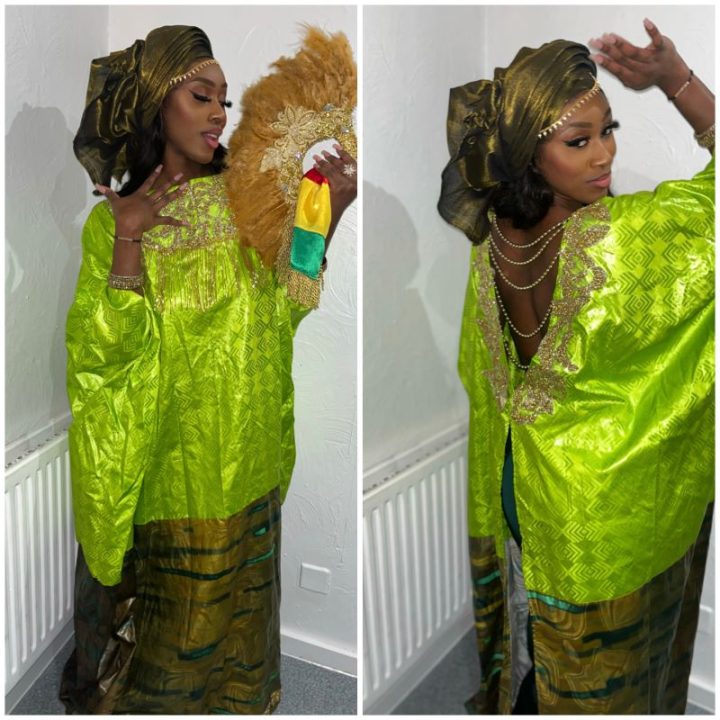
She began intentionally crossing cultural lines, wearing Guinean traditional attire to Congolese gatherings and celebrating her Congolese identity in Guinean spaces. At first, the response was skepticism. Then curiosity.
Soon, family members who had quietly questioned her choices began asking her to bring back traditional clothing from Guinea. Friends became curious about attending cultural events outside their own national communities. What she was doing, she realized, was larger than self-expression. She was building cultural bridges.
That realization led to the creation of La Guinue Elise, her intercultural company dedicated to heritage preservation and cultural exchange.
Through immersive events featuring music, food, dance, and storytelling from different African countries, Soumah has created spaces where people do more than celebrate culture. They learn from one another.
Her gatherings challenge division by replacing unfamiliarity with connection.
Source: Chancel Soumah
The Crown That Expanded Her Purpose
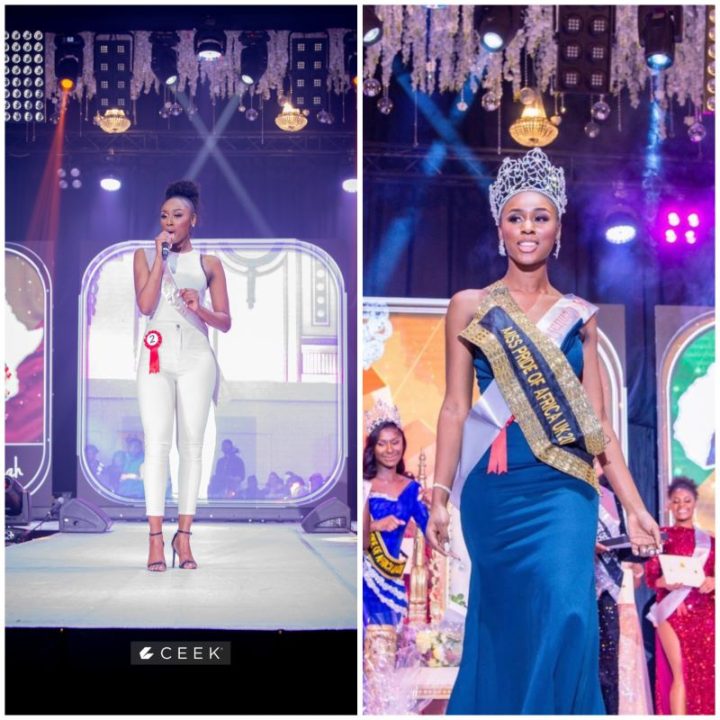
Winning Miss Pride of Africa UK in 2022 became another defining turning point.
Representing Congo, Soumah entered a highly competitive field of over 20 contestants from across Africa. The pageant was demanding, but what set her apart was not simply presentation or performance. It was purpose.
During the competition, contestants were asked what they would do with the platform if crowned. Soumah already knew her answer.
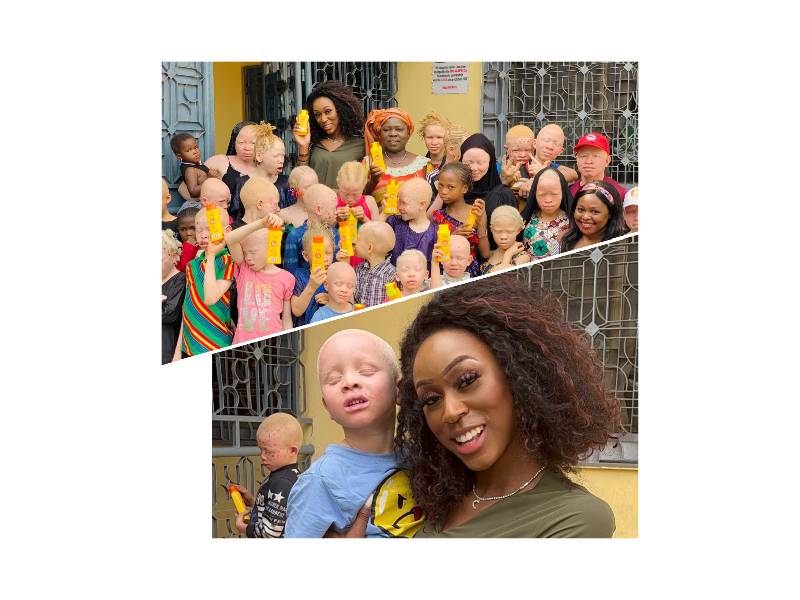
She had recently encountered children living with albinism during her travels in Guinea, an experience that deeply affected her. She witnessed firsthand the medical challenges they faced, the scarcity of sunscreen and healthcare resources, and the dangerous misconceptions that continue to surround albinism in many parts of Africa.
Winning the crown gave her the platform to act.
Since her reign, Soumah has dedicated significant energy to humanitarian advocacy for people living with albinism in Guinea and Congo. Her work includes:
- Supplying sunscreen and protective products
- Partnering with specialized care centers
- Supporting medical treatment access
- Raising awareness about harmful myths surrounding albinism
- Organizing fundraising efforts, including charity marathons
She is especially passionate about dismantling dangerous misconceptions. In some communities, deeply rooted myths still portray people with albinism as cursed, supernatural, or even sources of ritual power. Soumah confronts these narratives directly. “They are not witches. They are not another race. They are human beings.”
Her advocacy is both practical and educational, addressing urgent medical needs while pushing cultural transformation.
Using Influence for Impact
As a fashion and lifestyle influencer, Soumah understands the pressures of public visibility. Audiences often want consistency. They expect a creator to stay within a familiar niche. But she refused to compartmentalize herself.
Her platform reflects the fullness of who she is: fashion enthusiast, cultural advocate, humanitarian, and bridge-builder. To her, advocacy is not separate from lifestyle. It is part of it. “If you want Princess Shani’s lifestyle, then charity must be part of it too.”
It is a philosophy that challenges conventional influencer culture and redefines what digital influence can mean.
A Message to the Next Generation
Looking back, Soumah says the one thing she would change is how harshly she judged herself as a child. She spent years believing her mixed identity was something to solve rather than something to embrace. Now, she sees it differently. Her dual heritage is not a conflict. It is a strength. “My heritage is my passport.”
For young people navigating cultural complexity, her message is simple but powerful:
Be yourself. Stand your ground. The very thing that makes you feel different today may become the thing that empowers others tomorrow.
In a world still wrestling with division, Chancel Soumah is proving that identity need not be chosen, hidden, or split in half. Sometimes, it can become the bridge that brings people together.

Dr. Eric John Nzeribe is the Publisher of FunTimes Magazine and has a demonstrated history of working in the publishing industry since 1992. His interests include using data to understand and solve social issues, narrative stories, digital marketing, community engagement, and online/print journalism features. Dr. Nzeribe is a social media and communication professional with certificates in Digital Media for Social Impact from the University of Pennsylvania, Digital Strategies for Business: Leading the Next-Generation Enterprise from Columbia University, and a Master of Science (MS) in Publication Management from Drexel University and a Doctorate in Business Administration from Temple University.