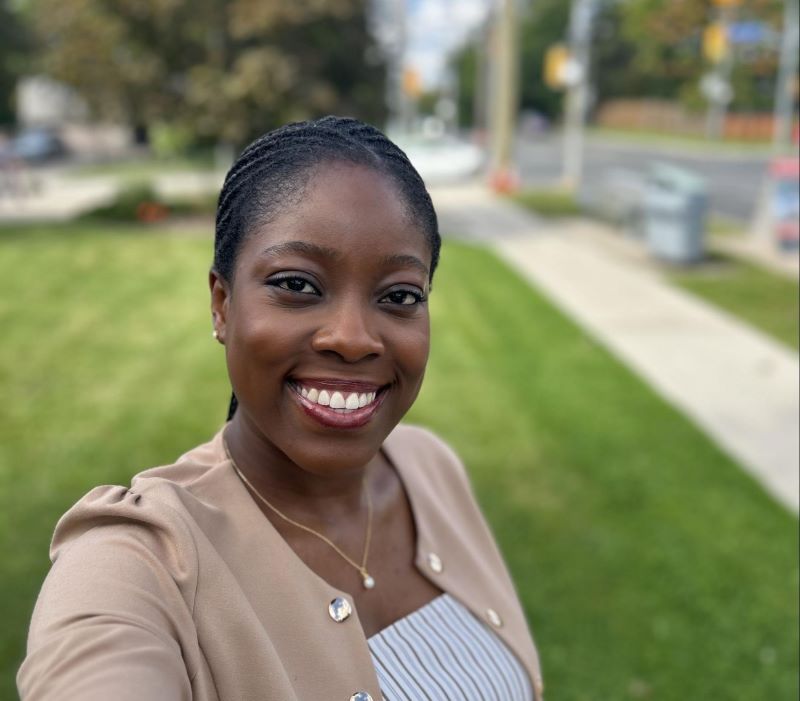
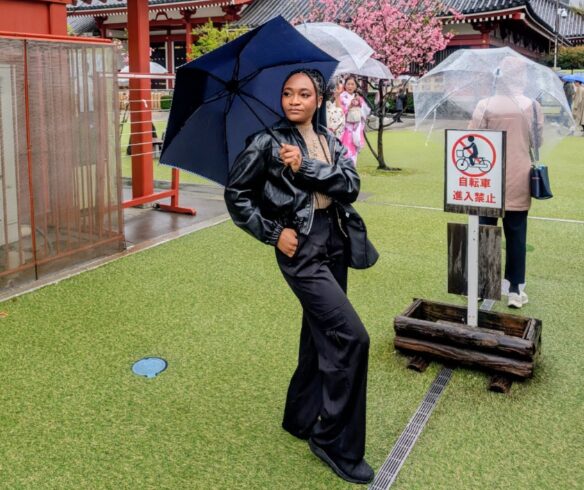
Source: Facebook / Chinyere Luke
For many Nigerians, the “Japa” map is fairly predictable: Canada, the UK, or the US. But for one teacher, the path to a new life didn’t involve a years-long master plan. Chinyere Luke’s relocation journey started with a scroll on Facebook, and then a short post – “Nigerian teachers are moving to Japan to teach,” which piqued her curiosity. In 2024, she packed her bags and bade farewell to the place she had called home all her life. Today, she is navigating a life in Japan where food is relatively cheaper than back home and a teaching salary actually leaves room for savings.
While in Nigeria, what was life like for you?
Life wasn’t that great; it was just normal. I was doing what I had always done: teaching. The last place I lived in was Abuja. It was pretty okay, though the rising insecurity and recurring cases of bandits breaking into people’s homes were concerning. Even though I lived in an estate, I had neighbouring communities where these incidents happened. So sometimes when I’m leaving the estate gate, I just have that unrest in me.
Other Nigerians often go for the typical destinations like the UK, US, or Canada, but why Japan?
Honestly, Japan wasn’t even a country I was thinking of. In fact, when I was in Nigeria, I wasn’t thinking of any country. I was hoping that things would normalize and get better. I had no plans of relocation. I was just teaching. Sometimes during the holiday, when I have nothing to do at home, I go to school to prepare for my lessons ahead of resumption.
I was there one of those days, working on my laptop, and while I took a break, I scrolled through Facebook. I came across a very short post that said something like, “Nigerian teachers are moving to Japan to teach.” That just awakened my curiosity because Japan wouldn’t have crossed my mind. Since I was on holiday and had nothing to do, I went online and started reading on Google. I went on Reddit, and I saw some negative reviews about teaching in Japan. I decided to see how it goes and, casually, very casually, applied. I didn’t even edit my CV. Usually, before I apply for a job, I tailor my resume to the position.
I just submitted to a couple of companies, and when the rejection emails started coming in, I was like, “Hold on, this is real, it’s real.” Eventually, two companies got back to me, and I decided to just go with the flow. At one point, I needed to choose between the two companies, so I left one and went with the other. Just like that, I was scheduled for a phone interview, followed by a one-on-one interview. A week later, I got a very long and detailed email, you know, job description and all of that. That was why I came to Japan, not really because Japan has always been on my mind.
Why do you think you were getting rejections initially?
I think it majorly depends on whoever is handling your applications, you know, humans with different perspectives. Every application and interview I have attended since I got here, I have succeeded. I don’t think it was really about my CV. Maybe I wasn’t really meeting the particular requirement of the specific company or individual. Sadly, someone with less experience than someone from Africa will easily get this teaching job. We go for meetings, I meet my Western colleagues, and I’m like, “How did you get in?” It is so sad. We have so many qualified teachers with their licenses and years of experience.
Though there may be hindering factors for Africans. I emphasize on my social media post about learning to speak properly. I’m not saying you should speak through your nostrils. As a teacher, if you have a global mindset, you should develop certain practices on your own. I have interacted with a few people who have reached out to me online. Sometimes, even as a Nigerian, I struggle to understand their voice notes. You should be able to articulate in such a way that anyone can hear you. You are coming to teach English to people who do not speak English as a first language. When you don’t articulate your words properly, it might discourage the interviewer. I’m not trying to negate the fact that we’re naturally considered the second option in most cases. But we also need to work on certain things.
What is the biggest cultural difference between Nigeria and Japan that hit you immediately?
I have been shocked by so many things. When I first got here, the very first thing that shocked me was the environment. I have never in my life seen a place so clean. The air, the streets, everywhere was clean. It felt like I was lifted from the earth, and I was just floating. Then, the orderliness. Everyone obeys the traffic lights, unlike in Nigeria. Here, you can confidently cross, knowing that everyone obeys traffic rules. There are just so many things. I think I am already adjusting to life here, so it’s now difficult for me to make comparisons.
What about the food?
Honestly, I still struggle with the food. I don’t like remembering that part of my life. I arrived in Japan a day earlier than expected, so I stayed at the airport. I was at the airport for two days. My company booked my accommodation, everything was ready, but you have to come at the time you’re supposed to lodge. So I couldn’t just pick up my luggage and say, ‘I am here now.’ I didn’t even have enough money to stay in another hotel until I could access the one provided by my company. So the only option available to me was the airport.
I got hungry, and I looked around. There were so many unfamiliar things, but then I saw something that looked like rice, egg, and tomato puree. I told myself I could eat this. I bought it, but the first spoon wasn’t what I expected. It was so sugary, not sweet-delicious, but sweet-sugar. It was really terrible, and I was supposed to stay there for two days. I love food and eating. I was like, “Oh my God, e don be for me.” I wasn’t able to eat that food. I think I tried another food, and I still wasn’t able to eat it.
Before I moved into my apartment, I was just eating bread and butter. When I resumed at my place of work, my Canadian colleague took me out to show me around the city. We went out to eat, and that was the first time I had Soba. The taste wasn’t all that good for me, but the meat was well seasoned, so I was able to eat it. Also, the teachers invited me to the home economics lab, and I was able to eat there because the salad was great.
I still struggle with the food, but right now I think I can eat some of it, even though I may not really enjoy it. I have adjusted to the taste. For me, Nigerian food is non-negotiable. I always place an order for it. There are so many stores around here, but unfortunately, I don’t have any in my city. So I buy from Tokyo and other neighbouring cities. Every month, I make sure I never run out of Nigerian foods.
Discover More Migrant Stories of other Africans building their life abroad.
How do you handle the language barrier in daily life?
I love my space and love being indoors, so I really do not have much to do outside; that’s one advantage. Also, I was so lucky when I got here. My Canadian colleague has been here for a while. This is his 10th year, so he speaks “passable” Japanese. He was there for literally everything that I needed to do within those first three months. He did everything, including driving me everywhere in his car. He was there through all of the difficult parts. Gradually, I started learning to do certain things on my own. When I get stuck, I still reach out to him, but I started trying first. Now, for basically everything that I need to do, I don’t think the language is a barrier anymore.
However, the challenge may be if I have to explore something unfamiliar. Though I am sure, I would still have that language issue. Although I’m learning Japanese, which is one of the most difficult languages to learn in the world. They have three writing styles: the katakana, hiragana, and kanji. The katakana has 46 characters, which I have learned. The kanji has over a thousand characters. At that point, I almost gave up, but I am still learning anyway, because to really survive here in this country, you must be able to speak the language. Also, there are many job opportunities, but the language is always a problem.
As a Black woman in a country where Black people are a very small minority, have you experienced racism, stereotyping, or awkward curiosity?
I love the stares, especially from the older people, they just look at you. There’s a difference between admiration and hey, why do you look like that? Most times, I feel admired. They look at you like, ‘Why are you so different?’ and I get that every time. It’s been almost two years of living here, and I still get that. Somehow, I enjoy it.
Personally, I have not experienced any form of racism, I also don’t feel like a minority. I am an introvert, and back in Nigeria, there are basically just three places you can likely find me: school, my room, and church. It is here in Japan that I am trying my best to be a little bit more outgoing. Sometimes I get uncomfortable, especially when I go out, and I see myself differently from others, but I have never experienced racism.
Do you ever get homesick?
Even when I was in Nigeria, I wasn’t missing home. Maybe that’s why it’s so easy for me to live alone. I left home at 18, and then I went to the University of Nigeria, Nsukka. I didn’t live in the hostel. I lived off campus. Throughout my final year, I did not go home, and from Nsukka, I went to Awka while waiting for my NYSC call-up letter. From there to Kaduna for NYSC, then to Abuja. I lived alone in all these places. It was while in Abuja that I eventually went home, and thank God I did. If not, I would have probably left Nigeria without seeing my parents. The last time would have been when I went home in my third year. But, I won’t lie, I miss my mum. I really want to see my mum. If I had the means, I would love to bring her. But I do not miss home that much.
What has been the hardest part of building a life from scratch in another country?
I didn’t have a privileged life, so everything right here, right now, is new to me. I don’t feel like I’m building from scratch because I had nothing. As a matter of fact, this is me beginning to live. It’s not like my life was perfect and I left it all to start afresh. I’m not starting over.
What is the cost of living like, and is teaching in Japan financially worth it?
The cost of living is okay. Food is relatively cheap, even the African foodstuffs I buy, compared to back home. The last school I taught in Nigeria was quite okay. I had free accommodation and wasn’t paying rent. But still, I was struggling to survive. It was from paycheck to paycheck. I was earning over 100k, but before you remove transportation, buy food, and send money home, the money is all gone, nothing left. You can’t even afford the things you crave. Then, I used to set aside N3,000 for enjoyment every month, maybe for shawarma or ice cream, and that was it.
Compared to Japan, I’m good. I feed, I clothe, send money home, and I have savings on teaching salary. I earn enough to be okay. I don’t have to think about what I will eat tomorrow. If I want to eat a full chicken right now, I can afford it. If I feel like going for fine dining right now, I don’t have to think. I can just get up and go. These were luxuries for me back home. I couldn’t afford a full chicken back home. Even the one kilo I could afford, I would dice it into small bits. The contrast is just so wide.
What is one thing social media influencers get wrong about relocating to Japan?
I wouldn’t say we are getting it wrong anywhere. I’m speaking for myself. When I moved to Japan, I told myself I was going to pay back. I didn’t have the money to thank the person whose post I saw. So I promised to pay the favor forward by posting and talking about coming to Japan, because this changed my life. Everything I talk about is based on my experience and life.
You asked about being homesick. I cannot really relate, as I have always been that girl who enjoys her own company. So, if an extroverted person comes to Japan and feels lonely on arrival, I shouldn’t be blamed, even though I said I’m not homesick. If I post anything based on my experience and you encounter something different, I don’t think I should be blamed. I received some backlash from TikTok some time ago because some people feel relocating is impossible. I put up a post about how I relocated to Japan, and these people were not interested in asking questions. They were more interested in calling me a liar, saying the money I paid was not enough to come to Japan. I didn’t pay anyone. I did everything myself. I paid just N12000 to pick up my passport, but they did not believe me. Should I tell lies about how much I paid?
Are there other job opportunities for foreigners, or is it just teaching that can get one into Japan?
Japan needs workers, but there is a language problem. If you do not have a level of Japanese proficiency, you can not even apply in the first place. I think only a few companies will accept someone who cannot speak the language. The job is there, a lot. But sadly, it requires a level of proficiency in Japanese. But for teaching English, you are not expected to speak Japanese to your students. That is why teaching is the primary means of coming into Japan, as it doesn’t require you to speak the language. There is also the scholarship, through which some people came in. They offer Japanese classes, and you may be able to speak passable Japanese by the time you’re done, and this can open doors for you.
Is there a path to permanent residency or citizenship for foreigners in Japan?
Don’t come to Japan with that in mind. For PR, I think the minimum number of years is 10. You must have lived in Japan for 10 years. I think there’s a new law being passed now that says you must be able to speak Japanese before you can become a citizen. So it’s a lot here.
Do you ever see yourself returning to Nigeria?
There’s no place like home, maybe one day. I’m at this stage in life where my only dream is to travel around the world. Being in Japan has opened my eyes to the possibility of that happening. Back in Nigeria, that was just a dream that would never come true. Now that I’m here, I don’t know where’s next. As for Nigeria, I’ll keep visiting. It is forward ever.