Black communities in the United States know exactly how much weight a single name carries. Our ancestors had their true names stolen during the transatlantic slave trade. Enslavers replaced those original African identifiers with their own surnames as a brutal method to claim ownership and erase family lineages. Because of that specific history, Black Americans spent the last century building entirely new naming traditions from the ground up to reclaim their identities.
From the civil rights era to the present day, we invent, adapt, and remix names because we know a name is a boundary line. We understand that what a society calls you will determine exactly how it treats you.
Now, look across the Atlantic to East Africa, specifically at the nation of Burundi. The naming culture there proves that our desire to name ourselves intentionally is rooted in an old and unbreakable tradition. In Burundian culture, popular Black names are not just random sounds picked out of a baby book because they sound pretty. They function as literal historical records. A name documents family history, faith, birth order, social memory, survival, gender, and profound aspiration. This reality matters deeply for the diaspora living in the West. It shows us exactly how African identities survive in a modern world that constantly tries to flatten human beings into basic data points on a government form.
A recent academic paper from a 2025 University of Burundi study makes this exact point with perfect clarity. The researchers argue that indigenous Rundi names are “not arbitrary labels, but socio-cultural functions and meanings.” When a family names a child in Burundi, they are actively transmitting a clear message to the world. They are taking that person and placing them into a very specific spot within the local community. They are building a living archive.
To truly understand how these names work, you have to look at the complex languages spoken inside the country. According to the Encyclopedia Britannica, the country operates in a highly multilingual environment. Kirundi is the national language. It is the language of the home, the rural hills, and the local culture. However, French and English hold massive power in formal education, government administration, and international business. This dynamic creates a situation where names serve as cultural evidence. A family must decide exactly how their child will face a complicated linguistic world. Because of this history, Burundian names are usually split into two clear and distinct categories. You have modern or common forenames, and you have indigenous Rundi names.
The modern forenames reflect the heavy influence of Catholicism and European colonial history in the region. Global demographic data from Forebears shows that many families choose Western or biblical names. These names give citizens a practical way to navigate French, and English-speaking spaces easily without facing administrative friction.
Here are the most common modern forenames for men in Burundi:
- Jean, Eric, Emmanuel, Joseph, and Pierre: These names are absolute staples across the entire country, offering strong religious and historical grounding.
- Innocent, Richard, Alexis, Pascal, and Patrick: You will hear these names called out constantly in the bustling capital city of Bujumbura.
- Alain, Olivier, Desire, Claude, and Thierry: These specific choices heavily reflect the country’s strong Francophone ties.
- Prosper, Gerard, John, and Charles: These names round out the most frequent choices for men, offering an immediate sense of international familiarity.
Here are the common modern forenames for women in Burundi:
- Marie: This name is universally recognized across the globe and carries deep religious weight in Catholic communities.
- Aline, Francine, Jeanne, and Alice: These remain incredibly popular and consistent choices for girls across different generations.
- Mama: Sometimes a cultural title crosses over to become an official legal name, carrying instant maternal respect and authority right on the surface.
While modern names look outward to the globe, indigenous Rundi names look strictly inward to the family and the village. The same 2025 University of Burundi study painstakingly categorized these indigenous names. The researchers found that families use them as a hyper-specific filing system. Nothing is left blank. The family uses the child to record exactly what was happening in the world on the day they arrived.
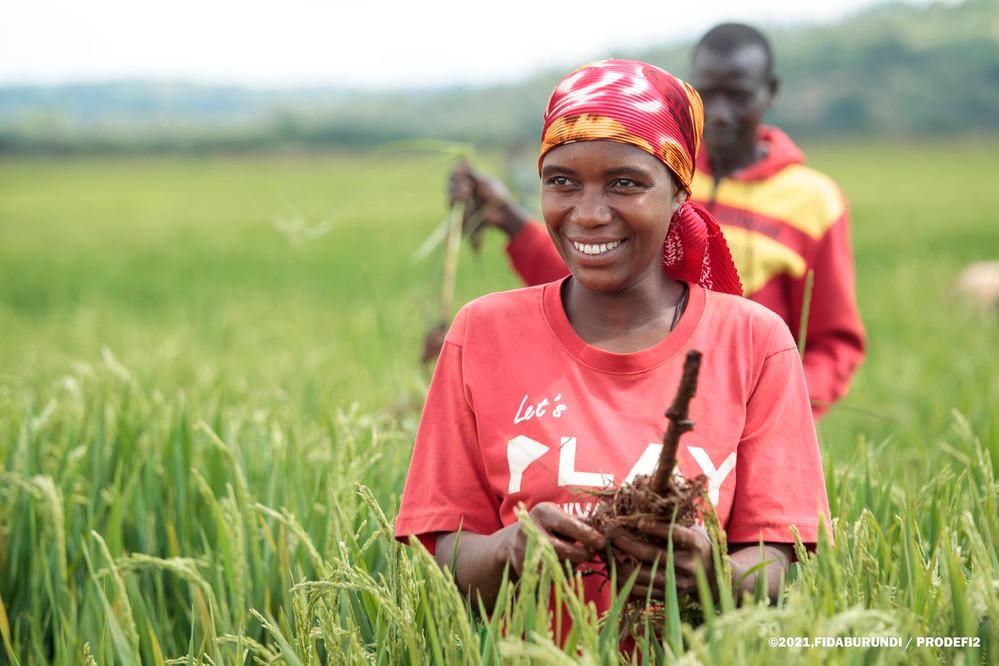
Source: Burundi
Here is how families use names to signal gender within the community:
- Gahungu and Buhungu: These specific linguistic roots instantly identify boys.
- Gakobwa and Kigeme: These specific linguistic roots instantly identify girls.
Here is how families use names to record exact birth order mathematically:
- Bukuru and Butoyi: These names are reserved exclusively for twins. Bukuru always goes to the older twin. Butoyi always goes to the younger twin.
- Nyandwi: This name officially marks the arrival of a seventh child.
- Minani: This name permanently marks the eighth child in a family.
- Nyabenda: This name permanently marks the ninth child.
- Bucumi: This name permanently marks the tenth child.
Here is how families use names for the psychological strategy of death avoidance:
- Ntabahungu: This name translates directly to having no boys.
- Ntabakobwa: This name translates directly to having no girls.
- (These names are never meant as insults to the baby. In areas with historically high infant mortality, grieving families used these names as a spiritual defense strategy. They hoped to trick malevolent spirits into thinking the new child had absolutely no value, so the spirits would leave the baby alone to survive).
Here is how families use names to record pure joy and descriptive aspiration:
- Kaneza: This name directly and clearly signals joy.
- Keza: This name means beautiful.
- Munezero: This means happiness.
- Muhorakeye: This describes someone who is always radiant or always peaceful.
- Ntwari: This name invokes physical bravery and moral courage.
- Kamikazi, Karire, and Kanyange: These are highly culturally resonant names that celebrate the child and elevate their status in the community.
Here is how families use names to document the neighborhood and social conditions:
- Kabura, Misago, Ciza, Nkurikiye, and Congera: These names are obliged by the specific conditions at the exact time of birth. They might record a particularly hard agricultural season. They might record a political conflict happening in the village, or a specific family dispute that was resolved on the day the baby was born.
This indigenous naming system is brilliant and incredibly thorough. However, it immediately clashes with Western paperwork when Burundians are forced to migrate. A person might use their French forename exclusively on a government resettlement form to avoid bias from a border agent. They might save their traditional Rundi name only for their closest friends and family to maintain their sanity. They altered their identities to get through the heavy friction of refugee camps and new host countries. The paperwork simply did not have the space to hold their actual history.
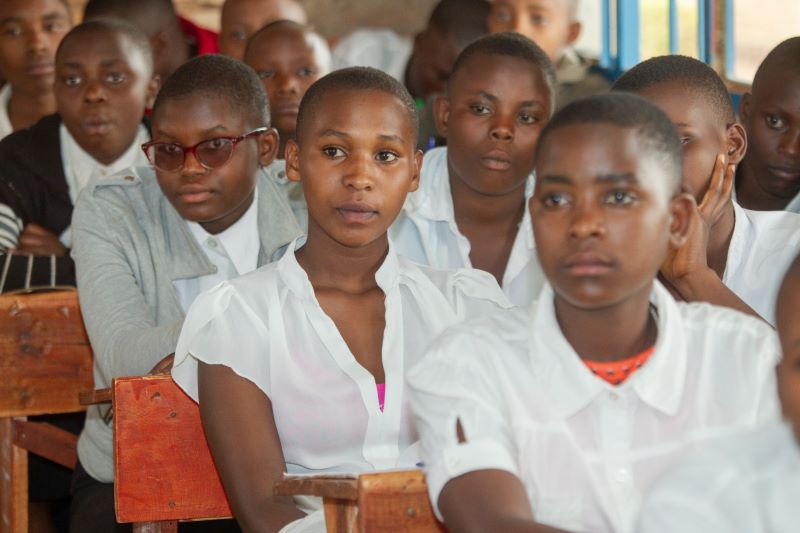
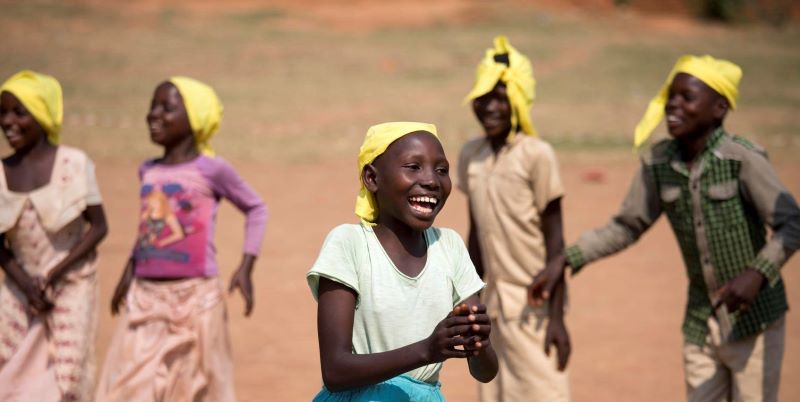
Source: Meet the young people leading climate action in Burundi
Black immigrants living in the West know this routine perfectly well. We constantly change how we present ourselves to make the dominant culture comfortable. People adopt Americanized nicknames at work because a corporate manager refuses to learn how to pronounce their real name. Black American parents sit at the kitchen table and debate whether a culturally distinct name will ruin their child’s chances at a job interview twenty years down the line. The administrative world constantly demands that we shrink ourselves for its convenience. We are told to make ourselves easy to file away.
When we look at Burundian naming traditions, we see exactly what is lost when we give in to that outside pressure. We lose the archive. We lose the specific data of our own lives.
Names like Keza and Minani are not just letters on a page. They hold the memory of the village. They hold the exact birth order of a massive family. They hold the survival tactics of parents who desperately wanted their babies to live. They also hold the joy of a good harvest.
To the diaspora looking back toward the continent, this is a clear and ringing reminder. Our names are the very first stories we tell the world. They are the only archives that nobody can burn down. They are worth protecting at all costs.

Anand Subramanian is a freelance photographer and content writer based out of Tamil Nadu, India. Having a background in Engineering always made him curious about life on the other side of the spectrum. He leapt forward towards the Photography life and never looked back. Specializing in Documentary and Portrait photography gave him an up-close and personal view into the complexities of human beings and those experiences helped him branch out from visual to words. Today he is mentoring passionate photographers and writing about the different dimensions of the art world.