Photo: Instagram / G20 South Africa
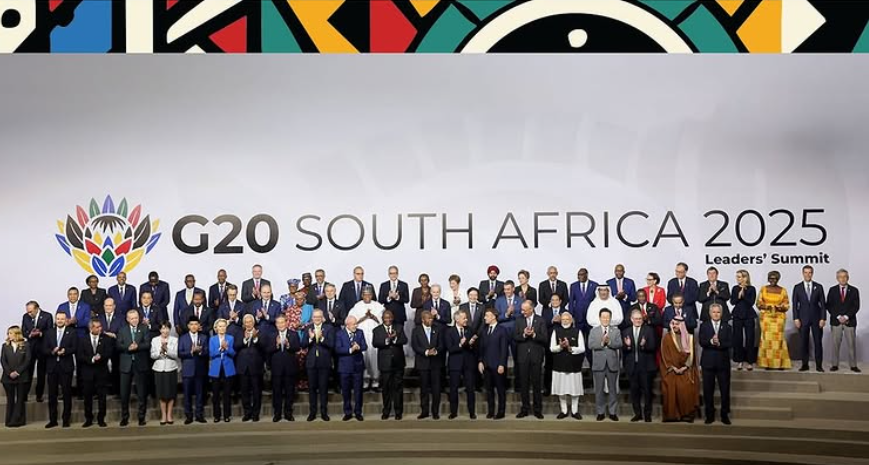
History was made as the world’s most influential economic forum, the G20, was held on African soil for the first time. For years, African nations have been the subject of global economic policy and aid beneficiaries, and the focus of debates, but seldom given a chair at the table where these agendas are set.
Held in Johannesburg between November 22 and 23 under the theme, ‘Solidarity, Equality, Sustainability,’ the G20 marks a turning point not just for the nation itself, but for the entire African continent. It is an opportunity for the continent to reposition itself from passive recipient to becoming one that influences the global agenda from an African perspective.
This milestone reflects Africa’s rising influence in global affairs, with South Africa’s presidency amplifying the voices of the African Union (AU), now a permanent G20 member, and securing attention for debt relief, climate action, and industrialisation. In his closing remark, South African President Cyril Ramaphosa declared: “This summit has taken place at a crucial moment, as calls around the world grow louder for progress on the imperatives of our time: to end poverty in all its forms, to reduce inequality within and among countries, and to take urgent action to combat climate change.”
What does Africa stand to gain from this historic moment?
Economic Gains, Debt Relief, and Investment
Africa’s heavy debt has been a major roadblock to the continent’s growth. The recent Johannesburg Declaration specifically addressed this by calling for substantial debt relief and restructuring, which offers African governments the chance to redirect funds toward national development goals.
Over half of African countries are either in debt distress or at risk of falling into distress, and the annual trade deficit widened by 41 per cent to $66.6 billion in 2023, according to Afreximbank. More than half of Africa’s population is reportedly living in nations that allocate more funds to servicing debt than to health or education.
At the summit, the leaders endorsed the G20 Ministerial Declaration on Debt Sustainability, improved the G20 Common Framework, and supported enhanced International Monetary Fund (IMF) – World Bank tools to mitigate debt vulnerability. They reaffirmed their support for the African Continental Free Trade Area (AfCFTA), small and medium enterprises (SMEs), and youth entrepreneurship.
To ensure that African economies have a sustained voice in global financial discussions, the Finance Track Africa Engagement Framework (2025–2030) was also introduced.
All these measures can help lower borrowing costs, create room for increased investment in infrastructure, healthcare, and education, while reducing reliance on external creditors and providing better access to concessional finance for Africa.
Climate Action and Energy Transition
The continent is rich in minerals required for renewable energy technologies, yet reaps little benefit from them, and is disproportionately affected by climate change.
The summit agenda emphasised climate adaptation and clean energy transition, with leaders committing to support Africa’s shift toward renewables.
Key announcements included Mission 300, which aims to provide electricity to 300 million Africans by 2030, and a global initiative to triple renewable energy alongside the new G20 Critical Minerals Framework, designed to enhance value addition in producer countries.
If implemented effectively, Africa stands to benefit from increased climate finance, support for adaptation and disaster risk reduction, and technology transfers for renewable energy. This could facilitate industrialisation and promote cleaner energy development.
Food Security
Food security remains one of Africa’s most urgent challenges, with climate change, conflict, and supply chain shocks increasing hunger in many regions. This was part of the discussions at the summit, where there was a renewed global commitment to tackle hunger, volatile food prices, and agricultural fragility.
Not only did the leaders acknowledge that around 720 million people faced hunger in 2024, but they also endorsed the Ubuntu Approaches to Food Security, Nutrition, and Excessive Food Price Volatility, to stabilize food prices and support smallholder farmers.
Such measures could boost agricultural investment across Africa, expand local food production, and ease shortages. The result would be fewer food shortages, more stable prices, and stronger rural economies, and millions gaining reliable access to healthy meals instead of a daily struggle.
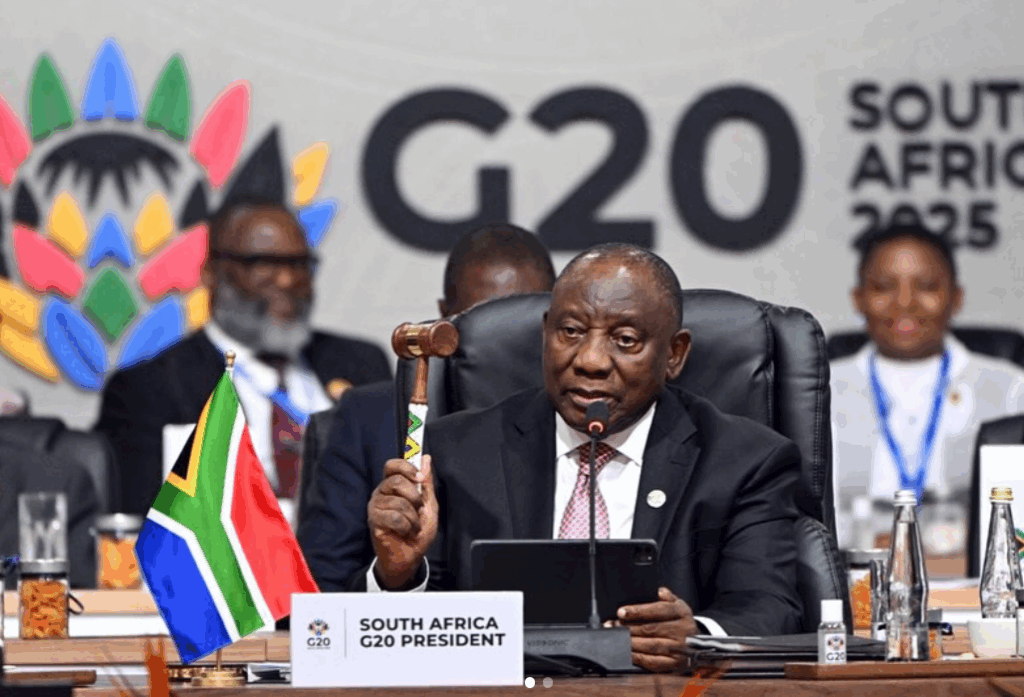
Photo: Instagram / G20 South Africa
Global Health
COVID-19 exposed Africa’s vulnerability to unequal vaccine access. In Johannesburg, leaders promised to take action. They reaffirmed support for Universal Health Coverage and pledged to strengthen global health systems, pandemic preparedness, and equitable access to medicines.
“We remain committed to building more resilient, equitable, sustainable, and inclusive health systems for the provision of integrated people-centred health services, including mental health, and to achieve Universal Health Coverage. We recognise the potential role of evidence-based traditional and complementary medicine,” Ramaphosa stated.
If the recommendations from the declaration are properly implemented, this means access to better funding for Africa, where health challenges remain compounded by weak infrastructure and limited resources. Potential gains include better primary health systems, enhanced pandemic response capacity, and increased funding to combat malaria and other vaccine-preventable diseases.
Artificial Intelligence
Beyond food and health, the G20 also discussed tech, addressing responsible AI innovation. New initiatives aimed at fostering responsible AI growth, particularly in Africa, were highlighted.
“We note the establishment of the Technology Policy Assistance Facility (TPAF) by UNESCO under the South African Presidency that aims to support countries in shaping their AI policies by drawing on global experiences and research,” Ramaphosa added.
The G20 backed efforts for digital inclusion and global AI governance that integrate Africa, and welcomed the AI for Africa Initiative, a voluntary collaboration platform between the G20 and the AU.
This matters because AI is already reshaping industries from finance to healthcare. For Africa, this could be transformative, fueling home-grown industries, innovation among the youth, creatives, and entrepreneurs, boosting key sectors from education to agriculture, and helping the continent grow despite infrastructure gaps. This will ensure Africa is not just a consumer of AI but a creator.
Peace, Security, and Governance Partnerships
Conflict and instability continue to hinder Africa’s growth, and this carries global consequences.
Hosting the G20 gave South Africa the platform to champion conflict-prevention funding, anti-terrorism collaboration, and African-led peacekeeping initiatives, alongside stronger governance and institutions. Leaders acknowledged that sustainable development is inseparable from security, and Africa’s role as host meant its views were not just included, but were the main focus of the discussion.
South Africa’s presidency highlighted the philosophy of Ubuntu, “I am because we are”, as a guiding principle for collective peace. In line with this, the G20 strongly condemned attacks on civilians, while pledging to act in accordance with international law, including international humanitarian law and the Charter of the United Nations and its principle of peaceful settlement of disputes, and called for renewed diplomatic efforts in global conflict zones.
“We condemn terrorism in all its forms and manifestations. We concur that, guided by the Purposes and Principles of the UN Charter in its entirety, we will work for a just, comprehensive, and lasting peace in Sudan, the Democratic Republic of Congo, the Occupied Palestinian Territory, and Ukraine, as well as ending other conflicts and wars around the globe. Only with peace will we achieve sustainability and prosperity.”
Giving Africa a voice at this global decision-making forum marks a turning point. It’s an acknowledgement that African security concerns are as important as other conflicts that usually dominate G20 diplomacy, and that they have far-reaching economic and security consequences that require global attention and action.