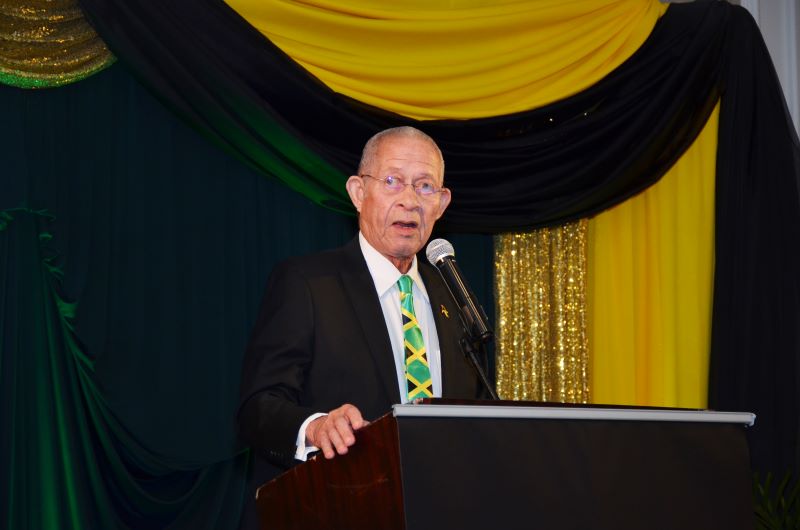
Photo: Former Prime Minister of Jamaica, Bruce Golding giving speech at Team Jamaica Bickle Independence Gala in Philadelphia.
Bruce Golding asks what independence means when Jamaica cannot afford to say no.
Some of the young Jamaican athletes had never been on an airplane.
They arrived in the United States to compete, surrounded by teammates and coaches but otherwise far from everything familiar. They had to adjust quickly, eat properly, prepare mentally and physically, and perform.
Team Jamaica Bickle noticed what was missing.
The organization stepped in with the kind of care that can seem small until you are young, far from home and expected to compete at your best.
Former Jamaican Prime Minister Bruce Golding began there as he addressed a Team Jamaica Bickle gathering marking Jamaica’s 64th year of independence and the organization’s 32 years of service. He praised its work with thousands of athletes from Jamaica and across the Caribbean.
From that story of care, Golding turned to a far more uncomfortable question about Jamaica itself.
He spoke about the country’s athletes, cultural figures, national heroes and democratic tradition. He recalled the 2016 general election, decided by a single parliamentary seat and fewer than 4,000 votes.
The margin was razor-thin. The transfer of power was peaceful.
There was no violence. No claim that the election had been stolen. Jamaicans went about their business the next day.
“Little as we are,” Golding said, “there are some important things that some big and powerful countries should learn from.”
Golding then reached back to Norman Manley, who said the mission of his generation had been to secure Jamaica’s political independence. The task left for another generation was economic independence.
That task, Golding said, remains unfinished.
He pointed to progress in Jamaica’s debt position, unemployment, international reserves, tourism and public safety. Yet those gains, he argued, have to reach ordinary Jamaicans through greater productivity, stronger education, better skills and higher wages.
Then his speech took a harder turn.
“We are an island state, but our borders do not define our circumstances,” Golding said.
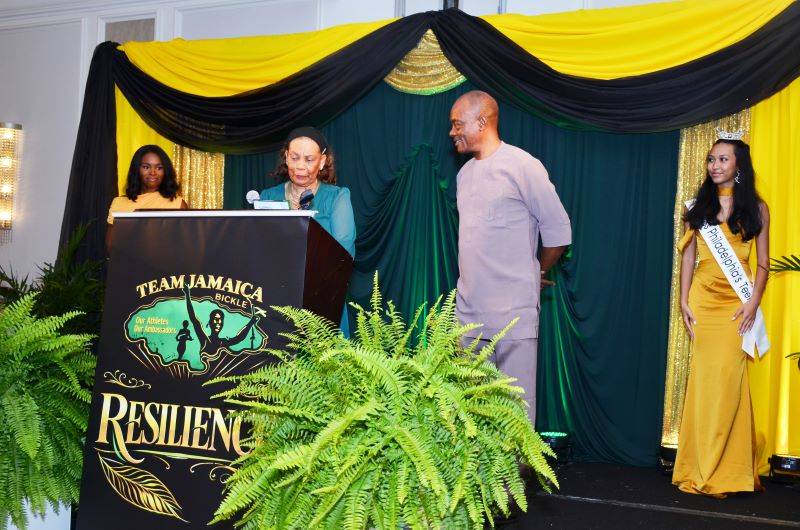
Photo: Janelle Burrell, Barbara Wilson, Dr. Eric Nzeribe, and Ksenya Wong
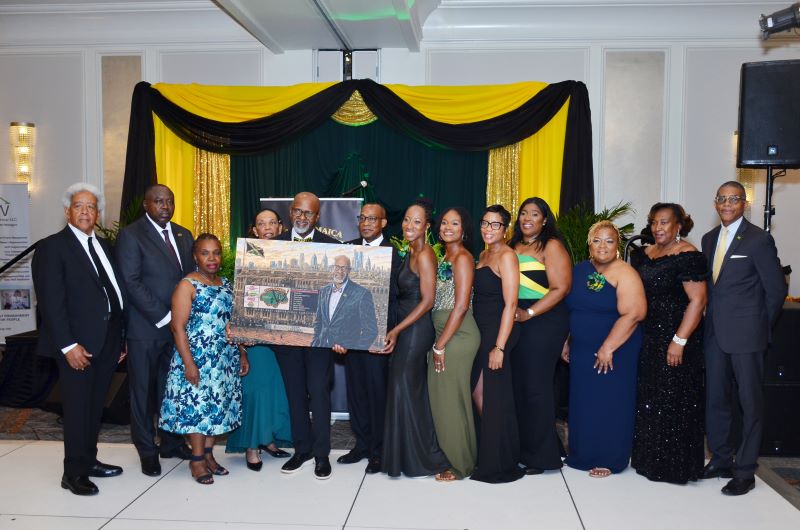
Photo Left to Right: Vincent Heath, Pervis Morrison, Sandra Haye-Carr, Barbara Wilson, Irwine Clare Sr O.D, Carlene N Welles, Tashell Jenkins, Esq, Karen Wilson-Robinson, Esq., Michele Bartley, Maxine Graves, Christopher Chaplin
Jamaica may control its territory and elect its government, but it operates inside an international system largely shaped by countries with far more economic and political power.
Golding recalled Jamaica adjusting to globalization, losing trade preferences and opening its markets to greater foreign competition. The country learned to play by those rules.
Now, he suggested, the rules themselves are becoming less predictable.
“New rules are being handed down, not after discussions and negotiations, but by social media posts at 2:30 in the morning when most of us are asleep.”
Golding moved from tariffs to Cuba, China and the pressure facing Caribbean governments as they try to maintain relationships with competing global powers.
Jamaica has longstanding ties with Cuba. China has become an important investment partner. The United States remains deeply connected to Jamaica through trade, tourism, finance, migration and family ties.
Golding’s concern was what happens when a powerful country begins attaching conditions to that relationship.
American officials, he said, frequently refer to the longstanding friendship between Jamaica and the United States.
“But let us be very clear,” Golding said. “What is being done to us is not friendship.”
Tariffs, dictates about whom Jamaica should do business with, and demands that placed additional burdens on the country were, in Golding’s telling, “not friendship.”
“True friends don’t abuse your friendship,” Golding said. “They don’t make unreasonable demands of you.”
“That’s not what friends are for.”
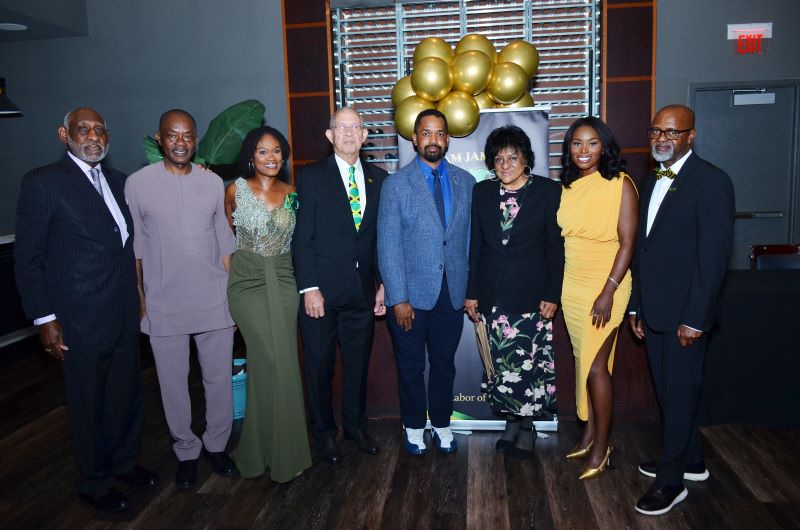
Photo Left to Right: Hon. Stan Straughter, Dr. Eric Nzeribe, Tashell Jenkins, Esq, Bruce Golding, PM, Sen. Sharif Street, Hon Jannie Blackwell, Janelle Burrell, Irwine Clare Sr O. D.
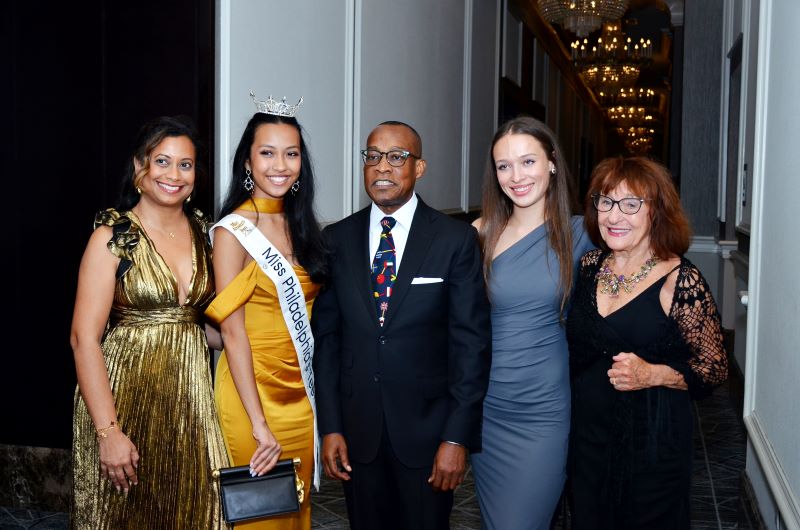
Photo: Tashell Wong ,Ksenya Wong, Blane Stoddart, Bella Elgar, Susan Gerrity
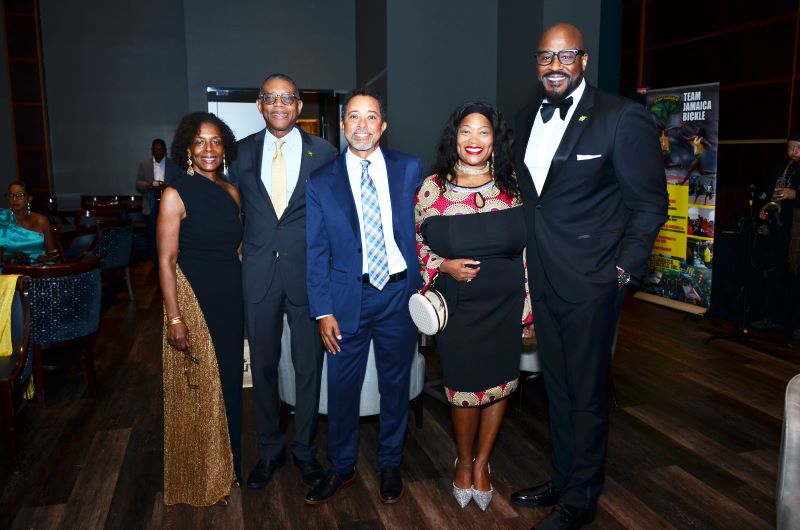
Photo: Margaret Chaplin, Chris Chaplin, Damien Scott, Tiffany Perkins, Donavan West
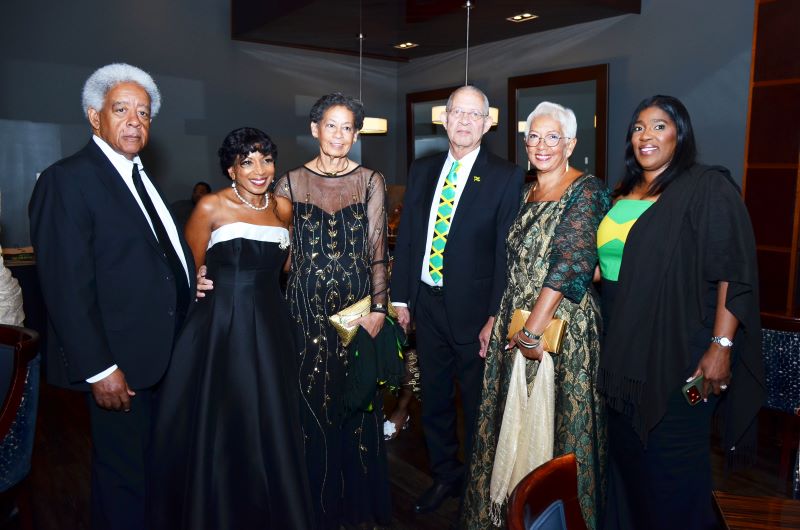
Photo: Vincent Heath, Ann- Marie Grant, Karlene Largie, Bruce Golding, Lesley- Ann Samuels, Kare Wilson- Robinson, Esq.
The setting gave the words added weight. For three decades, Team Jamaica Bickle had practiced another kind of friendship. Young people arrived far from home, someone recognized what they needed and stepped forward.
Golding resisted the easier call for defiance.
There are Jamaicans at home and abroad who want their government to push harder against outside pressure. Golding acknowledged the frustration and referred to Brazil’s willingness to defend its right to determine its own affairs.
Jamaica is not Brazil.
The United States represents a major market for Jamaican exports. American travelers are central to the tourism economy. Jamaican families receive billions of dollars in remittances from the United States. International transactions depend heavily on financial arrangements linked to the American banking system.
What if tariffs made Jamaican products too expensive to compete?
What if the cost of traveling to Jamaica rose enough to send tourists somewhere else?
What if remittances became much more expensive?
What if Jamaica lost access to correspondent banking?
“Jamaica would be marooned,” he said.
The consequences would reach the hotel worker whose livelihood depends on visitors arriving. The Jamaican manufacturer trying to sell goods in the United States. The family waiting for money from a relative in Philadelphia, New York or Miami. The person hoping to secure a visa to visit children, parents or grandchildren.
Jamaica has political independence. Golding’s dilemma was how freely it can exercise that independence when disagreement can reach jobs, tourism, banking and family life.
For a diaspora audience, the argument was especially personal.
Golding praised Jamaicans overseas for the assistance they sent home following Hurricane Melissa. He also spoke about remittances and used airfare between Philadelphia and Montego Bay to show how decisions made in the United States could quickly reach Jamaican households.
The diaspora is one of Jamaica’s great sources of support. Yet the money, travel and immigration systems connecting it to home are systems the island does not control.
Golding then offered an image that captured the predicament facing Caribbean leaders.
“When their hand is caught in the mouth of an angry lion, that is where we are.”
Golding was not calling for hostility toward the United States. His closing appeal was for a hemisphere of peace, mutual understanding and respect, where countries can pursue their own destiny with dignity and where America can still be regarded as “a friend indeed.”
“Putting America first should not mean putting Jamaica in jeopardy,” he said.
Sixty-four years after Jamaica gained political independence, Golding was asking a question that independence celebrations rarely dwell on.
How freely can a small country say no when the cost of saying no may fall on its people?
Team Jamaica Bickle’s story began with Jamaicans far from home discovering that someone was in their corner.
Who, in this changing world, is truly in Jamaica’s corner?
Read also: Philadelphia Sets Sail Again

Dr. Eric John Nzeribe is the Publisher of FunTimes Magazine and has a demonstrated history of working in the publishing industry since 1992. His interests include using data to understand and solve social issues, narrative stories, digital marketing, community engagement, and online/print journalism features. Dr. Nzeribe is a social media and communication professional with certificates in Digital Media for Social Impact from the University of Pennsylvania, Digital Strategies for Business: Leading the Next-Generation Enterprise from Columbia University, and a Master of Science (MS) in Publication Management from Drexel University and a Doctorate in Business Administration from Temple University.