
Image Source: iStock
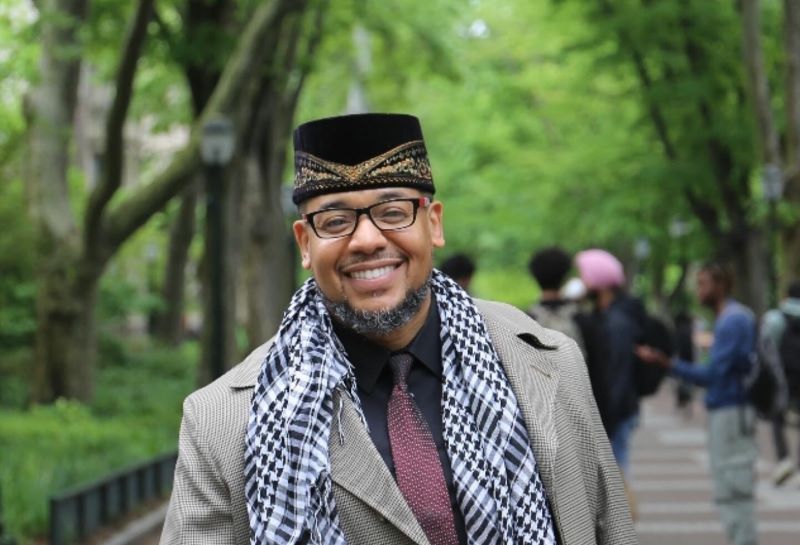
Here’s the thing about African higher education right now, it’s having a serious moment. For African students looking beyond the typical study abroad destinations, 2025 might just be the perfect time to consider the continent where it all began.
While your friends are heading to London or Sydney (and paying through the nose for the privilege), African universities are climbing global rankings and rolling out English-taught programs specifically designed for international students.
According to the Times Higher Education World University Rankings 2025, African universities now span 19 countries, with several institutions landing in the global top 200. South Africa leads the charge, but countries like Egypt, Ghana, Nigeria, and Uganda are seriously stepping up their game.
But here’s where it gets really interesting. The money side of things. While your average private US university will hit you for over $38,000 annually, we’re talking about world-class African education for $3,000-$15,000 per year.
They’re providing complete scholarship programs into the mix, including the Mastercard Foundation Scholars Program that covers everything for academically stellar students from disadvantaged backgrounds.
Beyond the wallet-friendly factor, studying in Africa means diving headfirst into cultural immersion that you simply can’t get anywhere else. Plus, there’s cutting-edge research happening in areas like public health and sustainable development, and access to emerging markets that could shape your entire career trajectory. With more partnerships forming between African and American universities, credit transfer has become way less of a headache than it used to be.
What US Students Should Know
Studying in Africa isn’t quite the same as that semester in Barcelona your roommate might be dreaming about.

Source: iStock
Academic Recognition and Credit Transfer: Most top African universities hold international accreditation that US institutions actually recognize. Universities like Cape Town, Stellenbosch, and the American University in Cairo have solid partnerships with major US schools, which makes credit transfer pretty straightforward. That said, always double-check with your home institution’s registrar before you sign anything.
Visa Requirements: This part varies depending on where you’re headed. South Africa wants a study visa with proof of admission, financial backing, and medical insurance, which usually takes about 30 days to process. Egypt’s got e-visas for US citizens, which honestly makes things super simple. Ghana and Uganda have similar requirements, though they might take a bit longer to get everything sorted.
Language and Instruction: While many African universities teach in local languages, the schools we’re talking about here offer extensive English-taught programs. South African universities conduct most classes in English, though some Stellenbosch programs throw in Afrikaans options. In Morocco, Mohammed VI Polytechnic University teaches in English despite French being everywhere you turn.
Health and Safety: All the universities maintain international safety standards and comprehensive health services. Student health insurance is mandatory which is bundled into tuition fees. Campus security systems mirror what you’d find at major US universities.
Cost of Living: In Cape Town, you’re looking at monthly living costs of $400-600. Ghana and Uganda are even more budget-friendly, with comfortable student living totally doable on $250-400 monthly.
Application Timeline: Most African universities follow February-August application cycles for the following academic year. Sound familiar? It’s basically the same timeline as US graduate school applications.
Top Universities to Consider
University of Cape Town, South Africa
Source: iStock
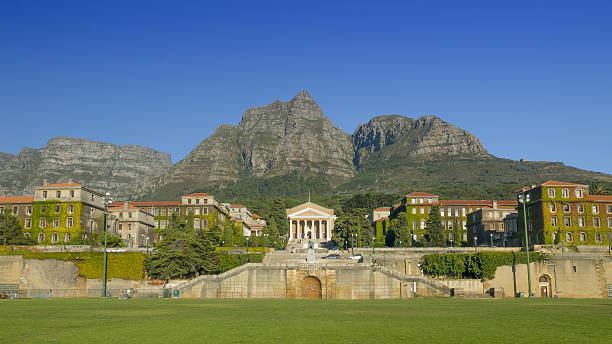
UCT stands as Africa’s premier institution, ranking 180th globally in the Times Higher Education World University Rankings 2025. This prestigious university attracts over 5,000 international students from 100+ countries, creating a truly global campus environment.
Notable Programs: UCT excels in medicine, engineering, business, and social sciences. The Graduate School of Business consistently ranks among the world’s top 100 MBA programs. Their medicine program is internationally recognized, with graduates practicing globally.
Tuition: International students pay approximately $11,000-15,000 USD annually depending on the program. Engineering and medical programs command higher fees, while humanities programs are more affordable.
Scholarships: UCT offers various international scholarships, including merit-based awards and need-based assistance. The International Academic Programmes Office provides comprehensive funding guidance.
Practical Details: Instruction is in English, with two main intake periods (February and July). International admissions requires a 3.0 GPA minimum.
UCT’s stunning campus beneath Table Mountain offers exceptional student life, with extensive sports facilities, cultural programs, and Cape Town nearby providing internship and career opportunities.
Stellenbosch University, South Africa

Source: Stellenbosch University
Tied for 2nd in Africa and ranked 301-350 globally, Stellenbosch University combines academic excellence with South African cultural heritage. Located in the heart of wine country, this institution offers a unique blend of academic rigor and cultural immersion.
Notable Programs: Stellenbosch leads in agricultural sciences, engineering, and business. Their wine and viticulture program is world-renowned. The business school offers internationally accredited MBA programs with strong industry connections.
Tuition: International students pay $8,000-12,000 USD annually for most programs. Business programs command premium fees, while undergraduate programs are more affordable.
Scholarships: The university offers international merit scholarships and participates in the Mastercard Foundation Scholars Program.
Practical Details: While Afrikaans is the primary language, extensive English instruction is available for international students. Applications typically close in August for the following year.
The picturesque university town offers safe, walkable campus life with extensive student support services and strong alumni networks extending globally.
University of the Witwatersrand, South Africa

Source: University of the Witwatersrand – UNICON
Also tied for 2nd in Africa, Wits University stands as South Africa’s premier research institution. Located in Johannesburg, Africa’s economic hub, Wits offers unparalleled industry connections and career opportunities.
Notable Programs: Wits excels in mining engineering, medicine, law, and business. Their School of Public Health leads continental health research. Engineering programs maintain strong industry partnerships.
Scholarships: Wits offers substantial funding through Postgraduate Merit Awards ($7,000-12,000 annually), Doctoral Scholarships ($10,000+ annually), and various research grants.
Practical Details: All instruction is in English. The university operates on semester systems with February and July intakes. International applications typically close by August.
Johannesburg provides extensive internship opportunities in finance, mining, and technology sectors, making Wits ideal for students seeking practical experience in emerging African markets.
University of Johannesburg, South Africa

Source: University of Johannesburg – Wikipedia
Ranked 401-500 globally and tied for 4th in Africa, UJ represents South Africa’s dynamic urban university model. With over 50,000 students, UJ offers comprehensive programs with strong industry connections.
Notable Programs: UJ leads in engineering, business, and information technology. Their entrepreneurship programs consistently rank among Africa’s best. The medical school maintains international partnerships.
Tuition: International fees range $6,000-10,000 USD annually, making UJ one of the most affordable top-tier options.
Scholarships: UJ participates in various international scholarship programs and offers merit-based funding for exceptional students.
Practical Details: English instruction throughout. Multiple campuses across Johannesburg provide diverse academic environments. Standard application deadlines align with other South African institutions.
UJ’s urban setting provides extensive internship and networking opportunities in Africa’s largest economy.
American University in Cairo, Egypt
Source: The American University in Cairo – UNICON
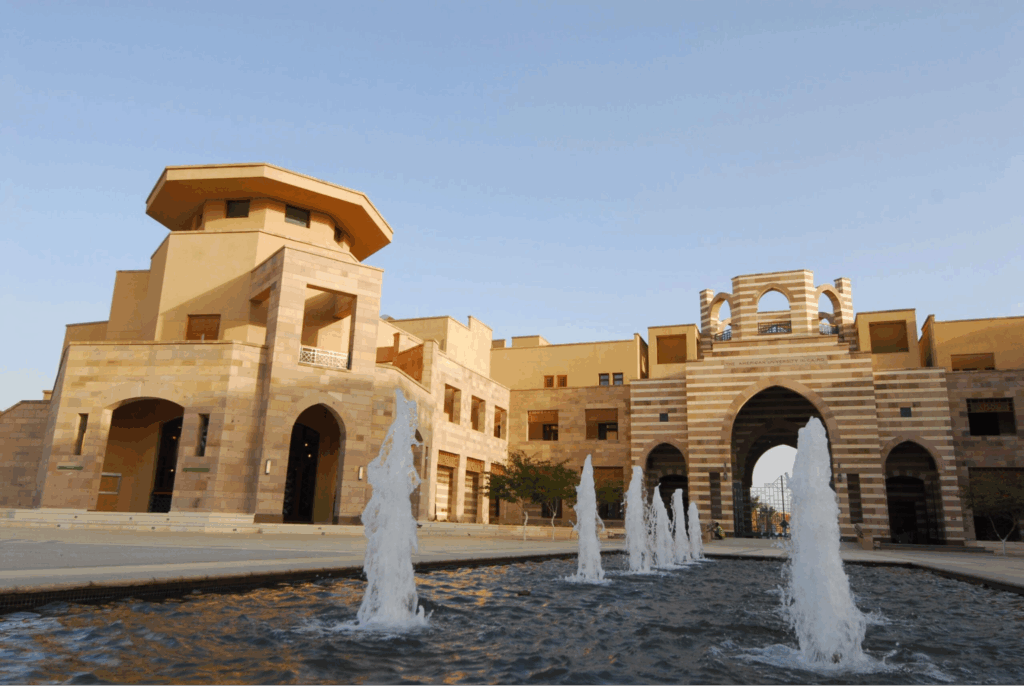
AUC offers American-style liberal arts education in the heart of the Middle East and North Africa. While not in the top African rankings, AUC provides unique cultural and academic opportunities.
Notable Programs: AUC excels in Middle Eastern studies, international relations, business, and journalism. Their location provides unparalleled access to regional expertise and cultural immersion.
Tuition: International students pay approximately $15,000-20,000 USD annually, comparable to US state universities.
Scholarships: The Tomorrow’s Leaders Graduate Fellowship provides full funding including tuition, housing, stipend, and laptop for outstanding students.
Practical Details: All instruction in English. Fall and spring semesters align with US academic calendars.
AUC’s modern Cairo campus offers American-style student life with Middle Eastern cultural immersion, ideal for students interested in international relations or regional studies.
Studying at a top African university offers students unprecedented opportunities for academic excellence, cultural connection, and global perspective at costs significantly below US alternatives. With world-class programs, comprehensive scholarships, and growing international recognition, 2025 is the ideal time to explore these transformative educational experiences.
Start by visiting official university websites linked above, requesting information packets, and connecting with admissions counselors. Your journey toward academic excellence and cultural discovery begins with a single application.

Anand Subramanian is a freelance photographer and content writer based out of Tamil Nadu, India. Having a background in Engineering always made him curious about life on the other side of the spectrum. He leapt forward towards the Photography life and never looked back. Specializing in Documentary and Portrait photography gave him an up-close and personal view into the complexities of human beings and those experiences helped him branch out from visual to words. Today he is mentoring passionate photographers and writing about the different dimensions of the art world.