This is the first story in our 2026 series. Philadelphia is in the spotlight this year with FIFA World Cup and America250 looming large in the nation’s birthplace. All eyes are on Philadelphia. FunTimes holds the lens, and we will spend 2026 making sure that the African Diaspora community’s unheralded narrative in this city, country, and continent is reported clearly and accurately.
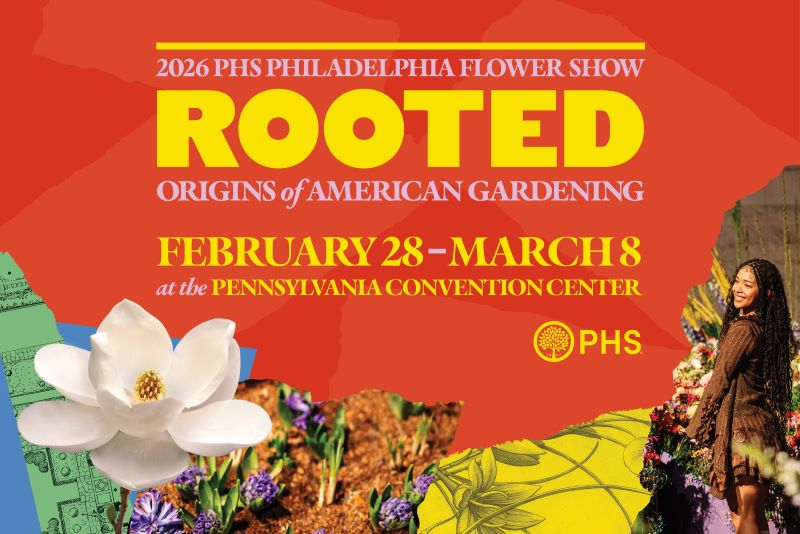
Philadelphia is currently spending an estimated $9 million to invite the world to its illustrious 250th-birthday party in the place that the American experiment of democracy was born. Before the first firework crackles in the sky, one of Philly’s enduring signature events, the 2026 PHS Philadelphia Flower Show, is open now through March 8th -only five days left -at the Pennsylvania Convention Center at 11th and Arch streets. The show’s theme demands scrutiny: “Rooted: Origins of American Gardening.”
While mainstream media will cover the impressive beauty and pageantry of the event, FunTimes is taking a moment to examine the intellectual property.
The Record Needs Correcting
The “origins” of American agriculture were not established in colonial hobby gardens. They actually were built on the expertise of enslaved Africans. It was expertise that was so specific and so valuable that plantation owners in colonial South Carolina actively sought to purchase people from the rice-growing regions of West Africa, particularly Sierra Leone and the Senegambia coast. They brought their sought-after skills. The result was the Gullah Geechee people, whose sophisticated knowledge of tidal irrigation, seed selection, and rice cultivation transformed South Carolina into one of the wealthiest of the 13 original United States colonies. The colonists provided the land while the Gullah Geechee provided the science.
Rice was not the only contribution. Okra, native to Ethiopia and cultivated on the African continent for 12,000 years, arrived in North America in the hands of enslaved West Africans. So did black-eyed peas, pigeon peas, sesame, and sorghum. Food historians have documented that women from the Dahomey region of West Africa braided okra and other seeds into their hair before being loaded onto slave ships. These were not random acts. Carrying seeds across the Middle Passage was a deliberate strategy to preserve both food knowledge and cultural identity in a future place and under conditions that were designed to erase both. Those seeds became the foundation of what Americans now call “Southern cooking” and, by extension, the American agricultural table
Provision Grounds: The Original Urban Farm
Even within the plantation system, enslaved people maintained their own gardens. Plantation owners set aside plots of land deemed unsuitable for cash-crop cultivation, called “provision grounds,” and required enslaved people to grow their own food on those plots, on their own time, typically Saturdays and Sundays. Historians at Stanford and Pennsylvania universities have documented that these grounds became sites of both survival and resistance. They were spaces where African planting traditions survived, where surplus was sold at market, and where a degree of economic agency persisted in the harshest conditions. The “provision grounds” are the direct ancestor of the Black community garden.
Philadelphia Holds This Legacy Right Now
That lineage is fully present in Philadelphia. In West Philadelphia, Mill Creek Urban Farm, founded in 2005 at 49th and Brown streets, is operated by and for people of color, growing fresh produce in a neighborhood where grocery access has historically been restricted. In Southwest Philadelphia, Bartram’s Garden, America’s oldest surviving botanical garden, explicitly identifies itself today as an African Diaspora farm. It is reclaiming the land and its history simultaneously. Sankofa Farm at Bartram’s Garden is a Community Farm that promotes self-reliance using the tools of the African Diaspora in Southwest Philadelphia. It is 2 acres of crop field, an urban orchard and a 60-bed community garden. Sankofa Community Farm is committed to the practice of natural agriculture; grounded in spiritual awareness; It has created a place for cultivating relationships with food and land.
The Black Farmers Market at Freedom Greens, 52nd and Pine streets, runs throughout the growing season. They are functional claims of ownership and food sovereignty, operating in the same city that this week is hosting a flower show about origins.
When the Pennsylvania Horticultural Society chose the theme “Rooted: Origins of American Gardening,” they opened a conversation. FunTimes is stepping into it.
The Diaspora Guide: Flower Show 2026
The show closes March 8. Five days remain. Go.
📍 Location: Pennsylvania Convention Center, 1101 Arch St., Philadelphia 🗓️ Dates: Open now through Sunday, March 8 — daily 10 a.m.–8 p.m. (closes at 6 p.m. on March 8)
While You’re There
Conduct an audit. Move past the display gardens and look for any installation referencing African agricultural traditions, seed-saving practices, or Gullah Geechee history. Note what is present and what is absent. Both are data points.
Find and spend with Black vendors. Identify Black-owned floral vendors, artisans, and plant sellers on the show floor. The city is projecting up to $2.5 billion in economic impact from 2026’s events. The Flower Show is the opening transaction of that year. Make sure Black businesses collect from it.
Skip the $40 parking trap. Take SEPTA Regional Rail to Jefferson Station. The station exits directly into the Convention Center. Round-trip rail from most Philadelphia neighborhoods costs under $10.
Make a second stop. After the Convention Center, go to Mill Creek Urban Farm or Bartram’s Garden. See what the Flower Show’s theme looks like when it is lived rather than exhibited.
Post with authority. Document what you see. Share your perspective. The history described in this article belongs in the same digital conversation as every floral arrangement being tagged this weekend. Put it there.
FunTimes Magazine is Philadelphia’s trusted source of information for the African Diaspora. Our 2026 editorial series covers the city’s landmark year through the lens of the community that built it. Another installment publishes in Marc
Sandra is a Deaconess and serves in various lay ministries. She is an Associate Publisher of FunTimes Magazine. Sandra holds memberships in various social service cultural and faith-based organizations.