

It was 11 am on a lovely Saturday morning. Nkesi’s sister, Ada, had just finished a 2-hour virtual work meeting and made a passing comment about getting paid for her attendance.
Nkesi, having just arrived in the UK from Nigeria a week earlier, was shocked. “You mean people get paid for meetings outside work hours?” she asked.
“Yes,” Ada replied. “That’s two hours of my personal time, and they’re paying for it.”
This was news to her ears, her first culture shock. Back in Nigeria, bosses were like mini-gods. Working late into the night or sacrificing your Saturday for a work meeting was just a part of the job description. You could even be on your annual leave and still be compelled to attend to work, and your only reward would be the vague hope of not getting fired.
The more Nigerians crave a better life, the more they seek ways to migrate to other countries, either through study or work overseas. When a Nigerian packs their bags to japa (a Nigerian slang for relocating), they already have this dream of reaching the promised land, flowing with better opportunities, stable electricity, good jobs, and the chance to finally make enough money to be able to afford their wants and needs.
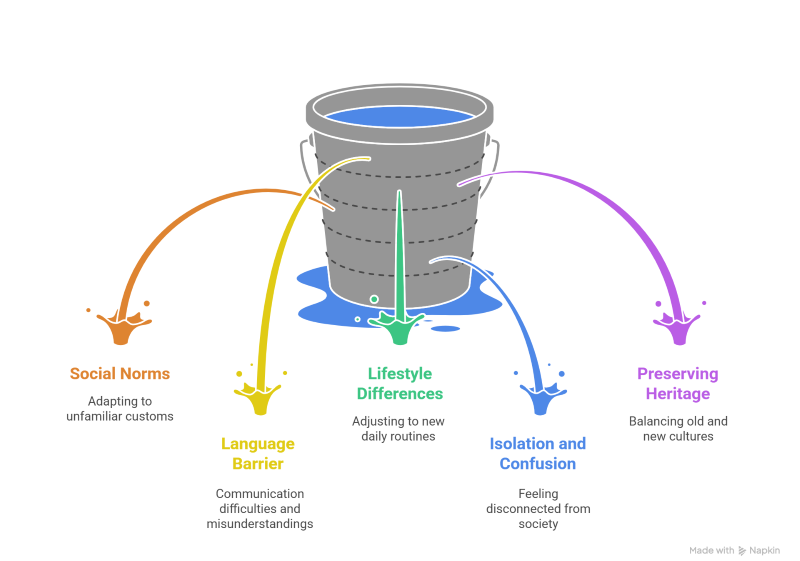
When they arrive in “their promised land”, reality finally dawns: It is more than just a change in location. You are starting a whole new life with culture shocks, trying to adapt, and identity shifts. It is not uncommon to experience these. This is as a result of having different cultures, communication styles, food, climate, and others. But with time and patience, many with open minds can adapt to these changes and thrive in their new environment.
Living in Canada as a Nigerian Immigrant
Back in Nigeria, there is something called African man time. If there’s an event scheduled for 12 pm, Nigerians will not show up until three or four hours later. Even then, the organizers are unlikely to begin on time.
Helen thought she could carry this same attitude to Canada, but she learnt the hard way.
“I had a doctor’s appointment and arrived a few minutes late. When I got there, I was told to book another appointment and return another day as I had missed my slot. After that experience, I always arrive for every appointment 30 minutes before the time.”
For Victoria, she quickly learnt that people change once they arrive abroad, even your relatives who were very nice back home. When she arrived in Canada, her cousin took her in. She had barely spent three days when this cousin, who had graciously offered to house her till she settled, began dropping hints about her moving out.
“That was my first shock. I moved out two days later into a shared apartment. I used to hear about people kicking their family out, but I thought it must be an exaggeration. It was quite shocking because this cousin lived in my house for over a year when she got a job in my city before she finally got her own place and moved out.”
Another culture shock was sharing apartments with total strangers. Some families would get a three or two-bedroom flat and rent out the extra rooms. Back in Nigeria, this is not very common. Families are not comfortable sharing their houses with people they are not related to.
Unlike in Nigeria, where families rarely let non-relatives into their living spaces, it seemed common here for people to rent out spare rooms to people they have never met. Sharing an apartment here was as normal as taking a walk. As strange as this was, it soon became a part of her new life.
Chidi also pointed out how he was shocked to realize that degrees do not really matter, but experience counts more when searching for a job.
“As a Nigerian immigrant, you could have a master’s degree, but your boss could be one without a university degree but has years of experience. That was my own culture shock.”
Discover More Migrant Stories of other Africans abroad.
Living in America as a Nigerian Immigrant
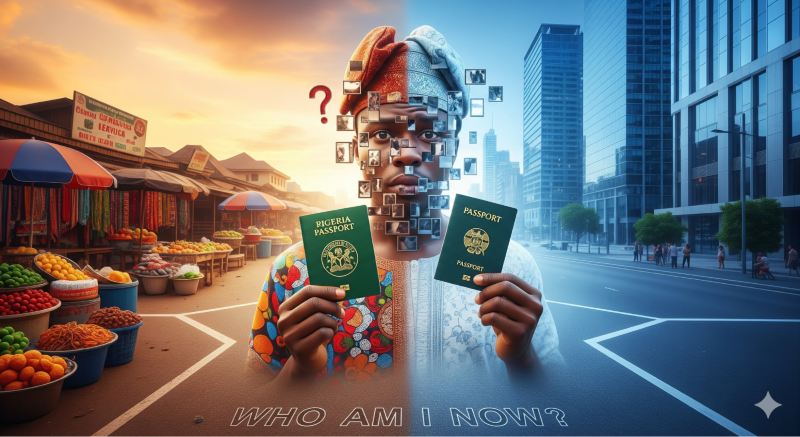
For many, the culture shock isn’t just about the new country they are in, it’s about becoming “Black” for the first time. In Nigeria, people are mostly identified by their ethnic groups and religions.
In her novel “Americanah,” award-winning novelist Chimamanda Ngozi Adichie explores the culture shock and identity shifts Nigerian immigrants experience in America through her main characters, Ifemelu and Obinze.
At an event hosted by the Aspen Institute in Washington, DC, Adichie talked about her experience of coming to identify as “Black” in America.
“When I came to America, I found myself taking on a new identity. Or no, rather, I found a new identity thrust upon me, I became Black in America.”
Several Nigerian immigrants have experienced the same identity shifts after moving abroad. Over time, they begin to find themselves trying to balance their Nigerian heritage with the African American experience. They begin to adopt the old saying, “When in Rome, do as the Romans do.” From adopting new habits to practicing foreign accents, it is a never-ending struggle to fit in, as they try to piece together a new identity from their old and new lives.
Some Nigerian immigrants often feel pressure to change their accents. With a lot of practice, it soon becomes a part of them as they begin to seamlessly move from Pidgin and their Nigerian dialects at home to polished American English at work.
When Chioma graduated from secondary school in Nigeria, her parents sent her to the US to further her education. She struggled with the accent as some of her course mates could barely hear her.
“I kept getting responses like “What?” “Come again?” “I’m sorry, what did you say?” I also struggled to hear them. Over time, my accent changed, and I started to speak like them.” I have been here since 2006, and now I struggle to switch to my Nigerian accent.”
In Nigeria, people tend to be very private and will never dream of sharing personal details with just anyone. In America, however, the culture is quite different; oversharing is common, and sometimes, they go as far as asking questions that may come across as intrusive to a Nigerian immigrant.
When a heavily pregnant Uloaku moved to Dallas to join her husband, she did not expect to hear a stranger’s life story.
“I was just scanning the baby aisle of a Walmart when a cheerful lady walked up to me and struck up a conversation. Within minutes, not only had this stranger touched my baby bump without asking, but she had also asked personal questions about her due date while also rambling about her two past pregnancies, her husband cheating, and her therapy sessions. I just stood smiling politely, but the Nigerian in me was wondering why she was comfortable telling me these things and why I needed to know, especially when I didn’t ask.”
This was her first taste of what may feel like a culture shock. It took Uloaku months to understand that Americans were just open books and what she called oversharing was simply a cultural norm.
Living in the UK as a Nigerian Immigrant
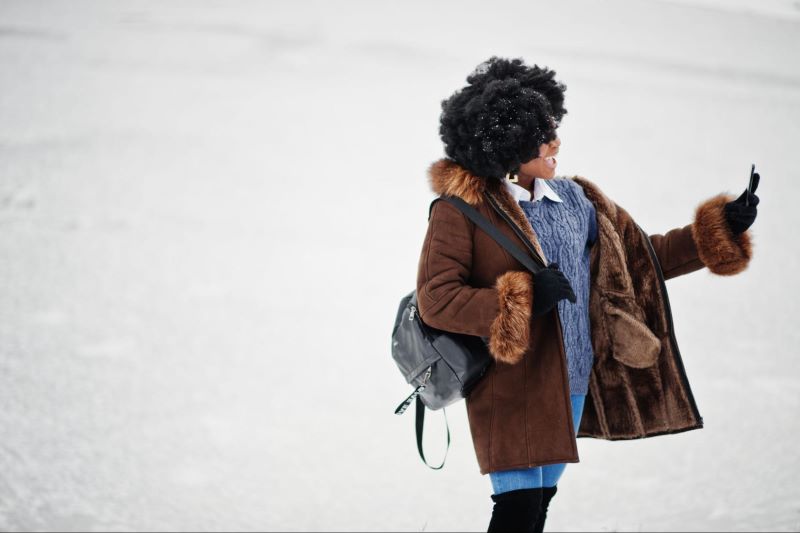
Nigerians in the UK are not left out, as they have also experienced their share of culture shocks. One of the first things that hit them is the unpredictable weather. You can have summer, winter, and rainfall in one day. Another shock is the day getting bright as early as 4 am and staying that way till 10 pm during the summer, and during winter, it gets dark as early as 4 pm.
“You would think there is still time, as everywhere is bright and clear, but when you look at the clock, it’s 9 pm. That’s when you realize it’s nighttime,” says Chinma, who travelled to the UK via the study route.
Another moment of shock for Chinma was that drivers were not honking their car horns. It was a stark contrast to Nigeria, where drivers honk not just out of necessity, but just for the fun of it. You can almost go deaf from the blaring of the different car horns on Lagos roads, especially the trucks that honk for no reason. She also noticed that vehicles yielded to pedestrians, and it was not what she was used to.
“A car was coming, and I paused to let it pass. Surprisingly, the driver stopped and signaled me to cross. I was like, “Is this for real?”
Nigerians love to dress up and would go to great lengths when it comes to their appearance. No one wants to be caught wearing a torn dress or very dirty shoes, except maybe if you’re homeless. Ayo had not spent up to two weeks in Northampton when she noticed a trend: people moving about with very dirty sneakers, some even had visible holes. Some others were dressed in what would be referred to as rags back in Nigeria. These were not the destitute, but regular people going about their day. Ayo started to think about all the foreign movies she had watched. None had portrayed this side of the Western world.
“No one really cares, and everyone minds their business. You could wear rags to class and absolutely no one, including the lecturer, would bat an eyelid. It was a shock for me seeing so many people walking about with very dirty shoes. One time, a young and handsome man came to work in my house and was wearing a pair of trousers that had a very big hole at the bottom. I thought it ripped on his way to work, and there was nothing he could do. But when he returned the next day in a different pair of trousers that were equally ripped. It was clear this was not a mistake. How can you feel comfortable dressed in rags? That’s something I would never understand,” Ayo stated.
“Let’s not forget the smoking and vaping culture. It’s like the norm for every Tom, Dick, and Harry. Imagine my shock when I saw young teenagers in their school uniform walking on the street, each vaping away like it was candy they were holding. The Nigerian in me wanted to preach to them, but I had to face front and mind my business.”
Read also: UK Blacks: Steps You Should Know Before Starting a Business
Have you ever been invited to an event and were told to “come hungry? The person who invited you had hinted that it was going to be a buffet. You arrive with a rumbling stomach in anticipation of eating till you drop, only to experience a moment of culture shock.
In Nigeria, when you’re told to come hungry to an event, you start preparing your stomach from the previous day because you are sure of varieties, from jollof, fried, and ofada rice to wraps of pounded yam and packs of small chops. You are sure you will eat to the stupor, but that’s not the case abroad.
Izoje had just started her Master’s program at Birmingham City University in 2024, and she was invited to an event that promised to feed guests fat.
“It was actually a buffet, but it was not buffeting. Imagine seeing cold macaroni, one soggy white rice that they called a foreign name, lots of vegetables, and all kinds of pastries that reminded you to beware of diabetes. If I say I wasn’t shocked, I would be lying. I also experienced the same thing one other time. We were going on a school trip and were told that lunch would be served. I obviously had not learnt my lesson as I left my house without any snacks, expecting lunch. You won’t believe what the lunch was: a cold cheese sandwich.”
She learnt a valuable lesson from these events, “In the UK, when they say lunch will be served, better eat before leaving home if you don’t want hunger to finish you.”
For some, they have started to embrace the culture in their new environment, while others still try to fight it, holding dearly to what they are used to. But as Heraclitus once said, “the only constant in life is change.”




Such an honest and relatable look at the culture shock many Nigerian immigrants face. The way you captured identity shifts abroad feels so real and heartfelt.