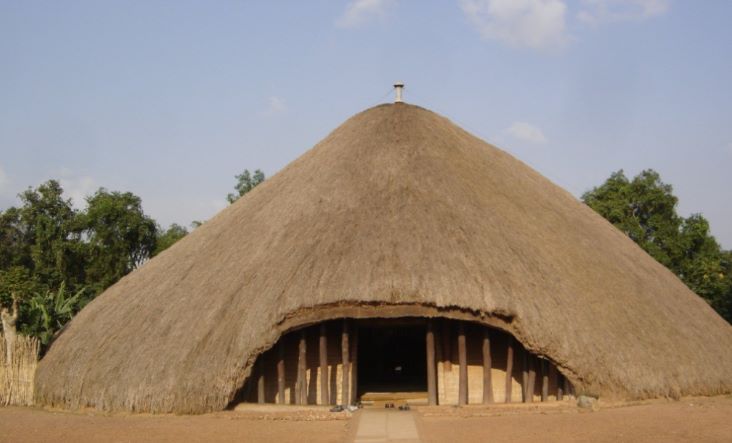
Photo source: Instagram / travels_uganda
On a quiet hill in Kampala, Uganda, are the Kasubi Tombs, where four of Buganda’s late kings, known as Kabakas, are buried. Located just five kilometres outside Kampala city and off the Kampala-Hoima highway, this sacred site is indeed a historical attraction. It is a cultural landmark, a living spiritual sanctuary, a royal burial ground, and a powerful symbol of identity for the Buganda people.
It is a site where royal rituals, oral histories, and spiritual traditions have been preserved for centuries. The site tells a bigger story about African heritage, global recognition, and the ongoing fight to preserve Black history in a world that often overlooks it.
The Kasubi Tombs, also known as the Muzibu Azaala Mpanga (a king gives birth to a king) in the local Luganda dialect, were built as a palace in 1882 by Kabaka Mutesa I. It was converted into a burial site following his death in 1884. Four tombs housing the remains of four prominent Buganda kings now lie at the Muzibu Azaala Mpanga.
Mutesa I, was the first kabaka to be buried there. Subsequently, his son Mwanga II, who died in exile in 1903, was buried there in 1910 after his remains were returned from the Seychelles. Daudi Chwa II, Mwanga II’s son, was also laid to rest at the tombs after his death in 1939. The most recent royal interment was Sir Edward Muteesa II, who died in exile in the UK in 1969. His body was returned for burial in 1971. These kings played key roles in shaping Uganda’s political and cultural landscape during crucial times in the kingdom’s history.
Godfrey Lule Ssemwanga, the station manager and former acting executive director of the Buganda Heritage and Tourism Board, highlights the uniqueness of Kasubi.
“This is a living heritage. The people therein are real. Definitely, they have to mourn their dead. They have to inter their dead. They have to dance or celebrate their dead, and at the end of the day, we have to give them a sanctuary, a good space for this to happen.
“There are different approaches to it, but in terms of business, we close part of the business to celebrate with the royalty, to celebrate with these people in this shrine. It not only serves as a tomb but also serves as a shrine for some of us who believe in the traditional religion. So, Kasubi Royal Tombs will partially serve the community there in, but also those who come to serve, to celebrate and appreciate this particular event.”
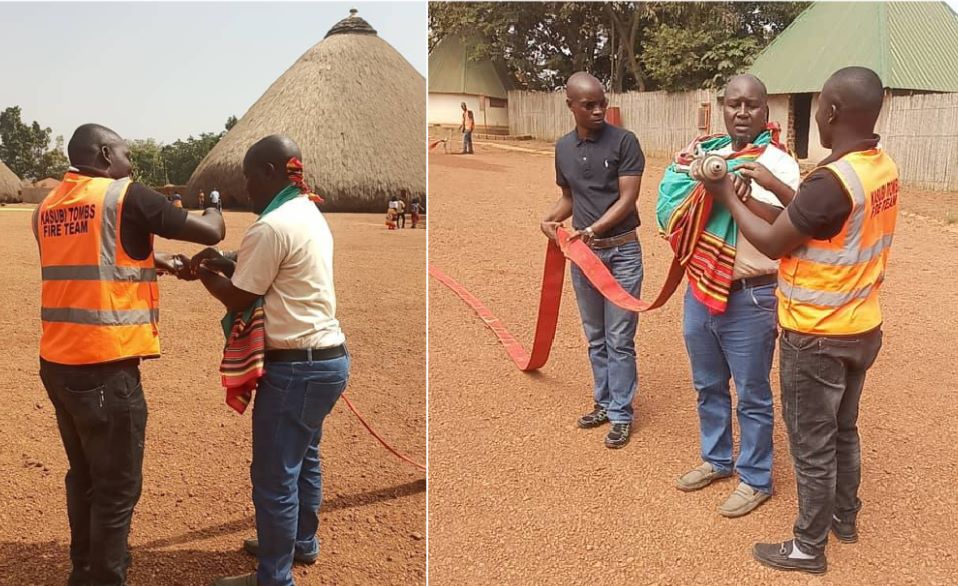
Photo source: Facebook / Lule Godfrey Ssemwanga
The Architectural Brilliance of Kasubi Tombs
One of the most extraordinary things about the Kasubi Tombs is what they are made of. No concrete. No steel beams (at least not in the original design). No imported materials. It is one of Africa’s most significant examples of indigenous architecture.
Muzibu Azaala Mpanga is entirely constructed of organic materials, including wood, thatch, reed, wattle, and daub. This is firmly in keeping with Ganda tradition and sacred architecture. It is circular in plan with a domelike overall shape. The circular form represents the eternal cycle of life. Intricate barkcloth artworks, royal regalia, and ceremonial items adorn the interiors, showcasing exquisite indigenous artistry.
Inside the tomb, the ceiling is supported by a series of concentric rings. The rings of spears hold the roof together, each representing the 52 clans of Buganda. Each clan is responsible for a particular task at the tomb.
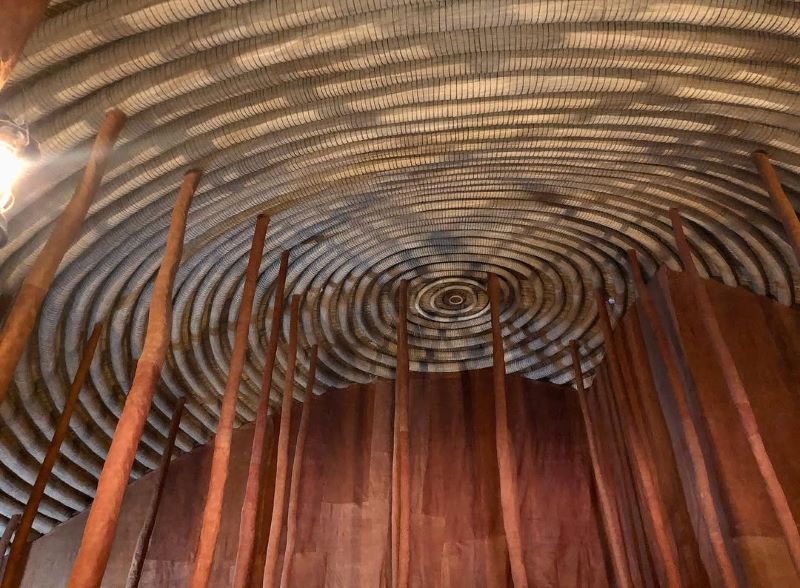
Photo source: Instagram / ibuthsafaris
As a masterpiece of form and craftsmanship, it is an exceptional surviving example of an architectural style developed by the powerful Buganda Kingdom since the 13th Century.
The site earned global recognition for its unique architecture and its role in preserving living heritage. When UNESCO designated it a World Heritage Site in 2001, it described it as “one of the most remarkable buildings using purely vegetal materials in the entire region of sub-Saharan Africa.”
Unlike a stone monument, Kasubi is a living building that requires periodic re-thatching and maintenance. That upkeep brings the community together and ensures that the technical skills of the ancestors are passed down to the next generation of builders.
As a living spiritual center for the Baganda, its real power lies in intangible elements such as ceremonies, ongoing rituals, and oral histories shared by guides from the royal clans, which gives the site an authenticity no modern structure can match.
Why Are the Kasubi Tombs Still “Fighting for Survival”?
On March 16, 2010, there was a devastating fire at the Kasubi Tombs, which burned the Muzibu Azaala Mpanga to the ground. In 2020, another fire broke out in a separate part of the complex. These incidents exposed the vulnerability of earthen and thatch heritage, sparking debates across Uganda and the diaspora about conservation, local stewardship, and international support.
After the 2010 fire, tourism was halted, and the site was added to UNESCO’s List of World Heritage in Danger in July. What followed was a 15-year restoration effort. One of the most powerful aspects of the Kasubi restoration is that it was not handed over to outside contractors or international engineers. Local communities were at the center. It involved the Buganda Kingdom, working hand in hand with the Ugandan government, international partners, cultural custodians, and local communities.
A building like this cannot simply be rebuilt by someone who looks at a blueprint. As a former minister of culture in the Buganda Kingdom, Honorable David Kyewalabye Male, explained, “The intangible and tangible cultural heritage, identity and beliefs required utmost attention to values during the reconstruction process that make them evidently unique from any grass thatch house anywhere in the world. We have ensured maximum respect to those values by going as far as undoing and redoing some restoration process.”
In September 2023, the World Heritage Committee decided to remove the Kasubi Tombs from the List of World Heritage in Danger, following the successful restoration work carried out by Uganda with UNESCO’s support.
Today, they stand as a tribute to resilience and as a reminder of why cultural heritage must be protected. Their recovery shows what community‑led preservation can achieve.
In December 2025, Katikkiro Charles Peter Mayiga confirmed that Muzibu Azaala Mpanga, the main tomb house and burial site of four Buganda kings, had been fully rebuilt with strict adherence to cultural, architectural, and historical norms.
Why This Matters to Black People Globally
Kasubi’s story reflects the conversations many in the diaspora have about memory, restitution, and cultural survival. For centuries, knowledge and traditions have been passed down through rituals and oral history, and at Kasubi, those practices are still alive. It is a rare, powerful example of living heritage that offers a direct, human link to a continuous past.
For Africans and Black people in the Americas and Europe, whose ancestral connections were systematically severed by the violence of slavery, sites like Kasubi are not just Ugandan heritage. They are proof of what African heritage looks like when it is protected and when a community refuses to let the thread be cut. They also serve as evidence that what our ancestors built was, and remains, extraordinary.
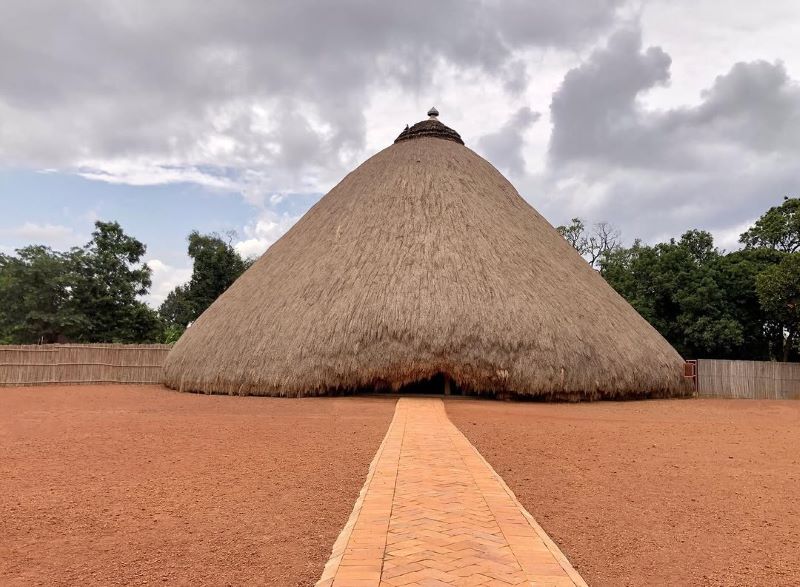
Photo source: Instagram / ibuthsafaris
Why Kasubi Tombs Are a Must-See For Every Black Traveler and What You Should Know Before You Go
A visit to the Kasubi Tombs in Uganda is more than a tourist stop; it is more like stepping into one of the rare places where precolonial African majesty remains both physically and spiritually intact.
The site connects you to a lineage of Baganda sovereignty and living memory where traditions unfold daily, from rituals to clan custodianship, and masterful craft. The massive, regal dome built entirely of wood, spear grass, and wattle would reshape your understanding of monumental architecture.
The atmosphere is reverent yet welcoming, with guides sharing personal stories that humanize the royal legacy. It is a place to reflect on Africa’s monarchical heritage amid Uganda’s vibrant modernity.
So much of Black history, especially in the diaspora, has been interrupted, erased, or fragmented. For diasporic visitors, especially African and Black American travelers seeking tangible roots, visiting Kasubi is a way to reconnect. It is a place where memory is practiced and passed on.
Its survival through fires and the pressures of modern life is more than a conservation win. It is proof of Black resilience and the refusal to let our stories be erased. Its ongoing restoration is a living act of repair: communities rebuilding with their own hands, reviving skills and rituals that link past to present. To visit is to support the preservation of a history that the world once tried to categorize as “in danger.”
You can easily access the Kasubi Tombs by taxi, boda-boda (motorcycle taxi), or an organized tour from downtown hotels. There are well-maintained paths suitable for most visitors, though some areas involve gentle inclines. Public transport like matatus (minibuses) also serves nearby routes.
Guided tours, led by knowledgeable Baganda custodians, are mandatory and provide deep insights into the site’s rituals and history.
Visitors can enter the newly rebuilt hut to experience the deep cultural and spiritual traditions of Buganda and learn about the history of the kings buried there. When visiting, dress modestly to respect cultural norms (this is a sacred site). Photography is allowed in outer areas but restricted inside sacred spaces.
The site is open daily, 8:00 AM – 6:00 PM.
Following its post‑fire restoration, the Buganda Kingdom established a tiered fee structure to make the Kasubi Tombs accessible to all visitors.
- Ugandan Pupils: UGX 3,000
- Ugandan Students: UGX 5,000
- Ugandan Adults: UGX 10,000
- East African Adults: UGX 20,000
- East African Children: UGX 10,000
- African Children: UGX 15,000
- African Adults: UGX 30,000
- Foreign Resident Children: $10
- Foreign Resident Adults: $15
- Foreign Non-Resident Children: $15
- Foreign Non-Resident Adults: $20