Source: Public Domain
On March 10, communities from upstate New York to college campuses nationwide will gather to mark Harriet Tubman Day.
Philadelphia is navigating local debates over a massive new monument and how Tubman’s image should be used in the public square; other cities will also be launching their own ambitious projects. These events feature civic ceremonies, new museum exhibits and public lectures. However, the 2026 commemorations arrive during a deeply contested moment. Across the country, renewed political battles are dictating how American institutions present the history of slavery and Black resistance.
In Auburn, New York, a full day of public programming is planned to honor Tubman. Auburn was Tubman’s chosen hometown for the final 54 years of her life. She settled there after her friend, Secretary of State William H. Seward, sold her a property on the outskirts of town. Due to this deep-rooted history, the city remains the geographical and spiritual center of her memory. She worshiped at the historic Thompson Memorial A.M.E. Zion Church, which was also the site of her funeral in 1913.
The official local theme for 2026 is “Towards a More Perfect Union.” This specific phrasing intentionally links her life’s work to the upcoming American Semiquincentennial. Planners want the public to understand that the fight for abolition was a fundamental part of the American democratic project.
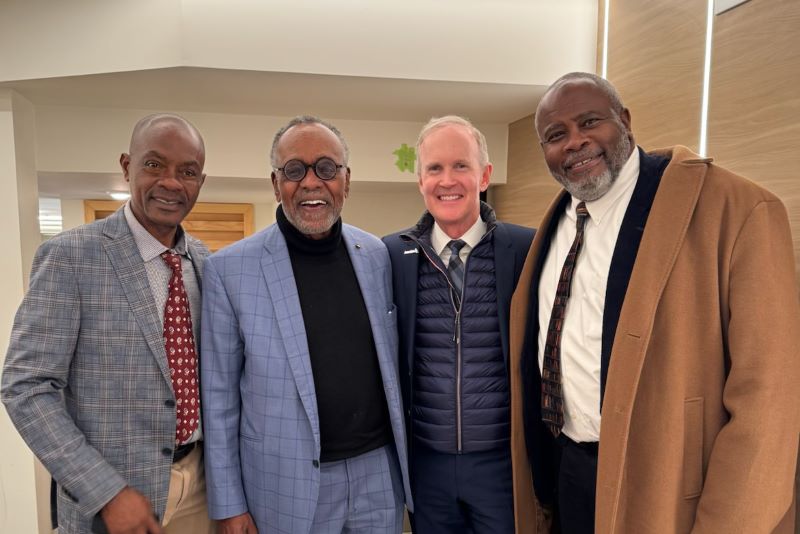
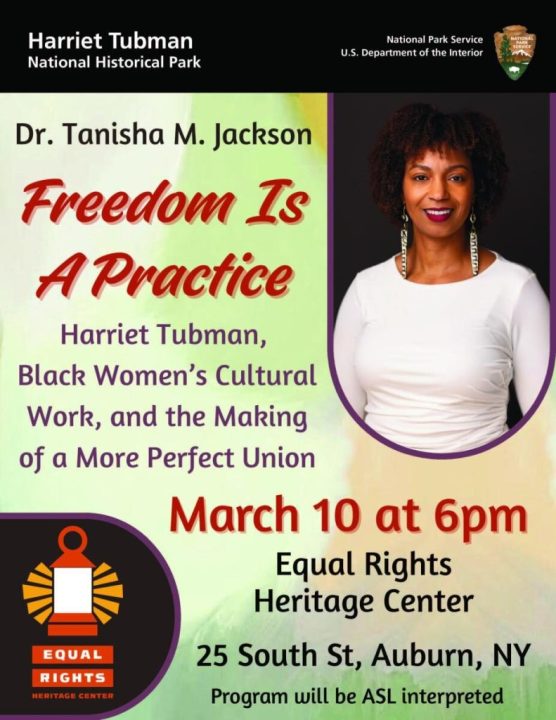
Following the daytime park events, the commemoration shifts downtown to the NYS Equal Rights Heritage Center for an extensive evening program. The focal point of the night is a keynote address by Dr. Tanisha M. Jackson. She is an African American Studies professor at Syracuse University and the executive director of the Community Folk Art Center. Her lecture is titled “Freedom Is a Practice: Harriet Tubman, Black Women’s Cultural Work, and the Making of a More Perfect Union.”
Jackson challenges her audiences to view Tubman as an active blueprint for modern survival. The phrase “Freedom is a practice” serves as both her title and a thematic anchor for the entire evening. It asks attendees to consider how contemporary Black women’s cultural work functions as a direct continuation of Tubman’s grassroots democracy and civic leadership. It demands that audiences look at freedom as a muscle that must be exercised daily rather than a permanent state of being.
Source: auburnny.gov
These local Auburn celebrations arrive at a highly volatile moment for public history in the United States. Over the past year, the federal presentation of Black history has been dragged to the center of a bitter cultural battle. Political pressure has increasingly targeted museums and federal agencies, demanding a sanitized version of the American past.
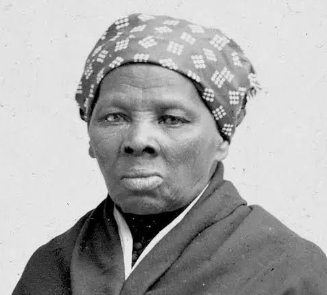
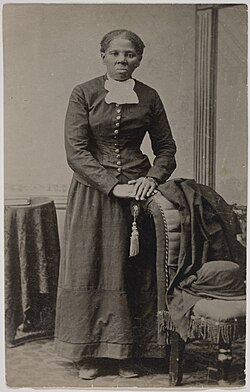
This friction reached a boiling point when the National Park Service’s official webpage for the Underground Railroad was quietly edited. Administrators removed a prominent portrait of Tubman. They also deleted text that detailed the brutalities of chattel slavery without permission. The new language instead emphasized the secretive network “bridged divides” and focused heavily on white allies. This temporary erasure struck a profound nerve across the country. Following swift public outcry and media scrutiny, the Associated Press and other news outlets reported that the original content was finally reinstated.
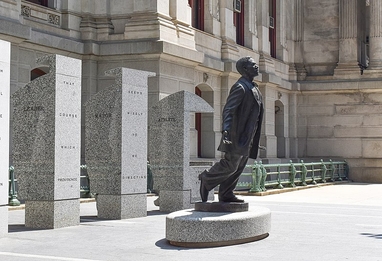
In Philadelphia, historical memory is taking on a massive physical form. Following a robust open call process, the city is preparing to install a permanent 15-foot bronze monument designed by artist Alvin Pettit. This statue will stand prominently outside City Hall. The sheer scale of the monument is meant to force pedestrians to look up and acknowledge her legacy in the center of the city. To ensure the community feels ownership of the space, the city launched an open call inviting local residents to submit original quotes to be inscribed on the statue’s base.
As Tubman’s cultural footprint grows larger, so does the proliferation of massive historical misattributions. The internet is flooded with putative Tubman quotations that she never actually spoke. The most famous example is the widely shared phrase, “I freed a thousand slaves. I could have freed a thousand more if only they knew they were slaves.” This quote has been printed on clothing, painted on murals, and even used in major political speeches. However, the quote is entirely fabricated.
Fact checkers at Reuters, the Associated Press, and PolitiFact have thoroughly debunked it. Leading Tubman scholars, including biographer Kate Clifford Larson, have consistently documented that there is absolutely no historical record of Tubman ever saying those words.
Source: Wikipedia
Commemorating her properly in 2026 requires rigorous archival grounding. Relying on reliable evidence of her documented missions honors the actual, perilous work she undertook. Repeating internet folklore diminishes her strategic genius and the agency of the people she helped liberate.
The Global Impact of Harriet Tubman Day
Tubman’s legacy is certainly not confined to American borders. She remains a towering figure of diasporic memory. For Africans living on the continent and the broader Black diaspora worldwide, Tubman represents the universal archetype of the ‘uncompromising liberator.’
Throughout February and March, international institutions are hosting programming that places her within a global context. The Harriet Tubman Institute for Research on Africa and its Diasporas at York University in Canada is leading this charge. Their exhibits and cultural events are explicitly aimed at diasporic audiences. They connect the mechanics of the American Underground Railroad to broader global histories of Black resistance.
These academic programs link her specific tactics in Maryland to the strategies of Maroons in Jamaica and anti-colonial fighters across the African continent. This framework elevates Tubman from an American hero to a global symbol of human rights and resistance against oppression.
Ultimately, Harriet Tubman Day 2026 serves as a powerful mirror for contemporary civic struggles over memory and truth. Whether it is a child pinning a button in Auburn, a citizen drafting a monument inscription in Philadelphia, or a student analyzing her legacy in a Pan-African context, the commemoration binds readers together. It connects people in the United States with those across the African continent.
The events of March 10 are a reminder that the rights she fought for are not permanently guaranteed. They require constant defense and vigilance.

Anand Subramanian is a freelance photographer and content writer based out of Tamil Nadu, India. Having a background in Engineering always made him curious about life on the other side of the spectrum. He leapt forward towards the Photography life and never looked back. Specializing in Documentary and Portrait photography gave him an up-close and personal view into the complexities of human beings and those experiences helped him branch out from visual to words. Today he is mentoring passionate photographers and writing about the different dimensions of the art world.